Mastering the art of storyboarding dialogue-heavy scenes can transform a script from static words into a vibrant visual narrative. This guide offers ten practical tips to help you effectively translate complex conversations onto the storyboard, ensuring clarity, emotional depth, and a compelling visual flow. We’ll explore techniques for simplifying dialogue, visualizing character interactions and emotions, and maintaining a clear and engaging visual rhythm even amidst rapid-fire exchanges.
From strategically planning your layout to employing visual shorthand and metaphors, we’ll cover essential methods for making dialogue scenes both visually interesting and easily understandable. This guide provides a practical, step-by-step approach to elevate your storyboarding skills and bring your dialogue to life.
Planning & Structuring Dialogue-Heavy Scenes
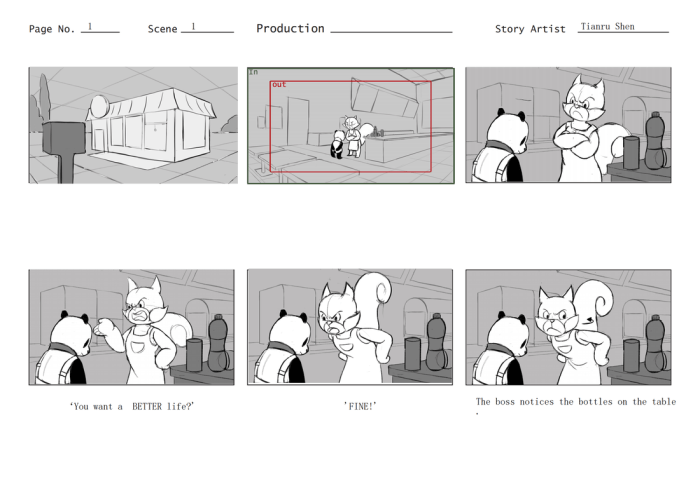
Effective storyboarding for dialogue-heavy scenes requires careful planning to ensure clarity and visual interest. A well-structured storyboard will not only convey the spoken words but also the emotional subtext and character interactions, making the scene dynamic and engaging for the audience. This involves choosing an appropriate layout, designing compelling visuals, and employing techniques to simplify complex exchanges without sacrificing narrative impact.
Storyboarding dialogue-heavy scenes presents unique challenges. The visual focus must shift from action to character interaction and emotional expression. A static image needs to convey the dynamism of conversation. This necessitates a strategic approach to panel layout and visual storytelling.
Storyboard Layout for Dialogue-Heavy Scenes
For scenes with multiple characters engaged in complex conversations, a multi-panel layout focusing on individual character reactions and close-ups is highly effective. Instead of a single wide panel showing all characters, consider using a series of smaller panels, each focusing on a specific character’s reaction or a significant moment in the dialogue. This allows for a detailed portrayal of micro-expressions, body language, and shifts in emotional tone. For instance, a three-panel sequence might show Character A speaking, then a close-up on Character B’s reacting face, followed by a panel showcasing Character C’s subtle shift in posture, all within a short time frame. This broken-down approach provides a more intimate and engaging experience for the viewer.
Sample Storyboard Panel: A Crucial Turning Point
Consider a scene where a detective reveals crucial evidence to a suspect. The panel would be a close-up on the suspect’s face. The character’s eyes are wide, a slight tremor is visible in their hand, and their mouth is slightly ajar. The background is blurred, drawing all attention to the character’s reaction. The detective’s hand, holding the evidence, is slightly visible in the bottom left corner, subtly suggesting the source of the character’s distress. The lighting is slightly dramatic, casting a shadow on one side of the face, enhancing the feeling of suspense and revelation. The overall color palette is muted, with darker tones emphasizing the gravity of the moment. This close-up shot immediately conveys the impact of the detective’s revelation without relying heavily on dialogue.
Simplifying Complex Dialogue Exchanges
Simplifying complex dialogue without losing narrative impact requires strategic use of visual shorthand. Instead of transcribing every line of dialogue, focus on key phrases or emotional beats. For example, a thought bubble could represent an internal monologue, while a series of small panels showing rapid eye movements and facial expressions can convey a character’s internal struggle during a tense exchange. Visual metaphors can also be used. For instance, a shrinking character could visually represent a loss of confidence or power during an argument, while expanding flames behind a character could depict their rising anger. These techniques allow the storyboard artist to convey the essence of the conversation without overwhelming the viewer with text.
Visualizing Character Interactions & Emotions
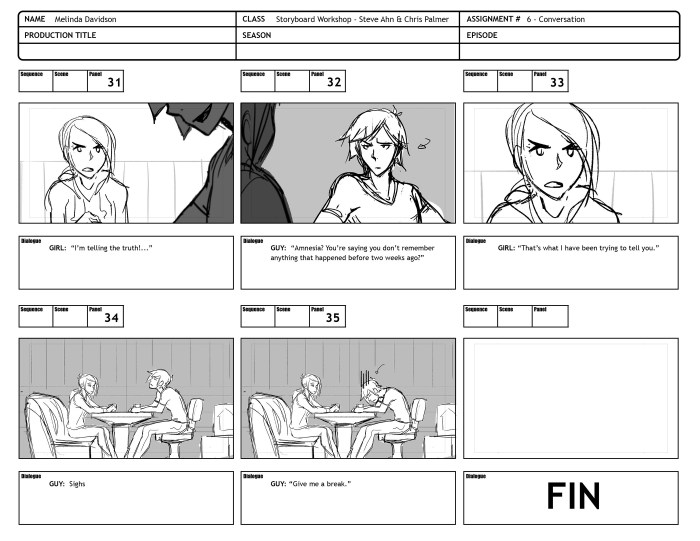
Storyboarding dialogue-heavy scenes effectively requires a keen understanding of how to visually represent not only the words spoken but also the unspoken emotions and power dynamics at play. This involves translating abstract concepts and internal conflicts into concrete visual language that enhances the viewer’s understanding and engagement. The following sections detail techniques for visualizing character interactions and emotions within your storyboard.
Character Internal Conflict During Dialogue
A character grappling with an internal conflict during a crucial conversation offers rich storytelling potential. To effectively portray this, the storyboard should show visual cues reflecting the character’s inner turmoil. For example, imagine a scene where a character is forced to agree to a business deal they secretly oppose. Panel 1 could show the character nodding in agreement, their face composed, but their hands clenched tightly, subtly revealing their tension. Panel 2 might depict a close-up of their eyes, showing a flicker of uncertainty or anger. Panel 3 could show them subtly shifting their weight, indicating discomfort. These visual cues, combined with the dialogue, communicate the character’s internal struggle without explicitly stating it. The use of contrasting visuals – a calm exterior versus agitated body language – heightens the dramatic effect.
Visual Metaphors for Abstract Concepts
Abstract concepts, such as betrayal, hope, or despair, can be challenging to depict visually. However, using visual metaphors effectively translates these abstract ideas into concrete imagery. Consider a scene where two characters discuss a broken trust. Instead of simply showing them talking, a storyboard could use visual metaphors. Panel 1 might show a cracked mirror reflecting their faces, symbolizing the shattered relationship. Panel 2 could show a wilting flower, representing the death of their trust. Panel 3 could show a shattered glass, representing the fragility of their relationship. These visual metaphors create a deeper emotional impact than simply showing the characters talking, making the abstract concept of broken trust more tangible and relatable for the audience. The choice of metaphor should be carefully considered to resonate with the specific context of the dialogue.
Subtle Shifts in Power Dynamics
Subtle shifts in power dynamics during a conversation are often crucial to the narrative. A storyboard can effectively illustrate these changes through careful visual composition. Consider a scene where a subordinate initially feels intimidated by their superior but gradually gains confidence. Panel 1 might show the subordinate positioned lower in the frame, looking up at their superior, who is centrally positioned and dominates the space. Panel 2 could depict the subordinate subtly leaning forward, engaging more directly with the superior. Panel 3 could show the subordinate standing taller, their posture more assertive, with their superior subtly shifting their posture or gaze, indicating a shift in the balance of power. These changes in physical positioning and body language within the storyboard panels effectively communicate the evolving power dynamic without explicit dialogue. The use of framing and character positioning are crucial tools in conveying these subtle but significant shifts.
Enhancing Clarity & Flow in Storyboard Dialogue
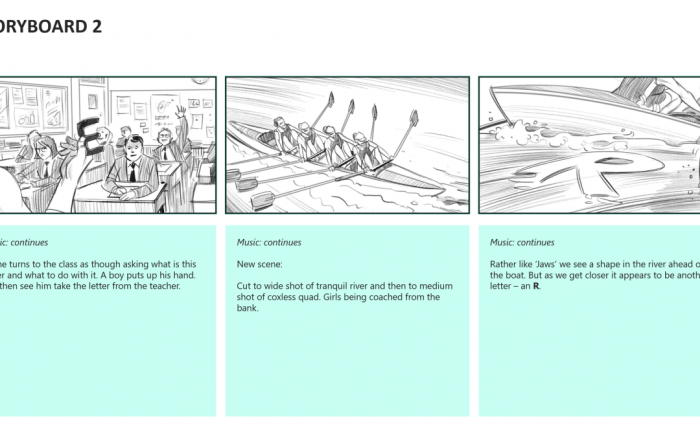
Effective storyboarding of dialogue-heavy scenes requires careful consideration of visual cues to maintain clarity and guide the viewer’s eye, especially during fast-paced exchanges or complex interactions. A well-crafted storyboard will seamlessly integrate visual information with the spoken word, ensuring the audience understands not only *what* is being said, but *how* it’s being said and its impact on the characters and the overall narrative.
Visual elements are crucial for maintaining the audience’s understanding and engagement, particularly in scenes with rapid dialogue or complex emotional exchanges. Strategic use of camera angles, character positioning, and visual metaphors can greatly enhance the clarity and flow of the narrative.
Visual Cues for Fast-Paced Dialogue
Consider a scene where two characters, Alex and Ben, are arguing in a crowded marketplace. To illustrate a storyboard sequence:
Panel 1: A wide shot establishes the bustling marketplace, showing Alex and Ben amidst the crowd. Both are shown in profile, their bodies slightly angled towards each other, indicating tension. The background is slightly blurred, drawing attention to the central figures.
Panel 2: A closer shot focuses on Alex, her face contorted in anger. A speech bubble above her head contains a short, sharp line of dialogue. The use of a close-up emphasizes her emotional state.
Panel 3: The camera angle shifts to Ben. He’s shown from a slightly lower angle, making him appear more vulnerable. His speech bubble displays a defensive response. The contrast in camera angles subtly communicates power dynamics.
Panel 4: A medium shot shows both Alex and Ben, their faces close together, their voices overlapping. Small, overlapping speech bubbles visually represent the simultaneous dialogue. The visual emphasis is on their proximity and the intensity of their argument.
Panel 5: A slightly wider shot pulls back to show the crowd reacting to the argument, some looking on with curiosity, others with concern. This shows the impact of their dialogue on the environment.
This sequence utilizes varying camera angles, close-ups to emphasize emotion, and careful placement of speech bubbles to maintain clarity despite the rapid exchange of dialogue. The change in shot size also helps to regulate the intensity of the scene.
Visual Representation of Time and Location Transitions
Transitions in time or location during continuous dialogue can be effectively represented using visual cues. For example, a scene might begin in a coffee shop and then transition to a park later in the conversation. This transition could be shown in the storyboard through a distinct visual change:
Panel 1: Shows characters sitting in a coffee shop, perhaps with coffee cups on the table.
Panel 2: A dissolve transition is indicated between Panel 1 and Panel 2. Panel 2 shows the same characters, now sitting on a park bench, with a noticeably different background. The visual change clearly signals a shift in location. A subtle change in the lighting could further emphasize the passage of time.
Alternatively, a simple scene break or a visual transition, such as a quick cut to a different setting, could indicate a time jump. The effectiveness of this method lies in its simplicity and clarity. The audience instantly understands the change in setting without any confusion.
Visual Differentiation in Overlapping Dialogue
In a scene with overlapping dialogue, visual elements are essential to differentiate speakers and maintain clarity. Consider a scene where three characters, Sarah, Mark, and Emily, are discussing a project.
Panel 1: A medium shot shows all three characters, positioned in a triangular arrangement. Each character has a distinct color-coded speech bubble, easily distinguishing their lines.
Panel 2: A close-up on Sarah, showing her expression as she speaks. Her speech bubble is clearly labeled, and the color-coding helps maintain clarity.
Panel 3: The focus shifts to Mark, with a similar close-up and clearly marked speech bubble.
Panel 4: The camera angle changes to show Emily speaking, her speech bubble again differentiated by color. The arrangement of the speech bubbles in the panels also visually reflects the flow of conversation.
This use of color-coded speech bubbles, combined with strategic camera angles and close-ups, ensures that the audience can easily follow the overlapping dialogue and understand who is speaking at any given moment. The visual separation makes the scene easy to follow and avoids confusion.
Closing Notes
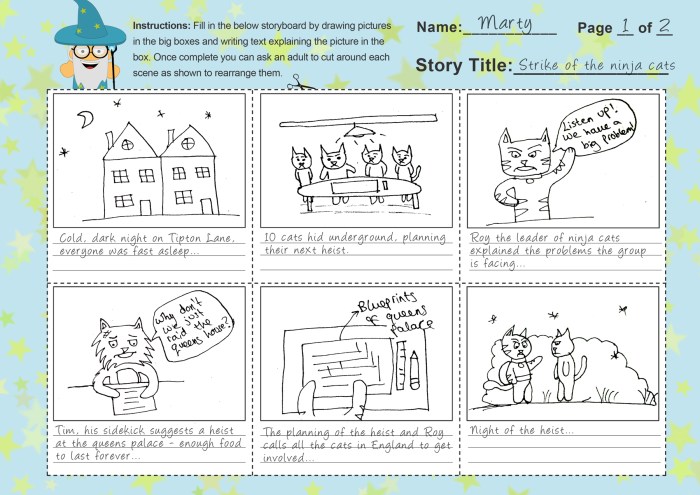
By applying these ten tips, you can significantly enhance the visual storytelling of your dialogue-heavy scenes. Remember, effective storyboarding isn’t just about representing the words; it’s about conveying the emotional weight, power dynamics, and narrative momentum inherent in the conversation. Through careful planning, visual creativity, and a focus on clarity, you can create storyboards that are both engaging and effective in communicating the essence of your script.