Crafting compelling action sequences requires more than just explosive visuals; it demands meticulous planning and a keen understanding of visual storytelling. This guide delves into ten crucial tips, transforming your storyboards from static images into dynamic narratives that captivate audiences. From pre-visualization techniques to mastering composition and bringing the action to life, we’ll explore the essential elements for creating unforgettable action scenes.
We will cover practical strategies for designing escalating tension, utilizing visual metaphors, and directing the viewer’s eye through clever staging and composition. Learn how to effectively use camera angles, leading lines, and panel transitions to enhance the pacing and impact of your action sequences. Mastering these techniques will elevate your storyboards and transform your action scenes into truly memorable cinematic experiences.
Planning & Pre-Visualization
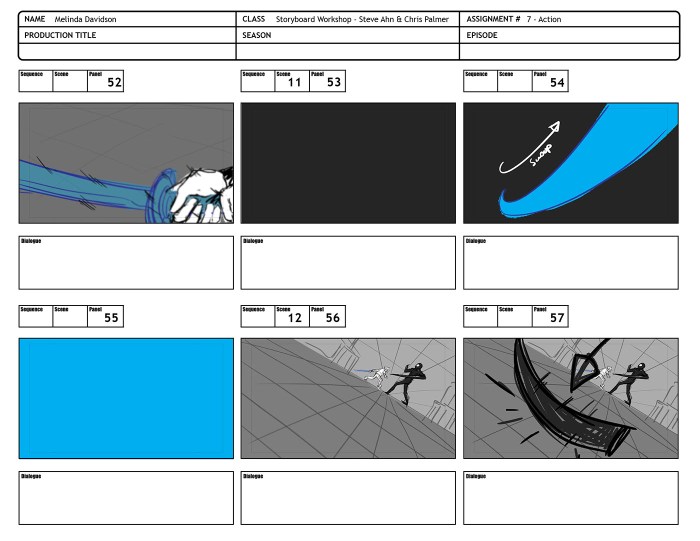
Effective pre-visualization is crucial for creating compelling action sequences in storyboards. By meticulously planning each shot and movement, you establish a clear visual narrative that guides the audience through the action, ensuring clarity and impact. This stage allows for the identification and resolution of potential problems before animation or filming begins, saving time and resources.
Designing a Storyboard for an Escalating Car Chase
To demonstrate escalating tension, a car chase scene can be broken down into three stages. Stage one: The chase begins. The storyboard panels would show the cars at a relatively slow speed, perhaps weaving through light traffic. The characters’ expressions would be focused and determined, but not panicked. Camera angles would be relatively wide, establishing the setting and the overall chase. Stage two: The chase intensifies. The cars increase speed, weaving through heavier traffic, narrowly avoiding collisions. The characters’ expressions show increased tension and urgency. The camera angles become tighter, more dynamic, focusing on close calls and individual car maneuvers. Stage three: The climax. The cars are driving at breakneck speed, possibly performing dangerous stunts. The characters’ faces show extreme focus and desperation. The camera angles become extremely dynamic, perhaps employing quick cuts and extreme close-ups to heighten the sense of danger and urgency. This escalating sequence of events, mirrored in the visual storytelling, effectively builds tension for the viewer.
Visual Representation of a Fight Scene
The following table illustrates a simple fight scene, highlighting the importance of detailed planning in conveying the action and emotional state of the characters.
| Panel Number | Description | Character Emotion | Camera Angle |
|---|---|---|---|
| 1 | Character A throws a punch at Character B. | Character A: Aggressive; Character B: Defensive, surprised. | Medium shot, focusing on both characters. |
| 2 | Character B blocks the punch, countering with a kick. | Character A: Slightly surprised; Character B: Determined, focused. | Close-up on the characters’ hands and feet during the exchange. |
| 3 | Character A dodges the kick, landing a blow to Character B’s side. | Character A: Triumphant; Character B: Pained, winded. | Dynamic angle, capturing the movement and impact. |
| 4 | Character B falls to the ground, clutching their side. | Character A: Dominant, slightly out of breath; Character B: Defeated, in pain. | Wide shot, showing the aftermath of the fight. |
Visual Metaphors for an Explosion
To depict the impact of an explosion without relying on an image, consider using visual metaphors to convey the scale and force. For example, a panel could show a character being thrown backward violently, their body contorted in an unnatural position, with debris raining down around them. The character’s expression should be one of shock and pain. The background could be rendered with highly distorted lines and intense, radiating light and heat waves, suggesting the intense force of the blast. Shattered glass and splintered wood could surround the character, further emphasizing the destructive power of the explosion. This detailed description helps the reader visualize the impact without relying on an actual image.
Depicting the Passage of Time in a Fast-Paced Sequence
Effectively depicting the passage of time in a fast-paced action sequence requires careful use of visual storytelling techniques. One method is to use a series of panels showing the gradual deterioration of the environment, such as a building collapsing piece by piece, or a vehicle progressively becoming more damaged during a chase. Another technique is to use quick cuts between different locations or points of view, suggesting the rapid movement of time. The use of motion blur in certain panels can also create a sense of speed and rapid change, reinforcing the feeling of time passing quickly. Finally, changes in lighting and weather conditions across panels can further highlight the passage of time, even within a short action sequence.
Composition & Staging
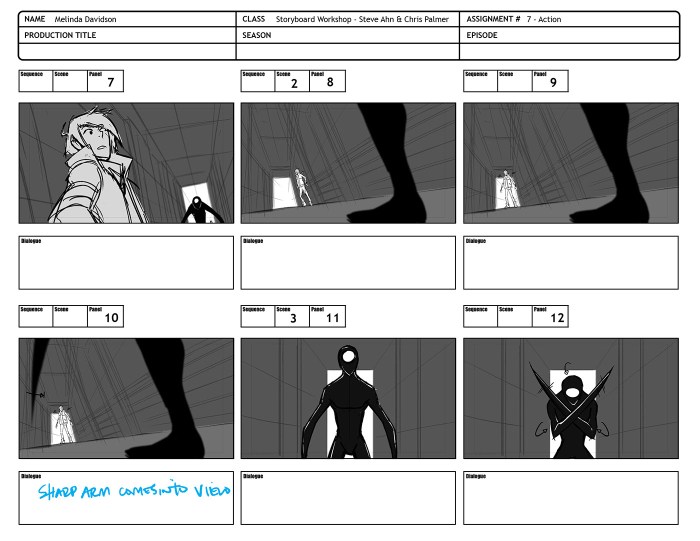
Effective composition and staging are crucial for creating compelling action sequences in storyboards. By carefully considering camera angles, character placement, and visual cues, you can guide the viewer’s eye and enhance the emotional impact of the scene. This section explores different approaches to achieve this, focusing on practical examples and techniques.
Sword Fight Staging: Close-Ups versus Wide Shots
Two distinct approaches to staging a sword fight dramatically alter the viewer’s experience. A close-up-focused approach emphasizes the intensity and brutality of individual blows. Rapid cuts between the combatants’ faces, hands gripping weapons, and the clash of steel create a visceral, immediate feel. The viewer is plunged into the heart of the action, experiencing the fight’s ferocity firsthand. This style prioritizes emotional impact and intimate details. Conversely, wide shots offer a broader perspective, showcasing the choreography and flow of the fight. The viewer can appreciate the spatial relationships between the fighters, the strategic movements, and the overall scope of the combat. This approach often emphasizes the elegance and skill of the fight, rather than its raw violence. A well-executed wide shot can highlight the setting and its influence on the fight. For example, a wide shot of a sword fight taking place in a rain-soaked alleyway adds atmosphere and context. The choice between these approaches depends on the desired mood and the story’s specific needs.
Leading Lines and Visual Cues in Chase Sequences
Employing leading lines and visual cues is essential for directing the viewer’s gaze and creating a sense of momentum during chase sequences. Here are three examples:
- Roads and Streets: A long, straight road stretching into the distance naturally leads the eye, creating a sense of forward motion. The fleeing character could be placed on the road’s center, with the pursuer following behind. The road acts as a leading line, guiding the viewer’s attention and emphasizing the pursuit’s progression.
- Architectural Elements: Buildings, fences, or rows of trees can be used to create leading lines that guide the viewer’s eye through the chase. For example, a character running through a city street could be framed by buildings that converge in the distance, creating a sense of depth and speed. The converging lines visually propel the action forward.
- Character Positioning: Positioning characters in relation to each other and the background can also create leading lines. For instance, a character running towards a specific point in the distance creates an implicit leading line, drawing the viewer’s attention to that destination. The character’s body orientation and direction of movement act as a visual cue.
Character Reaction to a Sudden Event
The following storyboard panel depicts a character’s reaction to a sudden, unexpected event:
Panel 1: The character is shown mid-sentence, perhaps in a relaxed pose, indicating a state of normalcy before the event. Their facial expression is neutral or slightly happy.
Panel 2: The character’s body is abruptly thrown back, hands instinctively raised for protection. Their mouth is slightly agape, eyes wide with surprise and perhaps fear. The character’s body language, especially the posture and the raised hands, clearly communicates the shock of the event.
Perspective and Scale in a Spaceship Battle
To create a sense of speed and movement in a spaceship battle, perspective and scale are invaluable tools. Smaller, distant ships appear to move faster due to the forced perspective, while larger, closer ships emphasize their power and impact. For instance, a small, nimble fighter jet could be shown streaking across the screen in the distance, creating a sense of speed, while a massive battleship in the foreground, slowly turning, adds a sense of scale and power. Varying the sizes of ships and their relative positions allows for creating dynamic compositions that highlight movement and impact. The use of depth of field, blurring distant ships and sharply focusing on those in the foreground, further enhances this effect.
Action & Dynamics
Bringing a storyboard’s action sequences to life requires a keen understanding of visual dynamics and the effective portrayal of impact and force. The goal is to make the viewer feel the weight of each blow, the speed of each movement, and the overall intensity of the scene. This goes beyond simply depicting characters moving; it’s about communicating the visceral experience of the action.
Visual representation of impact and force is crucial for conveying the intensity of an action sequence. Several techniques can be employed to achieve this effectively.
Methods for Visually Representing Impact and Force
Effective visual storytelling relies on showing, not telling. In an action sequence, this translates to clearly depicting the physical effects of actions. The following techniques can help achieve this:
- Motion Blur: Using motion blur on moving objects, particularly during high-speed actions like punches or kicks, visually emphasizes the speed and force involved. The blurred lines suggest a rapid movement, leaving a trail in its wake, communicating the impact more effectively than a still image.
- Impact Lines/Cracks: Adding radiating lines or cracks emanating from the point of impact on surfaces (e.g., a wall after a punch) immediately communicates the force applied. The severity of the cracks can also suggest the intensity of the impact.
- Character Deformation: Subtly deforming a character’s body upon impact – a slight bending of limbs or a compressed posture – adds realism and reinforces the impact’s physical effect. This is especially effective for depicting the force of a strong blow.
- Environmental Effects: Show the surroundings reacting to the action. Dust clouds kicked up by a running character, debris flying from a collision, or shattered glass from a powerful strike all enhance the scene’s realism and intensity.
- Camera Shake: A subtly shaking camera, especially during moments of impact, creates a sense of instability and force, immersing the viewer in the action. This technique should be used sparingly to avoid overwhelming the viewer.
Common Mistakes in Storyboarding Action Sequences
Several common pitfalls can hinder the effectiveness of an action sequence storyboard. Addressing these issues proactively ensures a more engaging and understandable sequence.
- Lack of Clarity: Poorly defined character poses and unclear staging can make it difficult for the audience to follow the action. Ensure each panel clearly shows the characters’ positions and movements, avoiding ambiguity.
- Inconsistent Timing: Uneven spacing between panels can create a jarring viewing experience. Maintain consistent timing between panels to ensure a smooth flow of action. This requires careful consideration of the speed and duration of each movement.
- Over-Reliance on Static Poses: A series of static poses, without any sense of motion or flow, can make the action feel stiff and unnatural. Incorporate dynamic poses and motion lines to convey movement and energy.
Storyboard Sequence: Complex Acrobatic Maneuver
This sequence depicts a character performing a backflip kick.
- Panel 1: The character is crouched, preparing for the backflip. Arms are bent, legs slightly spread for balance. The expression is focused and determined.
- Panel 2: The character is mid-backflip, body arched, legs extended upward. Motion lines indicate the rotation. A slight blur effect on the legs emphasizes the speed of the movement.
- Panel 3: The character is at the peak of the backflip, momentarily suspended in the air. The body is straight, with a clear view of the surroundings.
- Panel 4: The character is descending, legs now bent in preparation for the kick. Motion lines suggest the downward trajectory.
- Panel 5: The character lands, executing a powerful kick. Impact lines emanate from the character’s foot. The character’s body is slightly bent due to the force of the kick.
Panel-to-Panel Transitions in Action Sequences
Smooth transitions between panels are crucial for creating a fluid and engaging action sequence. The choice of transition can significantly impact the rhythm and feel of the sequence.
- Simple Cut: A direct cut between panels works well for rapid actions or changes in perspective. For example, a quick cut between a character preparing a punch and the punch connecting.
- Overlapping Action: This technique shows the continuation of an action across multiple panels. For example, a character throwing a punch could be shown across two panels, with the second panel showing the punch connecting.
- Zoom: Zooming in on a specific detail (like a character’s expression) can emphasize a crucial moment. For example, zooming in on a character’s eyes during a tense moment.
Final Review
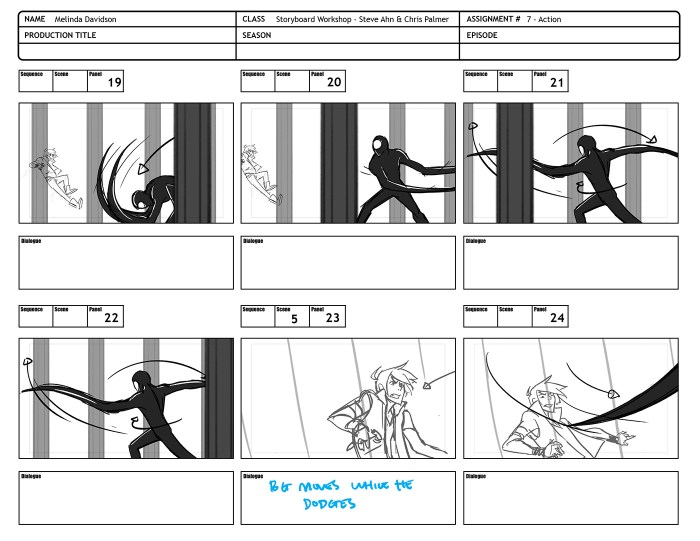
Storyboarding engaging action sequences is a blend of art and precision. By mastering pre-visualization, composition, and dynamic action techniques, you can transform static images into compelling narratives. Remember to plan meticulously, understand the impact of your choices on the viewer, and continuously refine your approach. With practice and a keen eye for visual storytelling, you’ll create action sequences that are not only visually stunning but also emotionally resonant and truly unforgettable.