Mastering the art of visual storytelling begins with a compelling storyboard. This guide delves into nine professional tips to elevate your storyboarding skills, transforming your ideas into captivating narratives. We’ll explore fundamental principles, narrative techniques, and refinement strategies, empowering you to create storyboards that truly resonate.
From understanding the core principles of effective storyboarding and exploring different types, to mastering visual storytelling techniques like composition, framing, and color palettes, this guide provides a comprehensive approach. We’ll also cover crucial aspects such as incorporating dialogue and sound, refining your work, and choosing the best presentation method for your storyboard.
Understanding the Fundamentals of Storyboarding

Storyboarding is a crucial pre-production process used across various media to visually plan the narrative flow of a film, animation, video game, or any other visual project. It’s a powerful tool for visualizing scenes, conveying action and emotion, and ensuring a cohesive story. Effective storyboarding relies on clear communication and a strong understanding of visual storytelling techniques.
Storyboarding’s core principles center around clarity, consistency, and communication. Each frame should convey a distinct moment in the narrative, clearly showing the action, characters, and setting. Consistency in style and visual language is vital for maintaining a cohesive feel throughout the project. Ultimately, a storyboard serves as a visual script, facilitating communication between the creative team and ensuring everyone is on the same page.
Types of Storyboards and Their Applications
Different media require different approaches to storyboarding. Film storyboards often focus on camera angles, shot composition, and character movement. Animation storyboards emphasize character animation and the sequencing of actions, often incorporating detailed character poses and expressions. Video game storyboards may focus on camera perspectives, user interface elements, and gameplay mechanics, often incorporating interactive elements within the storyboard itself. For instance, a film storyboard might detail a close-up shot of a character’s reaction, while an animation storyboard would show the character’s facial expressions in a series of sequential drawings, and a video game storyboard might illustrate a player’s perspective during a specific gameplay sequence, including interactive elements and UI changes.
Examples of Compelling Storyboards
The opening scene of “Saving Private Ryan” is a masterful example of cinematic storyboarding, using a series of intense close-ups and wide shots to convey the chaos and brutality of the Normandy landings. The storyboards for Pixar’s “Up” effectively communicate the emotional journey of the main character through carefully crafted character poses and settings. In video games, the storyboards for “The Last of Us” are known for their detailed depiction of environments and character interactions, helping to establish the game’s grim atmosphere and emotional depth. These examples highlight how storyboards can be tailored to different media, effectively communicating the narrative vision.
Storyboard for a Simple Conflict Resolution
Let’s imagine a scene where two friends, Alex and Ben, have a minor argument. The storyboard would depict the following:
Frame 1: Alex and Ben are walking, seemingly happy. Wide shot.
Frame 2: Alex drops his phone, breaking it. Close-up on the broken phone.
Frame 3: Alex angrily accuses Ben of causing it. Medium shot, showing both characters.
Frame 4: Ben denies it, frustration visible on his face. Medium shot.
Frame 5: Alex calms down, realizing Ben couldn’t have done it. Medium shot.
Frame 6: Alex and Ben help each other find the phone’s broken pieces. Close-up on hands picking up the pieces.
Frame 7: Alex and Ben walk away together, seemingly reconciled. Wide shot.
Comparison of Traditional and Digital Storyboarding Methods
| Feature | Traditional Storyboarding | Digital Storyboarding | Notes |
|---|---|---|---|
| Medium | Paper, pencils, markers | Software (e.g., Storyboard Pro, Photoshop) | Traditional offers a tactile experience, while digital allows for easier revisions. |
| Process | Drawing and sketching by hand | Digital drawing and painting, using various tools | Digital offers more flexibility in terms of editing and experimenting. |
| Revisions | Difficult and time-consuming | Easy and quick | Digital allows for easy changes and updates. |
| Collaboration | Can be challenging | Easier through cloud sharing and collaborative tools | Digital enhances collaboration amongst team members. |
Crafting a Narrative Through Visuals
Storyboards aren’t just about sketching out scenes; they’re about crafting a compelling visual narrative. A well-executed storyboard uses visual language to convey emotion, build suspense, and guide the viewer’s eye, all before a single frame of film is shot. The power lies in translating the script’s essence into a series of impactful images that tell a story in themselves.
Visual storytelling in a storyboard leverages the power of imagery to communicate the narrative’s core elements. Instead of relying solely on words, the storyboard utilizes visual elements to create a strong emotional connection with the audience. This approach ensures the story’s message is clear, engaging, and memorable, even without accompanying dialogue.
Composition, Framing, and Camera Angles
Effective composition, framing, and camera angles are crucial for guiding the viewer’s attention and establishing the narrative’s tone. For instance, a low-angle shot can make a character appear powerful and imposing, while a high-angle shot might portray vulnerability or weakness. The rule of thirds, a fundamental principle of composition, can be applied to create balanced and visually appealing frames. Framing, whether tight or wide, dictates the level of intimacy and detail presented to the audience. A close-up on a character’s face might reveal subtle emotional cues, whereas a wide shot can showcase the vastness of a setting and its impact on the narrative. Consider the classic film *Citizen Kane*; its use of deep focus and unconventional framing radically shifted cinematic storytelling.
Color Palettes and Lighting’s Influence on Mood and Emotion
Color palettes and lighting significantly influence the overall mood and emotion of a scene. Warm colors (reds, oranges, yellows) can evoke feelings of warmth, excitement, or danger, while cool colors (blues, greens, purples) might suggest calmness, sadness, or mystery. Lighting plays a crucial role in setting the atmosphere. High-key lighting creates a bright, cheerful mood, often used in comedic scenes. Conversely, low-key lighting with strong shadows can generate suspense and drama, frequently employed in thriller or horror genres. The film *Sin City*, known for its stark black and white cinematography with selective splashes of color, masterfully utilizes color to enhance mood and narrative impact.
Character Design and Expression in Storytelling
Character design and expression are paramount in conveying the story’s essence. A character’s physical appearance, clothing, and posture can communicate personality traits and social status. Facial expressions are equally important; subtle changes in a character’s eyes, mouth, and brow can reveal a wide range of emotions. Consider the iconic character design of Mickey Mouse; his simple features effectively convey a vast spectrum of emotions, demonstrating the power of simplified design in impactful storytelling.
Storyboarding a Character’s Emotional Arc
A storyboard sequence can effectively illustrate a character’s emotional arc. Consider a scene where a character starts with joy, transitions to fear, and finally ends in relief. The storyboard would begin with bright colors and wide shots to depict the initial joy, then shift to darker colors and close-ups to show the character’s fear, culminating in a return to brighter colors and a wider shot representing the relief. This progression visually represents the character’s emotional journey, making the story more engaging and relatable. The use of camera angles and lighting would further enhance this emotional journey, emphasizing the shifts in the character’s emotional state. For example, the character’s fear could be emphasized with a low-angle shot, while their relief could be highlighted with a high-angle shot showcasing a sense of release.
Polishing and Refining Your Storyboard
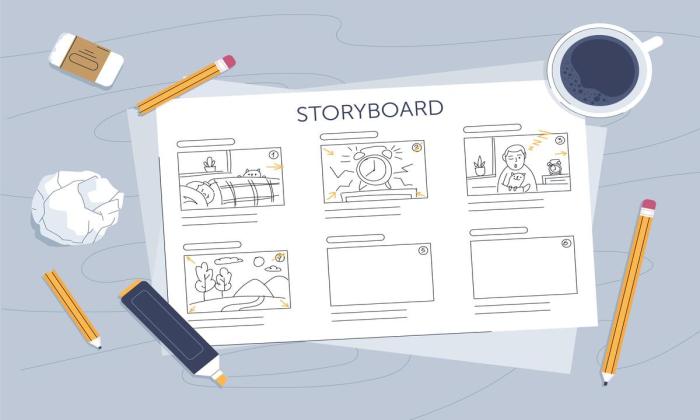
Creating a compelling storyboard isn’t just about sketching out ideas; it’s about refining those ideas into a clear and effective visual narrative. This stage involves identifying and addressing weaknesses, ensuring clarity, and presenting your work in a professional manner. Taking the time to polish your storyboard will significantly enhance its impact and usefulness in the production process.
Common pitfalls during storyboard creation often stem from a lack of planning, inconsistent visual style, or unclear communication of the narrative. For example, neglecting to establish a consistent camera angle throughout can disrupt the viewer’s experience. Similarly, inconsistent character designs or a lack of detail in the environment can make the story difficult to follow. Overly complex panels or a lack of clear action can also hinder understanding. Addressing these issues requires careful review and iterative refinement.
Common Pitfalls and Solutions in Storyboard Creation
Addressing common pitfalls is crucial for a polished storyboard. A consistent visual style, including character design, background details, and camera angles, is essential for a cohesive narrative. Inconsistencies can confuse the audience and detract from the story’s impact. Solutions include creating a style guide at the outset, outlining key visual elements, and employing a consistent color palette. Furthermore, unclear action can be resolved by adding more detailed annotations and using clear visual cues to indicate movement and character interactions. Finally, overly complex panels should be simplified or broken down into multiple panels for better clarity.
Incorporating Dialogue and Sound Effects
Effectively integrating dialogue and sound effects enhances the storytelling power of your storyboard. Dialogue should be concise and clearly placed within the panel, often within a speech bubble or caption. Sound effects, depicted through visual symbols or annotations, should be strategically used to emphasize key moments or enhance the atmosphere. For example, a crashing sound effect might be indicated by a jagged line and the word “CRASH!” near a broken object. This combination of visual and textual elements creates a more immersive and engaging experience for the viewer.
Comparing Physical and Digital Storyboard Presentation Methods
The choice between physical and digital storyboarding depends on personal preference and project requirements. Physical storyboards, created using paper and drawing tools, offer a tactile experience and allow for easy annotation and collaboration. However, they can be cumbersome to store and revise. Digital storyboards, created using software such as Storyboard Pro or Photoshop, offer flexibility, ease of revision, and easy sharing. They are also ideal for complex projects requiring extensive animation or visual effects planning. The best method depends on the project scale, team workflow, and personal comfort level with the different technologies.
Storyboard Review and Refinement Checklist
A systematic review process is vital for ensuring the storyboard’s quality. A checklist can help maintain consistency and identify areas needing improvement.
- Consistency of style: Are character designs, backgrounds, and camera angles consistent throughout?
- Clarity of action: Is the sequence of events clear and easy to follow?
- Effectiveness of visuals: Do the visuals effectively convey the story’s emotion and mood?
- Accuracy of dialogue and sound effects: Are dialogue and sound effects appropriately integrated and clearly visible?
- Overall pacing: Does the pacing feel appropriate for the story?
Creating a Detailed Image Depicting a Dramatic Scene
A compelling storyboard panel depicting a dramatic scene requires careful consideration of setting, characters, and lighting. Imagine a scene: A lone figure stands silhouetted against a burning building, wind whipping their hair. The setting, a city street at night, is depicted using dark tones and detailed architecture. The character’s pose conveys fear and determination. Lighting is crucial; the fire casts an orange glow on the character’s face, highlighting their expression. Details like smoke, debris, and the character’s clothing contribute to the scene’s intensity. This level of detail creates a powerful visual that immediately conveys the scene’s drama and emotion.
Final Thoughts

By implementing these nine pro tips, you’ll be well-equipped to craft storyboards that effectively communicate your vision. Remember, a strong storyboard is not just a collection of images; it’s a dynamic narrative tool that guides your project from concept to completion. Embrace these techniques, refine your process, and watch your storytelling soar.