Mastering the art of storyboarding is crucial for effective visual storytelling across diverse mediums. This guide delves into the fundamentals, exploring various storyboard types used in film, animation, and video games. We’ll then unpack twelve proven techniques, offering practical applications and real-world examples to elevate your storytelling capabilities. Prepare to transform your narrative vision into compelling visual sequences.
From understanding core principles and comparing traditional versus digital methods, to mastering advanced techniques like camera angles and character design, this comprehensive guide equips you with the skills to create impactful storyboards. Learn how to effectively communicate pacing, rhythm, and narrative flow through visual cues, resulting in dynamic and engaging stories.
Understanding Storyboard Fundamentals
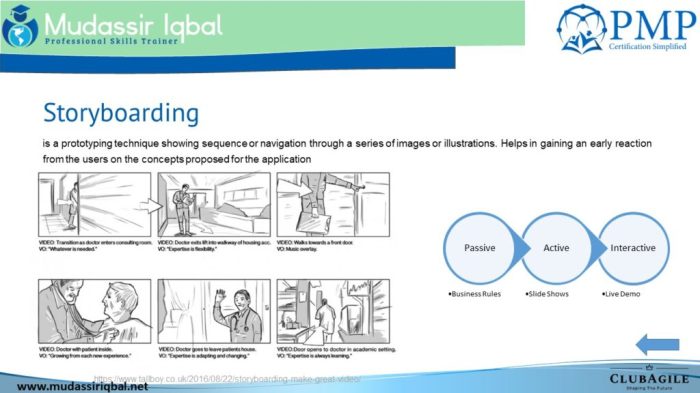
Storyboarding is a crucial pre-production process in visual storytelling, serving as a blueprint for filmmakers, animators, and game developers. It allows creators to visualize their narrative flow, experiment with shot composition, and communicate their vision effectively to the team. Essentially, it’s a visual roadmap for bringing a story to life.
Storyboarding translates the script’s narrative into a sequence of visual panels, each representing a single shot or scene. These panels, often accompanied by concise descriptions and dialogue, provide a comprehensive overview of the visual storytelling, facilitating smoother production and reducing potential on-set issues. The process encourages creative problem-solving and ensures consistency in the final product.
Types of Storyboards
Different mediums utilize storyboarding techniques adapted to their specific needs. Film storyboards focus on camera angles, movement, and lighting to convey cinematic visuals. Animation storyboards emphasize character animation, action, and the overall pacing of the sequence. Video game storyboards, on the other hand, concentrate on player interaction, camera perspectives, and user interface elements, detailing the game’s visual narrative and gameplay mechanics. The core principle remains the same across all mediums: visualizing the story frame by frame.
Sample Storyboard: A Simple Scene
Let’s imagine a scene where two friends, Alice and Bob, meet at a coffee shop.
Panel 1: Wide shot of a bustling coffee shop. Alice is seen entering, looking around. Dialogue: “Bob?”
Panel 2: Medium shot of Bob sitting at a table, looking up. Dialogue: “Alice! Over here!”
Panel 3: Over-the-shoulder shot of Alice approaching Bob, a smile on her face. Dialogue: “Hey!”
Panel 4: Close-up of Alice and Bob laughing together. No dialogue.
Traditional vs. Digital Storyboarding
| Method | Advantage | Disadvantage | Example |
|---|---|---|---|
| Traditional (Hand-drawn) | Allows for quick sketching and creative exploration; offers a tangible, tactile experience; easily shared and reviewed physically. | Time-consuming; revisions can be messy; limited ability to easily incorporate changes or digital effects; difficult to share remotely. | A director sketching key scenes on paper with notes. |
| Digital (Software-based) | Efficient revisions; easy collaboration; ability to incorporate digital assets; streamlined workflow; easier sharing and distribution. | Requires software proficiency; may lack the spontaneity of hand-drawn sketches; potential for over-reliance on digital tools; requires access to technology. | Using software like Storyboard Pro to create and animate a storyboard. |
Mastering 12 Proven Storyboarding Techniques
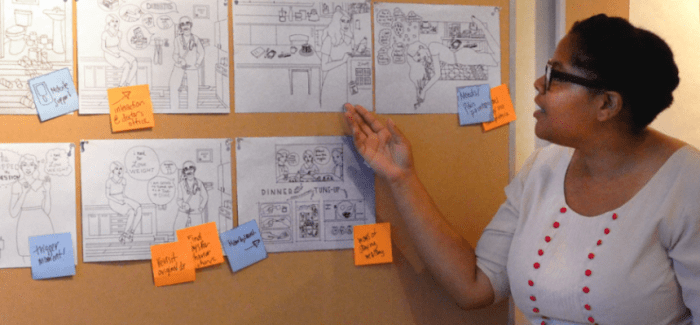
Storyboarding is a crucial process in visual storytelling, transforming abstract ideas into concrete visual representations. Mastering various techniques allows for greater flexibility and effectiveness in communication, ensuring your story is conveyed clearly and powerfully. This section delves into twelve proven storyboarding techniques, examining their application and impact.
Technique Overview and Hierarchical Structure
The following twelve techniques are categorized based on their complexity and typical application, progressing from foundational to more advanced strategies. Effective storyboarding often involves combining several of these techniques.
- Simple Shot Descriptions: This foundational technique involves concisely describing each shot with a focus on action and visual elements. Example: “WIDE SHOT – bustling city street, rain falling.” This is ideal for beginners and rapid prototyping.
- Character Emotion Focus: This emphasizes the emotional state of characters in each frame. Example: “CLOSE UP – Woman’s face, eyes filled with sadness.” This technique enhances emotional resonance.
- Action-Oriented Storyboarding: This focuses on the physical action within each frame, sequencing movements for clarity. Example: “MEDIUM SHOT – Man running, dodging obstacles.” Useful for action sequences.
- Dialogue Integration: Incorporates dialogue directly onto the storyboard panel, indicating who speaks and their tone. Example: “TWO SHOT – Man and Woman, Man: “I’ll never forget you.” (sad tone).” This is crucial for dialogue-heavy scenes.
- Mise-en-scène Emphasis: This technique prioritizes the composition and arrangement of elements within each frame, including lighting, set design, and character placement. Example: “LOW ANGLE SHOT – Character silhouetted against a bright window, emphasizing vulnerability.” This enhances visual impact.
- Camera Movement Indication: This shows the intended camera movement, such as panning, tilting, or zooming, using arrows or annotations. Example: “PAN RIGHT – Following the character as they walk down the street.” Essential for dynamic scenes.
- Panel Composition Variation: This involves using a variety of panel sizes and shapes to emphasize specific moments or create visual rhythm. Example: A large panel for a dramatic moment followed by smaller panels for quicker transitions. This creates visual interest and pacing.
- Storyboard Revision and Iteration: This iterative process involves refining the storyboard based on feedback and new ideas. This is not a single technique but a crucial ongoing process.
- Multiple Perspectives Storyboarding: This technique presents the same scene from different camera angles simultaneously, aiding in visualizing spatial relationships and options. Example: Three panels showing a fight scene from wide, medium, and close-up perspectives.
- Storyboard Color Coding: Utilizing color codes to represent different aspects, like characters, locations, or emotional tones. Example: Red for anger, blue for sadness, green for tranquility.
- Detailed Setting Descriptions: This goes beyond simple location descriptions to include specific details about the environment. Example: “INT. COFFEE SHOP – Cozy atmosphere, vintage furniture, jazz music playing softly.” This builds a richer world.
- Storyboard Animatics: Creating a rough animation using the storyboard, adding basic movement and sound. This provides a more dynamic preview of the final product.
Practical Applications and Case Studies
Many films and animations utilize these techniques. For instance, the action sequences in films like “Mad Max: Fury Road” heavily rely on action-oriented storyboarding and camera movement indication to create dynamic and thrilling scenes. The emotional depth in Pixar films often leverages character emotion focus and mise-en-scène emphasis. The use of storyboard animatics is prevalent in modern animation productions to test pacing and visual flow before committing to full animation. The successful implementation of these techniques is visible in the final product’s narrative clarity, visual appeal, and emotional impact.
Advanced Storyboard Design and Implementation
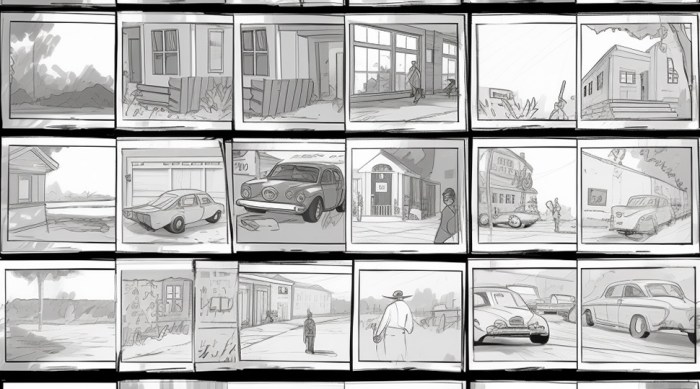
Elevating your storyboards beyond basic paneling requires a deep understanding of visual storytelling techniques. This section delves into advanced concepts, demonstrating how to effectively leverage visual elements to enhance narrative impact and emotional resonance. Mastering these techniques will transform your storyboards from simple Artikels into powerful visual narratives.
Effective incorporation of visual elements is crucial for conveying mood, character, and plot effectively. This involves careful consideration of camera angles, lighting choices, and compositional strategies to create a cohesive and impactful visual language. Character design, too, plays a pivotal role, influencing how the audience perceives and connects with the story’s protagonists and antagonists.
Camera Angles, Lighting, and Composition
Strategic use of camera angles, lighting, and composition dramatically impacts the viewer’s perception of a scene. For instance, a low-angle shot can make a character appear powerful and imposing, while a high-angle shot might convey vulnerability or insignificance. Similarly, lighting can set the mood – harsh, bright lighting might suggest tension or danger, while soft, diffused lighting can create a sense of peace or intimacy. Compositional techniques, such as the rule of thirds, leading lines, and negative space, can be employed to guide the viewer’s eye and create visually appealing and narratively effective panels.
Example: A low-angle shot of a lone figure silhouetted against a stormy sky, illuminated only by a flickering streetlamp, instantly communicates a sense of isolation and foreboding. The contrast between the dark figure and the bright sky creates a visually striking image, enhancing the scene’s dramatic impact.
Example: A close-up shot, using soft, warm lighting, on a character’s face during a tender moment, enhances the emotional impact of the scene. The focus on the facial expression, coupled with the gentle lighting, creates intimacy and allows the audience to connect with the character’s emotions.
Character Design and Narrative Influence
Character design isn’t merely about aesthetics; it’s a powerful tool for storytelling. A character’s physical appearance, attire, posture, and even their facial expressions communicate volumes about their personality, background, and role within the narrative. Consistent character design throughout the storyboard helps maintain visual coherence and strengthens audience engagement. Consider how a character’s clothing might reflect their social status or personality traits, or how subtle changes in posture can convey shifts in their emotional state.
Example: A character dressed in sharp, tailored business attire might be perceived as ambitious and driven, while a character in tattered clothing could represent hardship or rebellion. The contrast between their outfits would immediately tell the audience about their different social standing and possibly opposing ideologies.
Storyboarding a Challenging Scene
Let’s consider a scene where a protagonist confronts an antagonist in a tense standoff. This sequence will incorporate multiple techniques:
Panel 1: Extreme close-up on the protagonist’s determined face, illuminated by a single harsh spotlight. The background is shrouded in darkness, emphasizing the intensity of the moment. This uses a close-up shot and high-contrast lighting to highlight the protagonist’s determination and the tension of the situation.
Panel 2: A medium shot showcasing both the protagonist and antagonist, positioned at opposite ends of a dimly lit room. The antagonist is backlit, shrouded in shadow, adding to their mysterious and threatening presence. This shows the spatial relationship between the characters and enhances the suspense.
Panel 3: A wide shot revealing the entire room, showing the surrounding environment and adding context to the standoff. The composition uses leading lines to draw the viewer’s eye towards the two central figures. This establishes the environment and provides broader context to the scene.
Panel 4: A close-up on the antagonist’s hand reaching for a weapon, subtly highlighted by a reflection of light on metallic surfaces. This emphasizes the action and adds to the suspense.
Panel 5: A freeze-frame on the protagonist’s face, a mixture of fear and defiance, immediately before a decisive action. This uses a freeze-frame to emphasize the protagonist’s emotional state before the action climaxes.
Communicating Pacing and Rhythm Through Visual Cues
The pacing and rhythm of a story are significantly impacted by the visual choices in a storyboard. Quick cuts, represented by small panels, can convey rapid action, while larger panels with more detail can slow the pace and allow for more emotional engagement. The use of empty space or negative space between panels can also affect pacing, creating pauses for reflection or building anticipation. Consider using different panel sizes and arrangements to control the flow and rhythm of the narrative.
Example: A series of small, rapidly paced panels depicting a car chase would convey a sense of urgency and speed, while a single large panel showing a character’s emotional reaction after the chase could slow the pace and allow the audience to connect with their feelings. This contrast in panel sizes and their placement helps control the rhythm and pacing of the narrative.
Final Wrap-Up
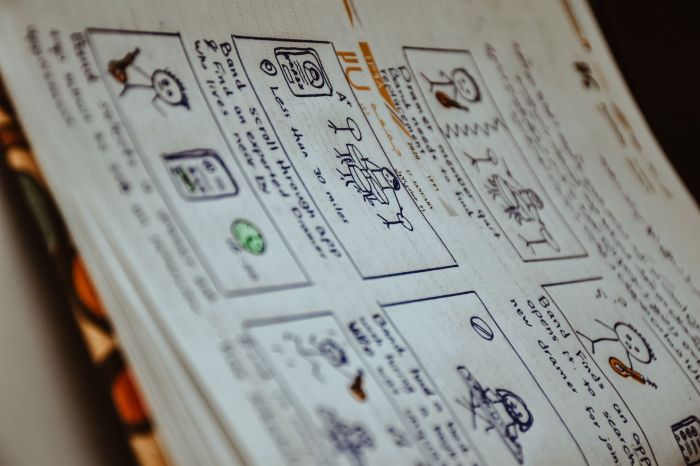
By applying these twelve proven techniques and understanding the fundamental principles of storyboarding, you can significantly enhance your ability to translate your creative vision into a powerful visual narrative. This guide serves as a practical roadmap, enabling you to confidently navigate the process of creating compelling storyboards for any project, regardless of its complexity or medium. Remember, consistent practice and experimentation are key to mastering this essential skill in visual storytelling.