Storyboarding is a crucial pre-production process across various media, from film and television to animation and marketing. Different projects demand unique visual approaches, impacting storytelling effectiveness. This exploration delves into six distinct storyboard styles tailored to specific media needs, highlighting their strengths and demonstrating how stylistic choices influence narrative impact and audience engagement.
We’ll examine classic film styles, minimalist approaches, graphic novel techniques, and the specific considerations for animation (both 2D and 3D), commercials, and corporate videos. The differences in approach, from detailed camera angles to simplified character expressions, are crucial for effectively conveying the story’s essence and tone to the intended audience. By understanding these styles, creators can choose the most effective method to visualize their narratives and bring their visions to life.
Storyboard Styles for Film & Television

Storyboarding is a crucial pre-production process for film and television, allowing filmmakers to visualize their shots and plan the overall flow of the narrative. Different genres and stylistic choices necessitate varied approaches to storyboarding, influencing the level of detail, visual style, and overall aesthetic. This section explores several distinct storyboard styles and their applications within the context of film and television production.
Classic Film Storyboard Style: Dramatic Chase Scene
This storyboard utilizes a detailed, realistic style common in classic Hollywood filmmaking. The panels are meticulously drawn, featuring clear character models, detailed backgrounds, and precise camera angles. Consider a chase scene:
Panel 1: Wide shot. A speeding car, pursued by a police cruiser, careens around a sharp corner on a rain-slicked city street. The camera angle is slightly elevated, providing a sense of the chase’s intensity. The rain is depicted with heavy, dark lines, enhancing the dramatic mood.
Panel 2: Medium shot from the pursuing police car. The officer grips the steering wheel, his face tense with determination. The blurry background emphasizes the car’s speed.
Panel 3: Close-up on the fleeing car’s driver, eyes wide with fear and desperation. The driver’s hands clench the steering wheel, knuckles white.
Panel 4: Point-of-view shot from inside the fleeing car. The blurred city lights create a sense of disorientation and danger.
Panel 5: Low-angle shot. The police car pulls alongside the fleeing vehicle, the officer’s hand reaching for his weapon.
Panel 6: Wide shot. The chase continues, the cars weaving through traffic. The camera follows the action, creating a sense of movement and tension.
Minimalist Storyboard Style: Comedic Scene
Minimalist storyboards prioritize clarity and impact through simplicity. This style uses basic shapes, limited detail, and focuses on character expressions and dialogue to convey the scene’s humor. For a comedic scene in a coffee shop:
Panel 1: Two stick-figure characters at a small table. One is exaggeratedly surprised, mouth agape, while the other is smirking mischievously. Dialogue balloon: “You put sugar in my black coffee?!”
Panel 2: Close-up on the surprised character’s face, emphasizing their wide eyes and shocked expression.
Panel 3: The smirking character shrugs, a simple line indicating their nonchalant attitude. Dialogue balloon: “Oops.”
Graphic Novel Storyboard Style: Suspenseful Scene
This style borrows from the visual language of graphic novels, using shadowing, dramatic angles, and symbolic imagery to build suspense. For a scene in a dark, abandoned house:
Panel 1: A high-angle shot shows a lone figure silhouetted against a moonlit window. Long shadows stretch across the floor, creating an eerie atmosphere.
Panel 2: Close-up on the figure’s hand reaching for a doorknob, emphasized by stark light and shadow. The doorknob is subtly stylized as a skull.
Panel 3: A panel depicting a series of quick, overlapping images: a flickering light, a creaking floorboard, a fleeting shadow. These images create a feeling of unease and anticipation.
Panel 4: A full-page spread showing the figure entering a dark room. The room is mostly black, with only faint, ominous light sources. The figure is small and vulnerable within the vast space.
Color Palettes in Storyboards for Different Genres
Color significantly influences mood and genre in storyboards. Horror films often utilize desaturated colors, deep blues, and murky greens to create a sense of dread and unease. Think of the muted color palette in many scenes from “The Shining.” In contrast, romantic comedies often employ bright, pastel colors, warm yellows, and soft pinks to evoke feelings of warmth, happiness, and lightheartedness, similar to the vibrant colors often seen in “When Harry Met Sally.” Action films typically utilize a high-contrast color palette with bold reds, blues, and yellows to highlight the energy and intensity of the action sequences, as seen in many action films from the 80s and 90s. These choices are not rigid, but they represent common conventions used to enhance storytelling.
Storyboard Styles for Animation & Video Games
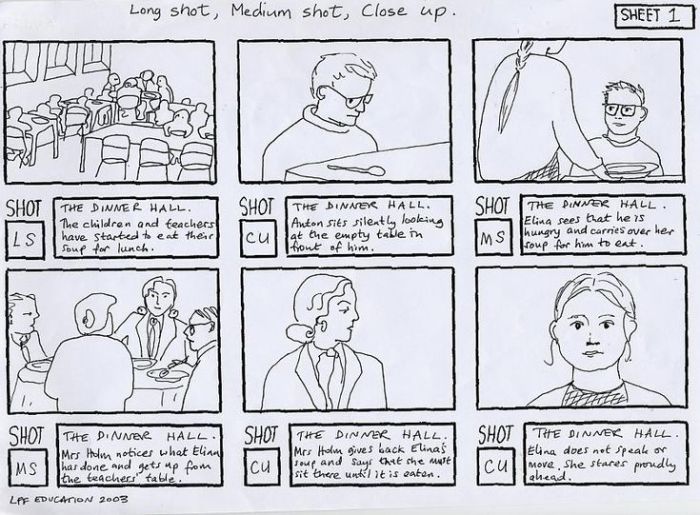
Storyboarding for animation and video games presents unique challenges and opportunities compared to film and television. The interactive nature of video games, the diverse animation techniques available, and the varying demands of 2D versus 3D production significantly impact the storyboard’s design and function. This section explores these differences and showcases examples of effective storyboarding techniques across various animation and game development contexts.
2D Animated Short Film Storyboard Sequence
This storyboard sequence depicts a whimsical 2D animated short film featuring Pip, a mischievous, clockwork-powered squirrel with oversized gears visible beneath its fur. Pip’s movement style is jerky and slightly unpredictable, reflecting its mechanical nature. The animation style utilizes a combination of traditional hand-drawn animation for character movement and digital painting for backgrounds, creating a vibrant, slightly surreal aesthetic.
Panel 1: Wide shot. Pip sits atop a giant grandfather clock, its hands frozen at 11:59. The background is a fantastical, overgrown garden with towering flowers and winding pathways. The style is reminiscent of classic Disney animation, but with a steampunk twist.
Panel 2: Close-up on Pip. Its gear-filled body visibly whirrs and clicks as it winds itself up, preparing for action. The animation uses exaggerated movements to emphasize its mechanical nature.
Panel 3: Medium shot. Pip leaps from the clock, its movements erratic and bouncy, defying gravity slightly. The background blurs slightly to emphasize the speed of its movement. This is achieved through a technique called motion blur.
Panel 4: Close-up. Pip lands gracefully on a giant mushroom, its tail twitching. The animation uses subtle shifts in the position of its gears to showcase the impact of the landing.
Panel 5: Wide shot. Pip races across the garden, leaving a trail of sparkling dust. The animation utilizes frame-by-frame animation to create the dust trail effect, and uses cel shading to enhance the vibrant colors of the garden.
Panel 6: Close-up. Pip reaches a giant sunflower, its face illuminated by the setting sun. The animation uses light and shadow to create a dramatic effect.
Video Game Cutscene Storyboard with Interactive Elements
This storyboard depicts a cutscene from a fantasy RPG. The player character, Anya, stands before a magical portal. The cutscene is designed to offer two distinct paths, influencing the subsequent game events. The storyboard explicitly illustrates how player choices impact the narrative.
Panel 1: Anya stands before a shimmering portal. Text prompt: “Approach the portal? Yes/No.” This indicates a player choice.
Panel 2 (If “Yes”): Anya steps into the portal. The portal glows intensely. The background shifts to a new environment, a dark forest.
Panel 2 (If “No”): Anya hesitates, looking apprehensive. A shadowy figure emerges from the trees.
Panel 3 (From Panel 2A): Anya finds herself in a dark forest. She encounters a friendly spirit who offers assistance.
Panel 3 (From Panel 2B): Anya is confronted by the shadowy figure, leading to a combat sequence.
The storyboard clearly defines branching narrative paths based on player interaction, highlighting the importance of player agency in shaping the game’s storyline. The interactive elements are explicitly noted within the panels to ensure clarity during development.
3D Animated Feature Film Storyboard: Atmosphere and Mood
This storyboard sequence illustrates a scene from a 3D animated fantasy film. The scene depicts a character, Elara, standing alone in a vast, desolate wasteland under a crimson sky. The goal is to evoke a sense of loneliness and impending doom.
Panel 1: High angle shot. Elara is a tiny figure in the vast landscape. The camera angle emphasizes her isolation. The lighting is muted, with long shadows stretching across the barren land. This establishes a sense of scale and vulnerability.
Panel 2: Low angle shot. Elara looks up at the crimson sky, her face partially obscured by shadow. The lighting is dramatic, with the crimson sky casting an eerie glow. This intensifies the sense of foreboding.
Panel 3: Close-up on Elara’s face. Her expression is one of despair and resignation. The lighting is focused on her eyes, highlighting her emotional state. This creates a more intimate connection with the character.
Panel 4: Wide shot. A storm begins to gather on the horizon, dark clouds obscuring the crimson sky. The lighting shifts to become darker and more intense. This heightens the tension and impending sense of danger.
The use of camera angles, particularly high and low angles, coupled with the dramatic lighting, effectively communicates the scene’s mood and atmosphere. The shifting light further enhances the narrative progression.
Comparison of 2D and 3D Animation Storyboarding
The differences between storyboarding for 2D and 3D animation are significant, affecting both the technical aspects and the creative choices.
| Style | 2D Considerations | 3D Considerations | Example |
|---|---|---|---|
| Character Design | Emphasis on linework, style consistency across multiple drawings. | Focus on 3D model design, potential for animation rigging and texture mapping. | A 2D storyboard might focus on distinct line styles for characters, while a 3D storyboard would focus on the character’s 3D model and its potential animation poses. |
| Backgrounds | Often hand-drawn or painted, requiring attention to perspective and detail. | Can be 3D models or digital paintings, allowing for more complex environments and camera movement. | A 2D storyboard might utilize simple background shapes, while a 3D storyboard would feature detailed 3D models, enabling dynamic camera movements. |
| Camera Movement | Limited to panning and zooming; camera angles are suggested rather than precisely defined. | More complex camera movements are possible, allowing for precise camera angles and shots. | A 2D storyboard would suggest a camera pan, while a 3D storyboard would specify camera angles and paths. |
| Animation Techniques | Traditional animation, digital painting, cel shading are common. | 3D animation software is used, with techniques like keyframing and motion capture being prevalent. | A 2D storyboard might specify cel shading, while a 3D storyboard would note the use of specific 3D animation software and potential motion capture data. |
Storyboard Styles for Commercials & Marketing Materials
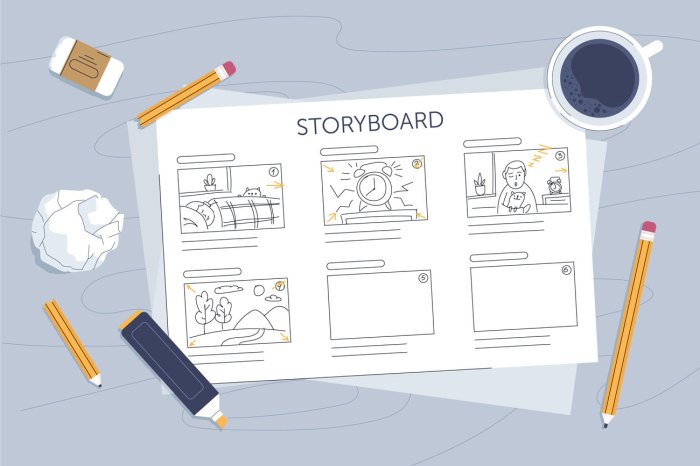
Storyboards for commercials and marketing materials differ significantly depending on the intended platform and the message being conveyed. A fast-paced, visually exciting storyboard might be ideal for a television commercial, while a simpler, more direct approach is often preferred for social media. This section will explore three distinct storyboard styles and their application in different marketing contexts.
Storyboard for a Fast-Paced Commercial
This storyboard depicts a commercial for a new sports drink. The style is dynamic and fast-paced, using quick cuts and energetic visuals to capture attention.
Panel 1: Extreme close-up of a sweaty athlete’s face, eyes focused intensely. Text overlay: “Thirsty?”
Panel 2: Rapid montage of athletes in various sports (basketball, running, swimming) interspersed with shots of the sports drink bottle. Transition: Fast cuts, jump cuts, and quick dissolves. Visual effects: Motion blur, slight color grading shifts to highlight the energy.
Panel 3: Close-up of the athlete taking a long drink of the sports drink. Slow-motion effect emphasizes the refreshing quality. Transition: Slow-motion effect, zoom in on the drink.
Panel 4: The athlete now energized, performing a winning shot/move. Text overlay: “Hydrate. Dominate.” Transition: Wipe transition. Visual effects: Bright, vibrant colors, sun flare effect.
Panel 5: Product shot of the sports drink bottle with tagline and website address. Transition: Fade out.
Storyboard for a Simple Social Media Advertisement
This storyboard illustrates a social media advertisement for a new line of sustainable clothing. The style is minimalist and easily digestible, prioritizing clear messaging and impactful visuals.
Panel 1: A single image of a person smiling while wearing one of the sustainable clothing items. Background is a muted, natural color. Text overlay: “Sustainable Style.”
Panel 2: Close-up shot showcasing the fabric texture and details of the clothing. Text overlay: “Ethically Made.”
Panel 3: Image showing the manufacturing process – people working in a bright, clean factory. Text overlay: “Eco-Friendly.”
Panel 4: Image of the person wearing the clothing in a natural setting (park, beach). Text overlay: “Shop Now!” with a link to the website.
Storyboard for a Corporate Video
This storyboard is for a corporate video highlighting a company’s commitment to innovation. The style is clean, professional, and utilizes a clear visual hierarchy to guide the viewer’s eye.
Panel 1: Wide shot of the company’s modern office space, showcasing employees collaborating. Visual Hierarchy: Focus on the employees’ faces and interactions, with a slightly blurred background.
Panel 2: Close-up shot of a product being developed, highlighting its key features. Visual Hierarchy: Product is centered and well-lit, with supporting visuals in the background.
Panel 3: Graph showing company growth and success. Visual Hierarchy: Clear, concise data visualization with a professional color palette.
Panel 4: CEO speaking directly to the camera, summarizing the company’s vision. Visual Hierarchy: CEO is prominently featured, with a simple, uncluttered background. Overall Aesthetic: Clean lines, muted colors, professional font choices.
Comparison of Storyboard Styles for Commercials vs. Marketing Videos
The effectiveness of different storyboard styles depends heavily on the context. Commercials often require a more dynamic and attention-grabbing approach to stand out amidst competing ads, while marketing videos can be more informative and detailed.
- Commercials: Often employ fast-paced editing, dynamic transitions (e.g., jump cuts, wipes, dissolves), and visually striking effects to create a memorable impact in a short time frame. Example: A fast-paced commercial for a new energy drink might use quick cuts, vibrant colors, and motion blur to convey a sense of energy and excitement.
- Marketing Videos: Tend to favor a more measured pace and clearer visual hierarchy, prioritizing the conveyance of information over immediate emotional impact. Example: A marketing video explaining the features of a new software program would use a slower pace, clear graphics, and a professional aesthetic to ensure the information is easily understood.
Wrap-Up
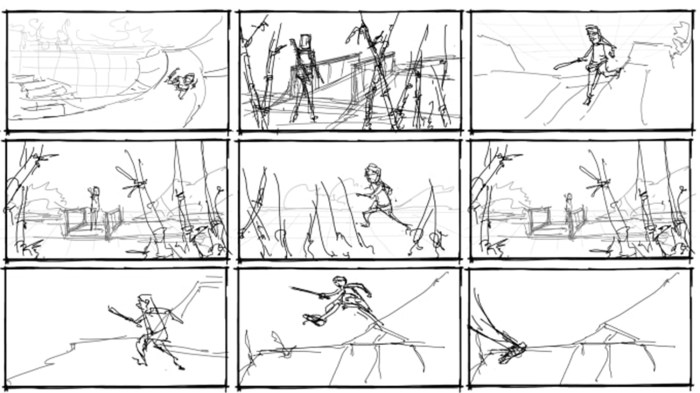
Mastering diverse storyboard styles is key to successful visual storytelling across all media. From the detailed realism of classic film storyboards to the concise power of minimalist designs, each style offers a unique pathway to translate narrative concepts into compelling visuals. By understanding the nuances of each approach and adapting them to the specific requirements of the project, creators can enhance their storytelling, streamline production, and ultimately create more engaging and effective content. The ability to adapt and select the right style empowers creators to bring their visions to life with clarity and impact.