Storyboards: often overlooked, yet incredibly powerful tools in video marketing. They’re more than just sketches; they’re blueprints for compelling narratives, efficient productions, and impactful campaigns. This exploration delves into seven practical applications of storyboarding, transforming your marketing videos from mere advertisements into engaging stories that resonate with your audience.
From initial planning and pre-production to enhancing efficiency and leveraging content, storyboards provide a clear roadmap for success. We’ll examine how storyboarding streamlines communication with your team, minimizes costly reshoots, and ultimately helps you create videos that deliver a strong return on investment.
Planning & Pre-Production with Storyboards
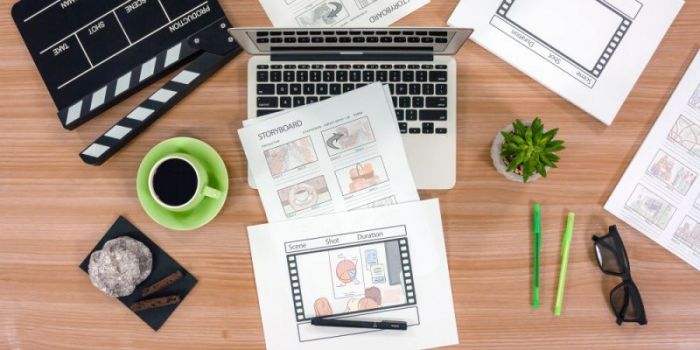
Storyboarding is a crucial pre-production step in creating effective marketing videos. It allows for visualization of the final product, facilitating communication between the creative team and ensuring everyone is on the same page before filming begins. This process helps to identify potential problems early on, saving time and resources during production. A well-crafted storyboard acts as a blueprint, guiding the entire video creation process from concept to completion.
Storyboarding significantly streamlines the video production process, improving efficiency and minimizing unexpected issues on set. By planning each shot meticulously, the team can optimize filming schedules, manage resources effectively, and ensure the final video aligns perfectly with the marketing objectives. This pre-visualization ensures a smoother, more efficient production.
Product Launch Video Storyboard
This storyboard depicts a product launch video for a new smart coffee maker.
Scene 1: Wide shot – A sleek, modern kitchen setting. The coffee maker is centrally positioned on a countertop.
Transition: Smooth zoom into the coffee maker.
Scene 2: Close-up – Detailed view of the coffee maker’s features, highlighting its design and functionality. The screen displays a brewing process.
Transition: Cut to a person’s hands interacting with the coffee maker’s touchscreen.
Scene 3: Medium shot – A person effortlessly using the coffee maker’s app on their smartphone to schedule brewing.
Transition: Cut to a shot of a steaming cup of coffee being poured.
Scene 4: Close-up – Focus on the rich aroma and appealing texture of the coffee.
Transition: Cut back to the person enjoying the coffee, looking satisfied.
Scene 5: Wide shot – The coffee maker is displayed again, this time with a promotional tagline overlaid on the screen.
Social Media Ad Storyboard: Customer Testimonials
This storyboard showcases a social media ad using customer testimonials.
Scene 1: A series of short clips showing diverse individuals (different ages, ethnicities, lifestyles) in various settings.
Transition: Quick cuts between each person, maintaining a fast pace.
Scene 2: Close-up on each individual as they begin to speak. Text overlay: “What our customers are saying…”
Transition: Smooth transitions between each testimonial.
Scene 3: Each individual provides a brief, positive comment about the product, their tone enthusiastic and genuine. Text overlay with key product benefits.
Transition: Fast-paced cuts continue.
Scene 4: A montage of short clips showing people enjoying the product in different contexts.
Transition: Fade to the company logo and website address.
Defining Video Pacing and Overall Flow
Storyboarding is essential for establishing the video’s pacing and flow. By sequencing shots and transitions, the storyboard dictates the rhythm and narrative arc of the video. For example, a fast-paced marketing campaign might use quick cuts and dynamic transitions, while a more informative video might employ a slower pace with longer shots to allow for detailed explanations. The storyboard provides a visual representation of this pacing, ensuring the final video effectively communicates its message. Inconsistencies in pacing can lead to viewer disengagement; a well-planned storyboard helps avoid this.
How-to Video Storyboard Incorporating Different Shot Types
This storyboard illustrates a how-to video demonstrating how to assemble a piece of furniture.
Scene 1: Wide shot – Showing all the components of the furniture laid out on the floor.
Transition: Zoom in on a specific component.
Scene 2: Close-up – Detailed view of a particular connector or joint.
Transition: Cut to a medium shot.
Scene 3: Medium shot – Showing the hands assembling the component, highlighting the steps.
Transition: Cut to a wider shot.
Scene 4: Wide shot – Showing the progress of the assembly process, step by step.
Transition: Cut back to a close-up.
Scene 5: Close-up – Focus on the final step, securing the last piece.
Transition: Cut to a wide shot.
Scene 6: Wide shot – The fully assembled piece of furniture is shown, looking complete and aesthetically pleasing.
Enhancing Video Production Efficiency with Storyboards
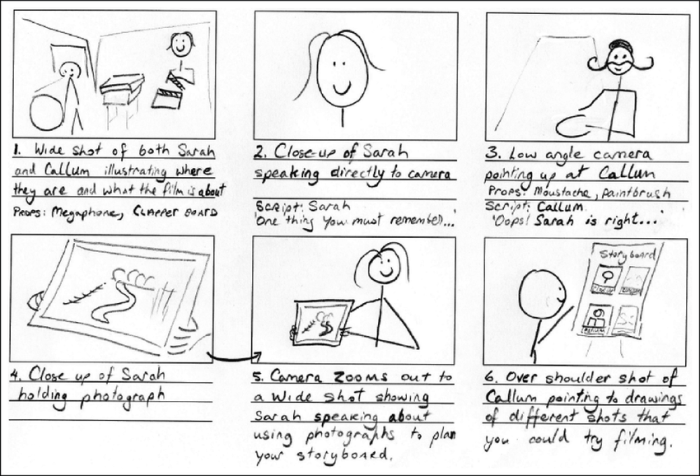
Storyboards are invaluable tools for streamlining video production, particularly in marketing where time and budget are often critical constraints. By pre-visualizing each shot, storyboards significantly reduce filming time, minimize costly retakes, and contribute to a more polished final product. This section explores how storyboarding enhances efficiency throughout the video production process.
Storyboarding dramatically improves efficiency compared to improvising on set. Improvisation leads to uncertainty, wasted time searching for the right angle or composition, and numerous retakes to achieve the desired visual. A storyboard, conversely, provides a clear roadmap, allowing the entire crew to understand the director’s vision beforehand. This pre-planning minimizes on-set decision-making, enabling a smoother, faster, and more cost-effective shoot. For instance, a marketing video for a new software product might involve demonstrating its features. Without a storyboard, the filming might involve numerous attempts to capture the right screen recording angles and user interactions. A storyboard would eliminate this guesswork.
Communicating Effectively with the Film Crew Using Storyboards
Effective communication is paramount for a successful video shoot. A well-constructed storyboard acts as a visual script, facilitating clear communication between the director, cinematographer, actors, and other crew members. The storyboard should clearly depict each shot’s composition, camera angles, and desired action. Consider the following step-by-step guide:
- Detailed Shot Descriptions: Each storyboard panel should include concise descriptions of the scene, including camera angles (e.g., wide shot, close-up), lens type, and any special effects. For example, a panel might read: “Wide shot, establishing shot of bustling city street, 24mm lens, slight tilt up.”
- Clear Action Notes: Include brief notes indicating the action taking place in each shot. For instance, “Actor A walks towards the camera, picks up a product, and smiles.” This ensures everyone understands the sequence of events.
- Consistent Visual Style: Maintain a consistent visual style across all panels. Use similar drawing styles and keep the level of detail consistent to ensure clarity.
- Annotations and Notes: Utilize annotations to highlight key details like lighting, sound effects, or specific props. These notes provide additional context beyond the visual representation.
- Revision and Collaboration: Share the storyboard with the crew for review and feedback. This collaborative approach ensures everyone is on the same page and allows for necessary adjustments before filming begins.
Minimizing On-Set Retakes and Improving Production Quality
Storyboards significantly reduce the need for on-set retakes. By pre-visualizing shots, potential problems, such as awkward camera angles or unclear action, are identified and addressed during the planning phase, rather than during costly filming. A clothing brand, for example, might use storyboards to plan out shots for a new clothing line. By pre-visualizing the poses, lighting, and background, they can avoid multiple retakes due to mismatched aesthetics. This not only saves time and money but also improves the overall quality of the final video by ensuring consistency and visual appeal. The result is a more polished, professional-looking marketing video that effectively communicates the intended message.
Leveraging Storyboards for Marketing Video Content
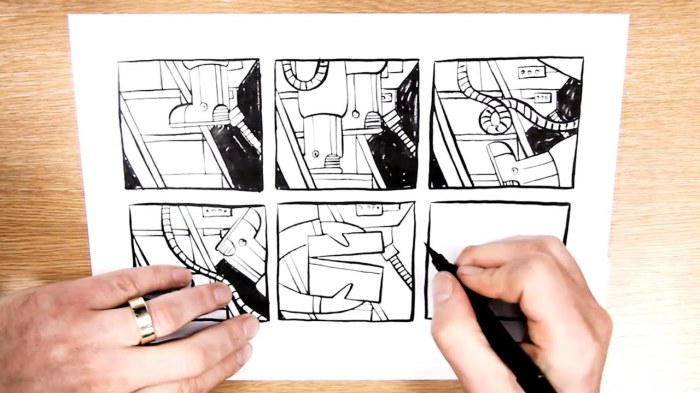
Storyboards are invaluable tools for crafting compelling marketing videos. They serve as a visual roadmap, guiding the entire production process from concept to final cut. By pre-visualizing each scene, you can refine the narrative, identify potential issues early on, and ultimately create a more impactful and efficient marketing campaign. This allows for better communication between the creative team and stakeholders, ensuring everyone is on the same page before a single camera rolls.
Storyboards allow marketers to develop engaging narratives across various video formats. Whether it’s a short social media ad, a longer explainer video, or a product demonstration, a storyboard provides a clear structure for the narrative arc. For instance, a social media ad might use a three-panel storyboard to showcase the problem, the solution, and a call to action. Conversely, a longer explainer video would require a more extensive storyboard, perhaps outlining each segment of the narrative with detailed descriptions and visual cues. This pre-planning ensures a cohesive and engaging viewing experience, regardless of the video’s length or purpose.
Developing Engaging Narratives for Various Marketing Video Formats
A well-crafted storyboard facilitates the creation of engaging narratives tailored to specific video formats. For example, a short, snappy Instagram ad might utilize a minimalist storyboard with only key visuals and minimal text, focusing on impactful imagery and quick cuts. In contrast, a longer YouTube explainer video would necessitate a more detailed storyboard, potentially including multiple scenes, transitions, and character interactions to effectively convey complex information. The storyboard adapts to the chosen platform and target audience, ensuring optimal engagement. Consider a promotional video for a new fitness app: a storyboard might show a series of short clips—someone struggling with their current routine, discovering the app, and finally achieving fitness goals with a happy expression. This visual narrative immediately connects with the audience’s aspirations.
Creating a Storyboard for a Short Promotional Video
Let’s imagine a short promotional video for a new line of sustainable coffee. The storyboard might begin with a wide shot of lush coffee beans growing on a plantation, emphasizing the origin and sustainability. The next panel could showcase close-up shots of the roasting process, highlighting the quality and craftsmanship. The following panel might show a person enjoying a cup of coffee, radiating contentment. Finally, the last panel could display the brand logo and website address with a call to action: “Enjoy Sustainable Coffee. Visit [website address]”. This simple yet effective storyboard communicates the brand’s commitment to sustainability and the product’s quality, leaving a lasting impression.
Key Elements of a Successful Storyboard for Enhanced Audience Engagement and Recall
Several key elements contribute to a successful storyboard. Clear visuals are paramount; each panel should clearly depict the scene, including camera angles, character positioning, and key actions. Concise descriptions accompany each visual, specifying dialogue, sound effects, and transitions. Furthermore, a strong narrative arc, with a clear beginning, middle, and end, is essential for maintaining audience engagement. A consistent visual style, matching the brand’s aesthetic, enhances recall and strengthens brand recognition. Finally, the storyboard should reflect the target audience’s preferences and expectations, ensuring relevance and impact.
Incorporating Brand Guidelines and Visual Consistency
Maintaining brand consistency throughout the storyboard and final video is crucial. The storyboard should adhere strictly to the brand’s color palette, logo usage, typography, and overall visual style. This consistency ensures brand recognition and reinforces the brand message. For example, if a brand utilizes a specific font and color scheme, the storyboard should reflect this, ensuring that the final video maintains a cohesive and professional appearance. This pre-emptive approach ensures a unified brand identity across all marketing materials, enhancing audience recognition and recall.
Summary
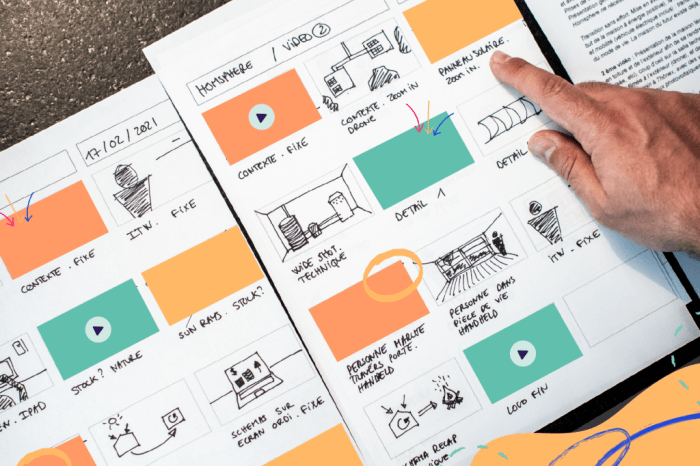
Mastering the art of storyboarding isn’t just about visualizing your video; it’s about strategically planning for impact. By meticulously outlining your shots, transitions, and narrative flow, you gain control over the entire production process, leading to a polished final product that effectively communicates your brand message. The seven ways Artikeld above provide a comprehensive framework for leveraging storyboards to create engaging, effective marketing videos that truly connect with your target audience.