Unlock the power of visual storytelling! This guide delves into the art of using visual metaphors in storyboarding, transforming your narratives from simple sequences of events into compelling emotional journeys. We’ll explore diverse storyboarding styles, from film to animation, revealing how strategic metaphor choices can significantly impact a story’s resonance with the audience. Prepare to elevate your storytelling skills through the strategic deployment of powerful visual imagery.
Learn to design compelling visual metaphors representing a spectrum of emotions, understand the nuances of literal versus metaphorical imagery, and master techniques for integrating these metaphors seamlessly into various storyboard layouts. We’ll address common obstacles and provide practical, step-by-step guidance, culminating in the creation of a short story told entirely through the evocative power of visual metaphors.
Understanding Visual Metaphors in Storyboarding
Storyboarding relies heavily on visual communication to convey narrative information efficiently. Visual metaphors, in particular, offer a powerful tool to enrich the storytelling process by adding layers of meaning beyond literal representation. They allow for concise and impactful communication of complex emotions, themes, and ideas, making them invaluable for both pre-production and presentation purposes. This section will explore the application and impact of visual metaphors in storyboarding.
Visual Metaphors Representing Emotions
Visual metaphors offer a potent way to express abstract concepts like emotions in a concrete and easily understandable manner. Effectively using visual metaphors requires careful consideration of the symbolic meaning each image carries. The following examples illustrate how different visual metaphors can represent specific emotions:
- Joy: A sunburst radiating bright, warm colors. The sun, universally associated with happiness and warmth, visually represents the feeling of overwhelming joy. The radiating lines suggest the spreading and infectious nature of the emotion.
- Sadness: A wilting flower, drooping and losing its vibrant color. The flower, a symbol of life and beauty, losing its vitality directly reflects the emotional state of sadness and loss.
- Anger: A clenched fist, veins bulging, with a dark, stormy sky in the background. The fist represents aggression and suppressed rage, while the stormy sky amplifies the intensity and potential for eruption.
- Fear: A shadowy figure lurking in a dark alley, with the character’s eyes wide with terror. The shadowy figure, undefined and mysterious, represents the unknown and the source of fear, while the character’s expression directly shows the emotional response.
- Hope: A single, fragile seedling pushing through cracked earth towards a bright sun. The seedling, despite the difficult conditions, represents perseverance and the potential for growth, symbolizing the feeling of hope.
Literal Versus Metaphorical Imagery in Storyboarding
While literal imagery directly depicts the scene as it is, metaphorical imagery uses symbolic representation to convey deeper meaning. For example, a literal depiction of a character feeling sad might show them crying. A metaphorical depiction might show them alone in a dark, empty room with rain falling outside, using the rain to symbolize their sadness and isolation. The choice between literal and metaphorical imagery depends on the desired level of detail and the overall narrative style. Over-reliance on literal imagery can lead to a flat and uneventful storyboard, while overuse of metaphors can lead to ambiguity. A balanced approach is often most effective.
Enhancing Narrative Impact with Visual Metaphors
Visual metaphors significantly enhance the narrative impact of a storyboard by adding layers of meaning and emotional depth. They can condense complex ideas into single, memorable images, making the story more engaging and impactful for the viewer. They can also create a more evocative and artistic feel, setting a specific tone or mood for the scene.
Storyboard Panel Example
Imagine a scene where a character is feeling overwhelmed by responsibility. A literal depiction might show them surrounded by paperwork. A metaphorical approach could show them as a tiny figure, dwarfed by a massive, looming mountain of papers. The mountain metaphorically represents the overwhelming weight of their responsibilities, making the character’s emotional state immediately clear. The panel would show a small, silhouetted figure standing at the base of a towering, dark mountain of papers, stretching into the sky. The sky would be a dull grey, reflecting the character’s despair and the daunting nature of their task. The use of the mountain visually communicates the character’s feeling of being overwhelmed without explicitly stating it.
Applying Visual Metaphors to Different Storyboarding Styles
Visual metaphors are powerful tools for enhancing storytelling in storyboards across various mediums. Their effective application depends on understanding the unique characteristics of each style and adapting the metaphor to fit the chosen layout and narrative structure. This section explores how visual metaphors can be integrated into different storyboarding styles and panel layouts, demonstrating their versatility and impact.
Visual Metaphor Application Across Storyboarding Styles
The following table compares visual metaphor application in different storyboarding styles. Choosing the right metaphor is crucial for conveying the desired mood, theme, and narrative elements effectively.
| Style | Description | Suitable Visual Metaphor | Example |
|---|---|---|---|
| Film Storyboard | Typically focuses on camera angles, shot composition, and actor movements. | Metaphors representing emotional states or thematic elements through lighting, shadow, and composition. | A character’s loneliness depicted by a single, small figure in a vast, shadowy landscape. |
| Animation Storyboard | Emphasizes character design, movement, and expressive animation. | Metaphors related to character transformation, inner conflict, or symbolic representation of abstract concepts. | A character’s internal struggle represented by a split-screen showing conflicting emotions on each side. |
| Comic Storyboard | Utilizes panel layouts, speech bubbles, and visual effects to convey narrative. | Metaphors conveyed through symbolic imagery, panel arrangement, and use of visual effects. | The use of exaggerated size or perspective to highlight a character’s power or vulnerability. |
Integrating Visual Metaphors into Different Panel Layouts
Visual metaphors can be effectively integrated into various storyboard panel layouts. The choice of layout directly impacts the metaphor’s presentation and its effect on the narrative.
Single-Panel Storyboard: A single panel can powerfully convey a visual metaphor, especially when the metaphor is concise and impactful. For instance, a character standing at a crossroads, visually representing a pivotal decision point in their journey. The entire panel focuses on this single, symbolic image, making the metaphor the central narrative element.
Multi-Panel Storyboard: Multi-panel storyboards allow for a more nuanced exploration of a visual metaphor. A sequence of panels could show a character gradually transforming, visually representing their growth or decline. Each panel contributes to the overall metaphor, building upon the previous one to create a more complex and layered meaning.
Split-Screen Storyboard: Split-screen layouts provide an opportunity to juxtapose contrasting visual metaphors. For example, showing a character’s internal conflict through a split screen where one side depicts their idyllic dreams, while the other shows their harsh reality. The contrast amplifies the metaphor’s impact, highlighting the internal tension.
Examples of Effective Visual Metaphor Use in Storyboards
Example 1: A film storyboard depicting a character’s descent into madness could use increasingly distorted and fragmented images. The visual fragmentation mirrors the character’s deteriorating mental state, creating a powerful and unsettling effect. The viewer is directly impacted by the visual disorientation mirroring the character’s internal turmoil.
Example 2: An animated storyboard about environmental destruction could employ a wilting flower as a visual metaphor for the planet’s declining health. The gradual withering of the flower across several panels directly relates to the increasing environmental damage, creating a poignant visual narrative that enhances the emotional impact of the story.
Example 3: A comic storyboard about a character overcoming adversity could utilize the metaphor of a climbing mountain. Each panel could depict a stage in their climb, representing the challenges faced and the eventual triumph at the summit. The visual representation of the mountain’s ascent directly parallels the character’s journey, creating a clear and effective visual metaphor that resonates with the audience.
Creating and Implementing Effective Visual Metaphors

Developing compelling visual metaphors in storyboarding requires careful consideration and execution. A well-chosen metaphor can instantly convey complex emotions, themes, or ideas, enriching the narrative and enhancing audience engagement. Conversely, poorly implemented metaphors can confuse or detract from the story. This section explores common obstacles and provides practical strategies for crafting effective visual metaphors.
Common Obstacles and Solutions in Using Visual Metaphors
Effective use of visual metaphors requires overcoming several potential pitfalls. Addressing these challenges proactively ensures a stronger, more impactful storyboard.
- Obstacle: Overly Abstract or Obtuse Metaphors: A metaphor that’s too obscure will leave the audience puzzled rather than enlightened.
Solution: Prioritize clarity. Ensure the connection between the visual metaphor and the intended meaning is readily apparent. Test your metaphors on others to gauge their understanding. - Obstacle: Inconsistency in Visual Style: A jarring shift in visual style between literal representation and metaphorical elements can disrupt the flow of the storyboard.
Solution: Maintain a consistent visual language. If your storyboard uses a realistic style, ensure your metaphors integrate seamlessly without appearing out of place. Consider using similar color palettes and artistic techniques across all panels. - Obstacle: Overreliance on Metaphors: Too many metaphors can overwhelm the audience and dilute the impact of individual images.
Solution: Use metaphors strategically. Employ them only when they significantly enhance the narrative or add a layer of meaning that cannot be easily conveyed through literal representation. Balance metaphorical elements with straightforward depictions of action and dialogue. - Obstacle: Clichéd or Overused Metaphors: Familiar metaphors can lack originality and fail to engage the audience.
Solution: Strive for fresh and inventive metaphors. Consider exploring unconventional pairings of imagery to create a unique and memorable visual language. Research diverse cultural and artistic references for inspiration. - Obstacle: Lack of Contextual Clarity: A metaphor without sufficient contextual clues can be misinterpreted or misunderstood.
Solution: Provide adequate visual and narrative context. Use surrounding panels or elements to guide the audience’s interpretation of the metaphor. Ensure the overall story supports and clarifies the metaphorical meaning.
A Step-by-Step Guide to Brainstorming Visual Metaphors
Developing effective visual metaphors is an iterative process. The following steps provide a structured approach:
- Identify the Core Emotion or Theme: Determine the central feeling or concept you wish to convey in the scene. For example, in a scene depicting loneliness, the core emotion is isolation.
- Brainstorm Associated Images: List all images that evoke the core emotion or theme. For loneliness, this could include: a single figure in a vast landscape, a wilting flower, an empty swing set.
- Select the Most Evocative Image: Choose the image that most powerfully represents the core concept. In this case, it might be the single figure in a vast landscape.
- Refine and Adapt the Image: Adjust the image to fit the specific context of the scene and the overall style of the storyboard. Perhaps the figure is silhouetted against a sunset, emphasizing the feeling of melancholy.
- Test and Iterate: Share your chosen metaphor with others and seek feedback. Refine the image based on their responses. Ensure the metaphor remains clear and impactful.
Storyboard Sequence Utilizing Visual Metaphors
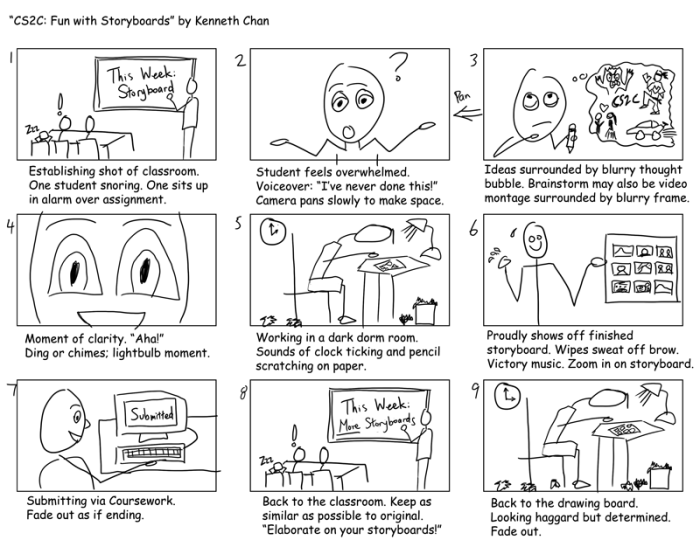
This sequence tells a short story about overcoming fear using visual metaphors.
- Panel 1: A large, shadowy figure looms over a small, cowering figure. Metaphor: The large figure represents fear, overwhelming and imposing; the small figure represents the protagonist, feeling vulnerable and small. Effect: Establishes the initial conflict.
- Panel 2: The small figure is shown holding a tiny, flickering candle. Metaphor: The candle represents hope and courage, a small but persistent light in the darkness. Effect: Introduces the protagonist’s inner strength.
- Panel 3: The small figure, slowly and hesitantly, moves towards the shadowy figure, the candle held high. Metaphor: The act of approaching represents facing fear, despite the trepidation. Effect: Shows the protagonist’s determination.
- Panel 4: As the small figure gets closer, the shadowy figure shrinks, becoming less imposing. Metaphor: The shrinking figure represents the diminishing power of fear when confronted. Effect: Demonstrates the protagonist’s success.
- Panel 5: The small figure stands tall, the candle now burning brightly, illuminating the area around them. The shadowy figure has vanished. Metaphor: The bright candle and the absence of the shadowy figure symbolize the overcoming of fear and the resulting empowerment. Effect: Provides a resolution and a sense of triumph.
Ultimate Conclusion
Mastering the use of visual metaphors in storyboarding is not merely about adding artistic flair; it’s about deepening narrative impact and forging a more profound connection with your audience. By understanding the symbolic language of images and applying the techniques Artikeld in this guide, you can transform your storyboards from static depictions into dynamic narratives that resonate on an emotional level. The ability to convey complex themes and emotions through carefully chosen visuals is a skill that will undoubtedly elevate your storytelling to new heights. Embrace the power of visual metaphors and watch your stories come alive.