Mastering storyboard transitions is key to crafting compelling narratives. This guide delves into four fundamental transition types – cuts, fades, wipes, and dissolves – exploring their visual impact and optimal applications. We’ll examine how these transitions influence pacing, mood, and overall narrative flow, guiding you towards creating seamless and engaging visual storytelling.
From fast-paced action sequences to emotionally charged scenes, the strategic use of transitions elevates your storyboard from a simple sequence of images to a dynamic and impactful visual narrative. We’ll provide practical examples and techniques to help you confidently choose the right transition for every moment in your story.
Understanding Storyboard Transitions
Storyboarding is a crucial step in filmmaking and animation, allowing creators to visualize the narrative flow before production begins. Smooth transitions between scenes are vital for maintaining audience engagement and creating a cohesive viewing experience. Understanding the different types of transitions and their impact is key to effective storyboarding.
Storyboard Transition Types
Four primary types of transitions—cut, fade, wipe, and dissolve—offer distinct visual effects and contribute differently to the pacing and mood of a story. Each transition type serves a specific purpose and should be chosen carefully to enhance the storytelling.
Cut Transitions
A cut is the simplest and most common transition. It involves an immediate switch from one shot to the next, with no visual effect bridging the two. The abrupt change can create a jarring effect, signifying a shift in time, location, or perspective. Cuts are effective for fast-paced action sequences, maintaining a sense of urgency. They can also be used to emphasize a sudden change in mood or to highlight a specific detail.
Fade Transitions
A fade involves gradually transitioning to or from black. A fade-out gradually darkens the screen to black, while a fade-in gradually brightens the screen from black. Fades are often used to signify the passage of time, a change in location, or the beginning and end of a scene. They provide a smoother, more gentle transition than a cut, creating a more contemplative or reflective mood. A fade-out can signal the end of a scene, while a fade-in can introduce a new one.
Wipe Transitions
A wipe transition involves one shot replacing another by appearing to “wipe” across the screen. The wipe can move in any direction (vertical, horizontal, diagonal) and can be used to create a more dynamic and stylized effect. Wipes are less common than cuts and fades, often used for a more dramatic or stylized feel, particularly in older films or animation styles. They can be used to emphasize a change in time or perspective, though their use should be sparing to avoid appearing overly dramatic.
Dissolve Transitions
A dissolve transition involves one shot gradually fading out while another simultaneously fades in, creating a momentary overlap. This creates a softer transition than a cut, often used to suggest a passage of time, a connection between two scenes, or a change in location. Dissolves are effective in creating a smoother, more fluid transition between scenes, especially when showing a progression of events or a subtle shift in mood. The overlapping images can also be used to create a metaphorical connection between two scenes.
Storyboard Panel Illustrations
Cut: Panel 1 shows a close-up of a character’s face, filled with fear. Panel 2 abruptly shows a wide shot of a menacing figure approaching.
Fade: Panel 1 shows a bustling city street at noon. Panel 2 is completely black. Panel 3 shows the same street at night, subtly brighter than the black screen.
Wipe: Panel 1 shows a tranquil forest scene. Panel 2 shows a vertical wipe from left to right, replacing the forest scene with a stormy ocean.
Dissolve: Panel 1 shows a child sleeping peacefully in their bed. Panel 2 shows the same child awake, but the image of the sleeping child is still faintly visible as the awake child’s image fully comes into focus.
Applying Transitions for Seamless Flow
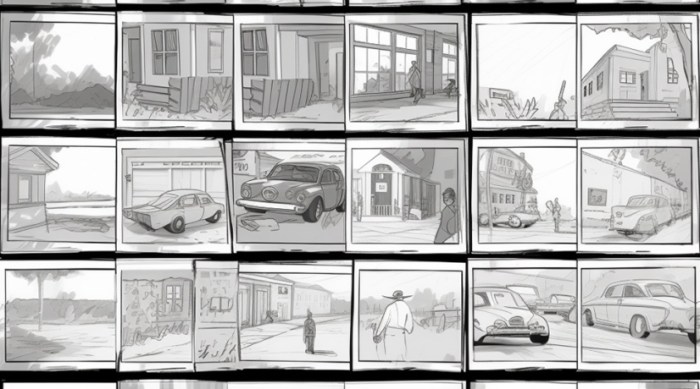
Effective storyboard transitions are crucial for maintaining a viewer’s engagement and guiding their understanding of the narrative. The choice of transition significantly impacts the pacing and emotional resonance of a scene, demanding careful consideration of the overall story’s rhythm and desired emotional impact. Mastering transition techniques allows for seamless storytelling, avoiding jarring shifts that disrupt the flow and immersion.
Different transitions serve distinct purposes and affect the pacing and mood of a story. Fast-paced scenes, often filled with action and quick cuts, benefit from transitions that mirror this energy. Conversely, slow-paced scenes, characterized by dialogue, introspection, or emotional moments, require transitions that maintain a sense of calm and deliberate progression. The selection of transitions should directly reflect the tempo and emotional intensity of the narrative.
Transition Types and Their Impact on Pacing and Mood
The impact of a transition extends beyond simply connecting scenes; it actively shapes the audience’s emotional experience. A quick cut, for instance, can heighten tension or create a sense of urgency, while a slow dissolve can evoke a feeling of nostalgia or reflection. Understanding this relationship between transition and emotion allows storytellers to precisely manipulate the audience’s feelings.
Maintaining Consistent Transition Style
Consistency in transition style is paramount for maintaining a cohesive visual language throughout the storyboard. Switching haphazardly between various transition types can create a disjointed and unprofessional feel, distracting the viewer from the narrative. Choosing a dominant style, perhaps with occasional variations for emphasis, provides a sense of unity and enhances the overall storytelling experience. This consistency contributes to a more polished and professional final product.
Comparison of Transition Types
The following table summarizes the four transition types discussed, outlining their emotional impact and typical use cases. Consistent use of a style guide will ensure that the transitions are used appropriately throughout the storyboard.
| Transition Type | Emotional Impact | Best Use Cases | Pacing Influence |
|---|---|---|---|
| Cut | Can be abrupt, creates tension or surprise, depending on context. | Fast-paced action scenes, sudden shifts in time or location. | Fast |
| Dissolve | Smooth, evokes nostalgia, passage of time, or dreamlike sequences. | Slow-paced scenes, transitions between memories or different time periods. | Slow |
| Wipe | Can feel dramatic or stylistic, often used for emphasis. | Transitions between scenes with contrasting moods, adding a visual flair. | Moderate to Fast, depending on the wipe speed |
| Fade | Suggests beginnings or endings, can create a sense of finality or mystery. | Scene beginnings and endings, emphasizing a change in location or time. | Slow |
Advanced Storyboard Techniques with Transitions
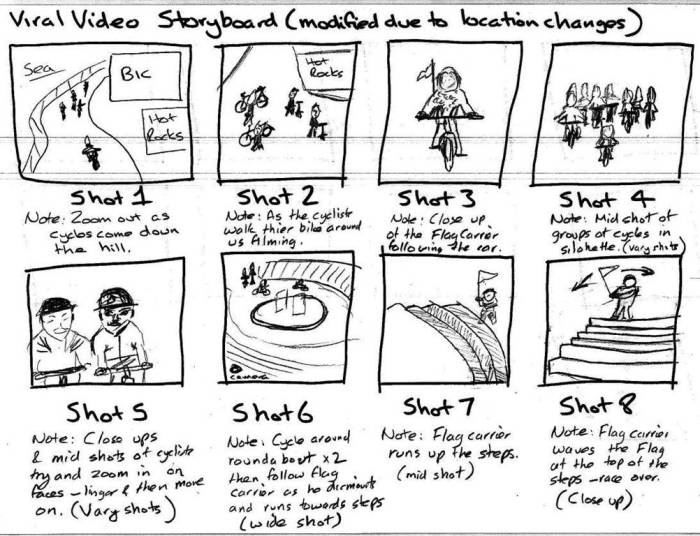
Mastering basic transitions is only the first step towards creating truly compelling storyboards. Advanced techniques involve leveraging transitions to manipulate the viewer’s emotions and control the pacing of the narrative, creating a more impactful and engaging visual story. This section delves into sophisticated applications of transitions to enhance storytelling.
This section explores the strategic use of transitions to build suspense, deliver surprises, and create complex visual effects. We will also examine instances where the absence of a transition serves as a deliberate stylistic choice. Finally, a detailed example illustrates the combined use of various transitions to achieve a nuanced and impactful scene.
Suspense and Surprise Through Transitions
Transitions are powerful tools for manipulating audience expectation. A rapid cut from a peaceful scene to a chaotic one, for example, instantly generates surprise. Conversely, a slow dissolve between two increasingly tense scenes builds suspense effectively. The choice of transition directly influences the emotional impact on the viewer. Consider the difference between a quick jump cut suggesting a sudden, unexpected event and a gradual crossfade that allows the viewer to anticipate an impending change. The former creates a sharp shock, while the latter fosters a sense of mounting dread.
Stylistic Choices: The Absence of Transitions
While transitions often smooth the flow, omitting them can be a deliberate stylistic choice, particularly to emphasize a jarring shift in time, location, or mood. For instance, a stark juxtaposition of two disparate scenes without any transition can highlight a thematic contrast or underline a character’s internal conflict. This technique is frequently employed in experimental filmmaking to disorient or challenge the viewer. Think of the abrupt shifts in David Lynch’s films – the lack of transition emphasizes the surreal and unsettling nature of the narrative.
Combining Transitions for Complex Effects
Combining multiple transition types within a single scene can create a complex and layered effect. For instance, a sequence might begin with a slow dissolve to establish a setting, followed by a series of quick cuts to convey a rapid series of actions, and finally conclude with a fade-out to emphasize a moment of reflection. This layered approach allows for a dynamic and nuanced storytelling experience. The combination of techniques allows for greater control over the rhythm and emotional impact of the narrative.
Example: A Scene with Varied Transitions
Let’s consider a scene where a character, ANNA, is preparing for a crucial meeting.
| Panel | Description | Transition | Purpose |
|---|---|---|---|
| 1 | Anna sits at her desk, looking anxious. Papers are scattered around her. | None (from previous scene) | Establishes the initial mood and setting. |
| 2 | Close-up on Anna’s hands nervously fidgeting with a pen. | Close-up | Highlights her anxiety. |
| 3 | A wide shot showing the clock ticking rapidly. | Jump Cut | Emphasizes the pressure of time. |
| 4 | Anna suddenly stands up, looking determined. | Wipe | Marks a decisive shift in her demeanor. |
| 5 | Anna walks confidently towards the door. | Crossfade | Smooth transition to the next scene. |
The absence of a transition between the first panel and the previous scene allows the viewer to immediately understand the context of Anna’s anxiety. The close-up on her hands is a transition that focuses attention on a key detail. The jump cut creates a sense of urgency, while the wipe signifies a change in her attitude. Finally, the crossfade smoothly leads to the next scene, potentially showing her arriving at the meeting. This combination of transitions creates a dynamic and emotionally engaging sequence.
Conclusion
By understanding the nuances of cuts, fades, wipes, and dissolves, and how they interact with pacing and emotion, you can significantly enhance the storytelling power of your storyboards. This guide provides a foundational understanding of transition techniques, empowering you to create visually rich and emotionally resonant narratives. Experiment with these techniques, find your style, and elevate your storytelling to new heights.