Storyboarding, a crucial step in visual storytelling, can sometimes feel daunting. Creative blocks are common, leaving even experienced artists staring at a blank page. This guide offers practical strategies to overcome these hurdles and reignite your creative spark, transforming frustration into fluid storytelling. We will explore techniques to streamline your process, add depth to your scenes, and find inspiration from unexpected sources, ensuring your storyboards are not just functional but truly captivating.
Whether you’re a seasoned professional or a budding artist, the ability to consistently produce engaging storyboards is paramount. This guide provides a structured approach, combining practical advice with creative exercises to help you navigate the challenges of creative stagnation and unlock your full storytelling potential. We’ll delve into overcoming common creative blocks, refining your techniques, and ultimately, creating compelling visual narratives.
Overcoming Creative Blocks
Feeling uninspired when storyboarding is a common experience, even for seasoned professionals. It’s a creative process, and creative processes are, by nature, prone to periods of stagnation. Understanding the root causes of this creative block and implementing practical strategies can help you overcome these hurdles and get back to visualizing your stories effectively.
Reasons for Storyboarding Impasse and Solutions
Three frequent reasons contribute to a lack of inspiration during storyboarding: fear of failure, overwhelming scope, and creative burnout. Addressing these issues directly can significantly improve the creative flow.
- Fear of Failure: The blank page can be intimidating. The pressure to create something “perfect” from the outset can lead to paralysis. Solution: Start small. Instead of aiming for a complete scene immediately, begin with rough sketches, focusing on capturing the core action and emotion. Don’t worry about details initially; those can be refined later. Embrace imperfection as a stepping stone to improvement.
- Overwhelming Scope: A large project or complex narrative can feel overwhelming, leading to a sense of being unable to even begin. Solution: Break down the project into smaller, more manageable chunks. Focus on one scene, one sequence, or even one panel at a time. This creates a sense of accomplishment as you progress, building momentum and confidence.
- Creative Burnout: Constant creative work can lead to exhaustion and a lack of inspiration. Solution: Take breaks. Step away from the project for a while. Engage in activities unrelated to your work – read a book, watch a movie, spend time in nature. Allow your mind to rest and recharge before returning to the storyboard.
Visualizing Storyboard Development
Imagine a blank page, a white void. This represents the initial stage of a storyboard. The first step involves sketching rough thumbnails, small boxes containing basic compositions and character poses, focusing solely on the sequence of events. These thumbnails are like a roadmap. Next, a more refined version is created, fleshing out the details – adding more specific character expressions, environment details, and clearer action lines. The third step involves cleaning up the sketches, refining lines, and adding more visual polish. Finally, the completed storyboard panels, neat and detailed, are ready to present a clear and coherent visual narrative. This progression from a blank page to a fully realized storyboard scene is a testament to the iterative nature of the creative process.
Diverse Sources of Inspiration
To reignite your creative spark, drawing inspiration from diverse sources is key. The following sources can be powerful catalysts for fresh ideas.
| Source | Description | Application to Storyboarding | Example |
|---|---|---|---|
| Photography | Images capturing moments, light, and composition. | Analyze composition, lighting, and emotional impact to inform your panel layouts and visual storytelling. | A photograph of a bustling marketplace could inspire a scene filled with dynamic action and vibrant characters. |
| Music | Soundtracks evoke mood, emotion, and rhythm. | Use the mood and tempo of a piece of music to guide the pacing and emotional tone of your storyboard scenes. | A suspenseful orchestral piece could inspire a tense chase scene. |
| Literature | Stories offer narrative structures, character development, and evocative language. | Borrow narrative techniques, character archetypes, or scene descriptions to enrich your visual storytelling. | A description of a character’s internal struggle in a novel could inspire a close-up shot focusing on their facial expression. |
| Dreams | Subconscious imagery can be unexpectedly surreal and inspiring. | Jot down dream fragments and use them as springboards for unusual scene ideas and character designs. | A recurring dream image of a shadowy figure could become a mysterious antagonist in your story. |
| Real-Life Observations | Everyday encounters and interactions provide authentic details and character inspiration. | Use real-life situations and behaviors as models for your characters and scenes. | Observing a conversation between two people at a cafe could inspire a dialogue scene between your characters. |
Streamlining the Storyboarding Process
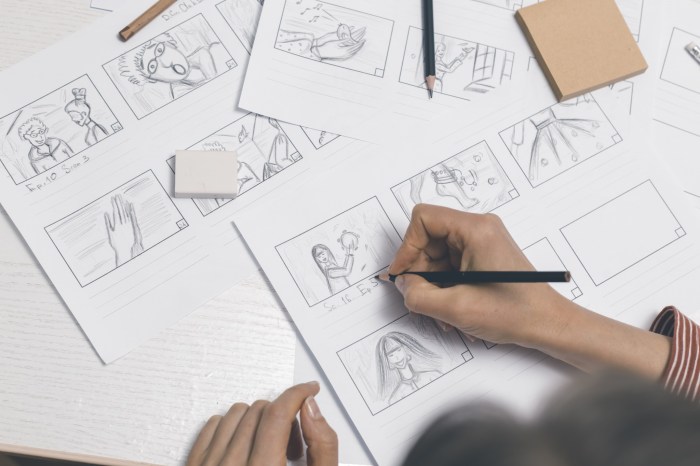
Feeling uninspired is a common hurdle for storytellers. However, the process of storyboarding doesn’t need to be a lengthy, laborious affair. By implementing efficient techniques, you can significantly reduce the time spent on the initial stages and jumpstart your creative flow. This section explores methods to accelerate your storyboarding workflow, allowing you to focus on the narrative itself.
Storyboarding, when approached strategically, can be a surprisingly quick process. Several techniques can help generate ideas efficiently, even when inspiration is lacking. These methods prioritize speed and simplicity, enabling you to create a solid foundation for your story without getting bogged down in detail too early. The goal is to capture the essence of your narrative quickly, leaving room for refinement later.
Time-Saving Methods for Generating Storyboard Ideas
Three effective time-saving methods can significantly accelerate the storyboard creation process. These methods focus on rapidly generating ideas and visualizing the narrative, even when facing a creative block.
- Rapid Sketching: Instead of striving for perfect drawings, focus on quickly sketching thumbnail-sized frames. Capture the key action and composition in each frame, prioritizing speed over detail. Think of it as a visual brainstorming session; the goal is to get ideas down, not create polished artwork. For example, if depicting a chase scene, you might use simple stick figures running and a few lines to suggest a background. This allows for a quick visual overview of the scene’s flow and pacing.
- Storyboarding: Write down key words or phrases representing the action and emotion of each scene. Then, arrange these s in sequence to form a basic narrative structure. This approach bypasses the need for immediate visual representation, allowing you to focus on the core story elements. Subsequently, you can add simple visual cues next to each . For instance, instead of drawing a complex battle scene, you might write “Epic Sword Fight” and add a simple sketch of two crossed swords.
- Using Existing Visual References: Leverage readily available images or illustrations as starting points for your storyboards. This could involve using photographs, clip art, or even screenshots from other media. These pre-existing visuals can provide a springboard for your own ideas, saving you time on initial concept development. For example, if your scene involves a bustling marketplace, you might find a relevant photograph and use it as the basis for a quick sketch.
Mood Boards versus Mind Maps
Mood boards and mind maps both serve as valuable tools in the initial stages of storyboarding, but they differ in their approach and effectiveness.
Mood boards are primarily visual, focusing on collecting images, textures, colors, and other visual elements that evoke the desired atmosphere and style of the story. They are excellent for establishing the overall tone and aesthetic, particularly useful for projects with a strong visual emphasis. Conversely, mind maps are more textual, organizing ideas in a hierarchical structure that branches out from a central theme. They are beneficial for brainstorming narrative structure, character development, and plot points. Mind maps excel at identifying connections and relationships between different story elements. Ultimately, the most effective approach often involves using both methods in tandem, leveraging the strengths of each to create a comprehensive pre-production plan.
Building a Basic Storyboard Framework
Even with limited inspiration, a basic storyboard framework can be easily constructed. This step-by-step guide provides a structured approach:
- Define the Core Narrative: Summarize your story in a concise sentence or two. This establishes the central theme and overall goal.
- Identify Key Scenes: Break down the story into a series of key scenes or moments. These are the pivotal points that advance the plot or reveal crucial information.
- Create a Simple Sequence: Arrange the key scenes in chronological order, establishing a basic narrative flow. This doesn’t need to be highly detailed at this stage; focus on the overall progression of the story.
- Add Basic Visual Cues: For each scene, add a simple visual representation. This could be a few words, a rough sketch, or even just a symbolic shape.
- Refine and Expand: Once you have a basic framework, you can gradually refine and expand upon it, adding more detail and complexity as inspiration arises.
Using Simple Shapes and Symbols
Simple shapes and symbols can effectively represent complex scenes, simplifying the storyboarding process while maintaining clarity.
For example: a simple square could represent a building, a circle could represent a character’s head, a zig-zag line could symbolize movement or conflict, and overlapping circles could represent a conversation. By using these simplified representations, you can quickly sketch out the essential elements of a scene without getting bogged down in detailed drawings. Consider a scene involving a car chase. Instead of drawing a detailed car, you could use a simple rectangle with wheels. The road could be represented by two parallel lines, and the other car could be another rectangle. This minimalist approach allows for rapid sketching and quick iteration.
Refining Your Storyboard
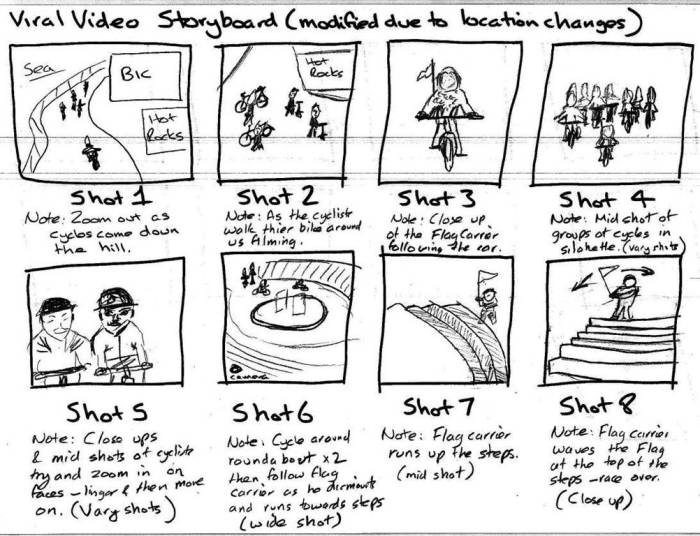
Even with a solid narrative structure, a storyboard can feel lifeless without the injection of visual flair and emotional depth. This stage is crucial for transforming a basic sequence of events into a compelling visual narrative that truly resonates with the viewer. Refining your storyboard involves adding layers of detail that elevate it from a simple plot Artikel to a powerful storytelling tool.
Adding depth and detail to your storyboard isn’t merely about adding more drawings; it’s about enriching the visual language and emotional impact of your story. This involves carefully considering character emotions, utilizing effective visual storytelling techniques, and introducing unexpected elements to keep the audience engaged.
Character Emotion and Visual Storytelling
Effective storyboarding relies heavily on conveying character emotion visually. Rather than simply showing a character’s actions, you must depict their internal state. This can be achieved through facial expressions, body language, and even the use of color and lighting to subtly hint at a character’s emotional state. For example, a character experiencing intense grief might be depicted with slumped shoulders, downcast eyes, and a muted color palette. Conversely, a character feeling triumphant might have an open posture, a confident expression, and be bathed in warm, bright light. Remember, a picture is worth a thousand words, and your storyboard should speak volumes without relying solely on dialogue.
Injecting Unexpected Twists
Introducing unexpected twists can dramatically improve a storyboard’s impact. Here are three ways to achieve this:
- Subvert Expectations: If the audience anticipates a certain outcome, deliberately lead them down a different path. For example, if a character is about to enter a seemingly safe building, have the door suddenly slam shut revealing something unexpected inside.
- Introduce a Red Herring: Create a false lead that misdirects the audience’s attention, only to reveal the true plot point later. This can be achieved by focusing on a seemingly important character or object, only to later reveal its insignificance in the grand scheme of things.
- Unexpected POV Shift: Suddenly switch the perspective of the scene, revealing a hidden detail or character’s motivation. For example, a scene initially shown from the protagonist’s perspective might suddenly shift to the antagonist’s viewpoint, revealing their cunning plan.
Camera Angles and Narrative Effect
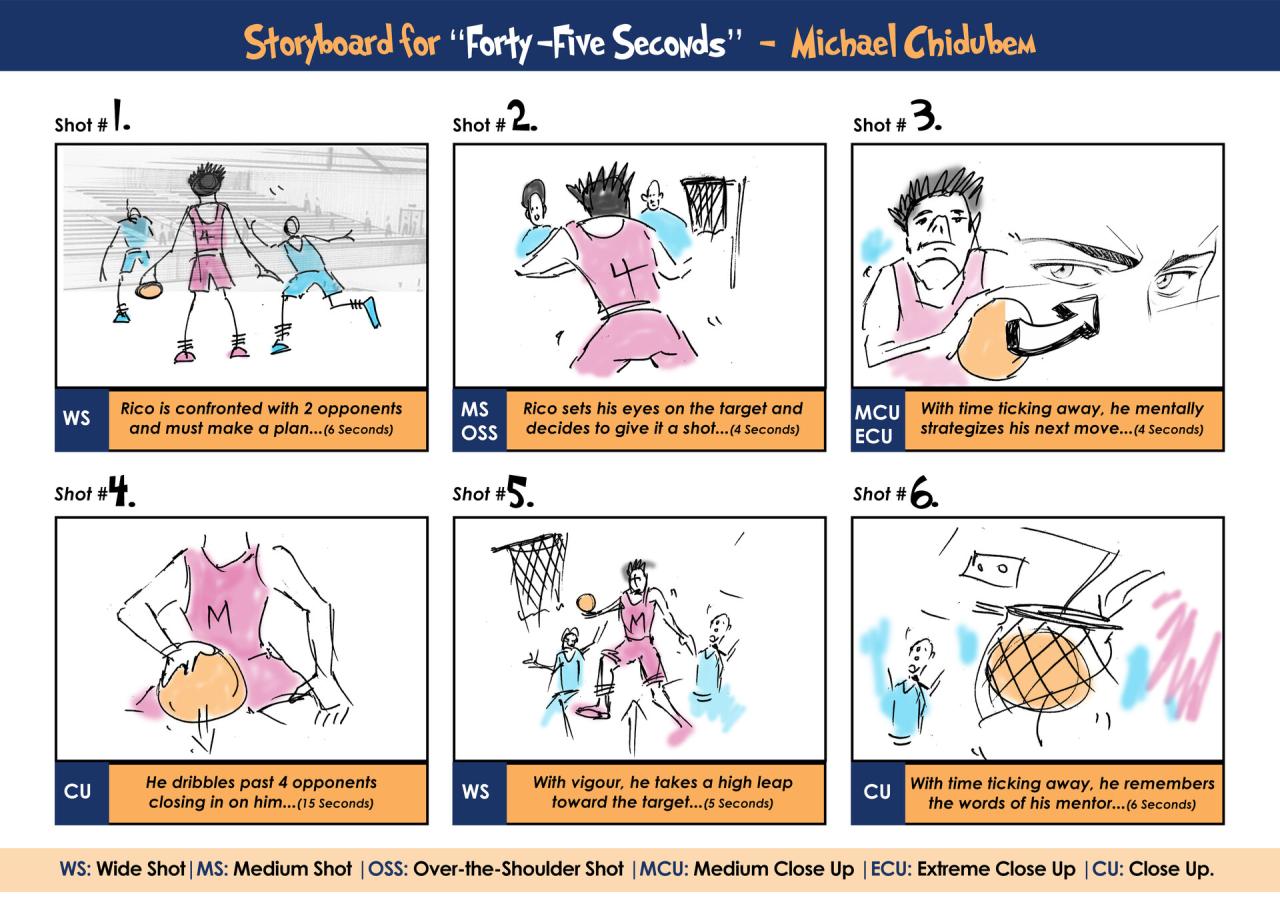
Camera angles play a significant role in shaping the viewer’s perception of a scene. Different angles can convey power dynamics, emotional states, and even alter the narrative’s pace.
- Low Angle: Shooting from below makes the subject appear powerful and dominant. Imagine a hero standing tall, viewed from a low angle, creating a sense of awe and invincibility.
- High Angle: Shooting from above makes the subject appear vulnerable or insignificant. Think of a character lying defeated on the ground, viewed from a high angle, emphasizing their weakness.
- Eye Level: A neutral perspective that creates a sense of connection and relatability with the character. This is often used for everyday interactions and conversations.
- Dutch Angle (Canted Angle): A tilted camera angle that creates a sense of disorientation, unease, or chaos. This is often used in scenes depicting suspense, danger, or psychological distress.
- Over-the-Shoulder Shot: Looking over the shoulder of one character at another, establishing a relationship between them and creating intimacy or tension depending on the context. This is often used in dialogue scenes to show the interaction between two characters.
Lighting and Color Palettes
Lighting and color palettes are powerful tools for setting the mood and tone of your storyboard. Consider the following:
Dark, muted colors often create a somber or melancholic atmosphere. Think of a scene set in a dimly lit alleyway at night, using predominantly blues and grays to convey a sense of mystery and danger. In contrast, bright, vibrant colors can evoke feelings of joy, excitement, or energy. A sunny beach scene, depicted with warm yellows, oranges, and blues, instantly conveys a sense of happiness and relaxation. The skillful use of lighting and color can significantly enhance the emotional impact of your storyboard, making it far more immersive and engaging for the viewer.
Ultimate Conclusion
Overcoming creative blocks in storyboarding is a journey, not a destination. By implementing these tips – identifying the root of your uninspired feelings, streamlining your process, adding depth and detail, and consistently seeking inspiration – you’ll not only create better storyboards but also cultivate a more resilient and creative workflow. Remember that even the most experienced storytellers encounter creative blocks; the key is to develop strategies to navigate these moments and continue to tell your stories with passion and purpose.