Mastering visual storytelling without relying on dialogue is a powerful skill. This guide delves into the art of conveying narratives solely through images, exploring fundamental techniques and advanced strategies for creating compelling storyboards. We’ll examine visual hierarchy, composition, and the development of a rich visual language capable of expressing complex emotions and abstract concepts.
From understanding the basics of visual storytelling to mastering advanced compositional techniques, this guide provides a practical, step-by-step approach to crafting impactful storyboards. We’ll cover essential elements such as panel layout, character expression, and the use of visual cues to drive the narrative forward, all without the need for a single word of dialogue.
Understanding Visual Storytelling Fundamentals
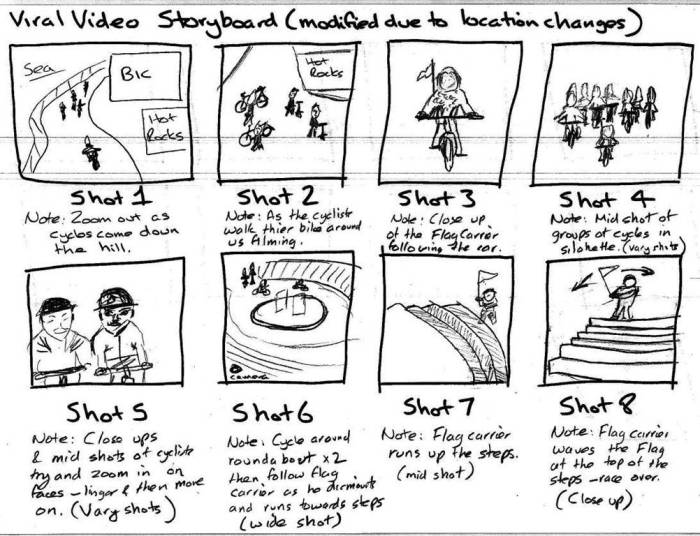
Effective storyboarding relies heavily on the principles of visual storytelling. It’s about communicating a narrative through images alone, minimizing reliance on text. This requires understanding how to convey emotion, action, and narrative progression visually, focusing on composition, character design, and the strategic use of visual cues.
Visual storytelling prioritizes clarity and impact. A well-designed storyboard panel should immediately communicate the essential information without requiring extensive explanation. This efficiency allows for a streamlined workflow and ensures the intended narrative is clearly conveyed to the intended audience, whether it’s fellow filmmakers, animators, or game developers.
Character Emotional Reaction to a Surprising Event
Imagine a character, let’s call her Anya, receiving unexpected news. The storyboard panel depicts Anya seated at a small, round table in a dimly lit café. Her posture is slumped; her shoulders are rounded, and her head is slightly bowed. Her eyes are wide, pupils dilated, reflecting a mixture of shock and disbelief. Her mouth is slightly agape, a subtle gasp frozen on her face. Her hands are clasped tightly together, her knuckles white with tension. The overall composition emphasizes Anya’s small figure against the vast, empty space of the café, further highlighting her isolation and emotional vulnerability. The background is deliberately muted, drawing all attention to Anya’s expressive face and body language.
Action Sequence: Opening a Door
This sequence will demonstrate a simple action – opening a door.
Panel 1: A close-up of a hand reaching for a doorknob. The hand is slightly tense, fingers curled around the knob. The background is blurred, indicating focus on the action.
Panel 2: The hand turns the doorknob. The knob is slightly out of focus, the hand more in focus to emphasize the movement. A subtle shadow is cast on the door, implying a light source.
Panel 3: The door begins to swing open. A sliver of light is visible from the other side, suggesting a contrasting environment. The focus is on the movement of the door.
Panel 4: The door is fully open, revealing a bright, contrasting space beyond. The focus is now on the open doorway, inviting the viewer’s gaze to the new space.
Visual Hierarchy in Storyboard Design
Visual hierarchy is crucial for guiding the viewer’s eye through a storyboard panel and establishing the focal points. It’s about controlling the order in which the viewer processes information within the frame.
Several techniques enhance visual hierarchy. Size is a key factor; larger elements naturally draw more attention. Contrast, through color or value, also directs the eye. A brightly colored character against a muted background will immediately capture attention. Placement within the frame also matters; elements positioned centrally or at the rule of thirds intersections are more prominent. Sharp focus versus blur can also be employed to guide the viewer’s gaze, emphasizing key actions or elements. Finally, the use of lines, either implied or explicit, can lead the eye through the panel, creating a visual pathway. For example, a character’s gaze can direct the viewer towards another element in the panel, creating a visual connection and narrative flow.
Mastering Storyboard Layout and Composition
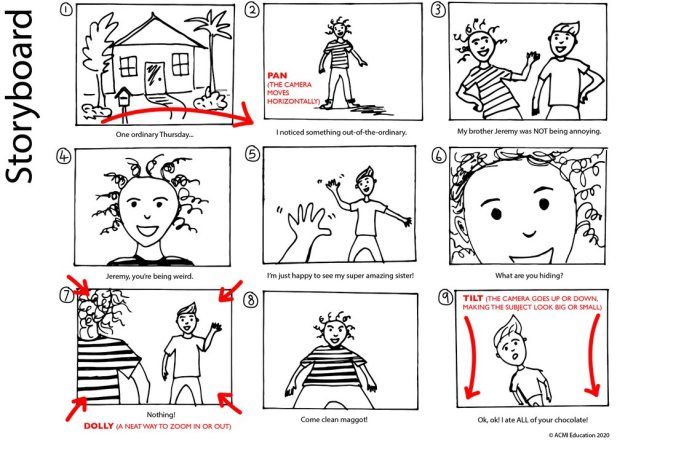
Effective storyboard layout and composition are crucial for conveying narrative flow and emotional impact. A well-designed storyboard guides the viewer’s eye, emphasizing key moments and building tension through the strategic use of panel size, arrangement, and camera angles. Understanding these elements allows for a more impactful and engaging visual narrative.
Understanding the relationship between panel size and storytelling is essential. Different panel sizes direct the viewer’s attention and control the pacing of the story.
Storyboard Panel Sizes and Layouts for a Conversational Scene
Let’s consider a short scene where two characters, Alex and Ben, are having a tense conversation in a coffee shop. We can use varying panel sizes to highlight emotional shifts and crucial plot points. The scene begins with a wide shot establishing the setting – a bustling coffee shop. This is followed by a medium shot showing Alex and Ben seated at a table, setting the stage for their conversation. As the conversation intensifies, we transition to closer shots, focusing on facial expressions to convey the rising tension. A particularly important moment, perhaps a revelation or a heated argument, might be emphasized with a large, dominating panel, drawing the viewer’s attention to its significance. Conversely, smaller panels can be used to show quick transitions or less important dialogue. For example, a small panel might depict Alex taking a sip of coffee, illustrating a brief pause in the conversation without interrupting the overall flow. The scene could conclude with another wide shot, showing Alex and Ben leaving the coffee shop, their body language suggesting the outcome of their conversation.
Comparison of Storyboard Panel Layouts
Wide shots establish the setting and context. They provide an overview of the scene, showing the environment and the characters’ relationship to it. For instance, a wide shot of a character standing alone in a vast desert emphasizes their isolation. Medium shots offer a balance, showing characters in more detail while still retaining some environmental context. They are commonly used for dialogue scenes, allowing viewers to see both characters clearly. Close-ups focus intensely on a character’s face, emphasizing their emotions and reactions. They are often used for crucial emotional moments, highlighting subtle changes in expression. Extreme close-ups further magnify a specific detail, like an eye or a hand, drawing attention to a particular aspect of the scene. The choice of shot significantly influences the viewer’s emotional response and understanding of the narrative.
Storyboard Panel Design Using the Rule of Thirds
The rule of thirds is a fundamental compositional guideline in visual arts, suggesting that an image should be divided into nine equal parts by two equally-spaced horizontal lines and two equally-spaced vertical lines, and that important compositional elements should be placed along these lines or their intersections. Applying this to a storyboard panel enhances visual interest and creates a more balanced and dynamic composition. For example, imagine a panel depicting a character looking out a window. Instead of centering the character, we can position them at one of the intersections of the rule of thirds lines. This off-center placement draws the viewer’s eye naturally to the character and creates a more visually appealing composition. Similarly, the placement of objects within the frame can be guided by the rule of thirds, ensuring a more balanced and dynamic visual representation. The horizon line, for instance, might be positioned along one of the horizontal lines, while a significant object might be placed along a vertical line. This prevents the scene from feeling static or overly symmetrical, leading to a more engaging and visually satisfying panel.
Developing Effective Visual Language Without Words
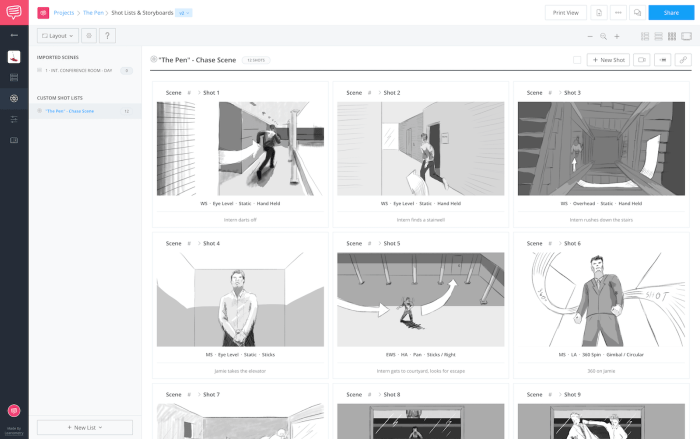
Storyboarding relies heavily on visual communication to convey narrative information efficiently. Without words, the effectiveness of your storyboard hinges on your ability to translate complex emotions, actions, and concepts into compelling visual cues. This section will explore strategies for creating a powerful and unambiguous visual language within your storyboards.
Effective visual storytelling without words requires a deep understanding of visual grammar. This includes utilizing composition, character design, and symbolic imagery to communicate narrative elements clearly and concisely. The key is to create a visual language that is both expressive and easily interpreted by the viewer. This goes beyond simply depicting actions; it involves conveying the underlying emotional and psychological states of your characters and the overall atmosphere of the scene.
Conveying Internal Thoughts and Feelings Through Visual Cues
A character’s internal state significantly impacts their actions and reactions. To convey these internal states without dialogue, we can employ several techniques. For instance, consider a character experiencing intense anxiety. Instead of writing “He felt anxious,” depict the character with visibly trembling hands, wide, fearful eyes, and shallow, rapid breathing. The character might be sweating, their posture hunched and tense. The background could be blurry or distorted, reflecting the character’s disoriented mental state. Conversely, a character feeling peaceful might be shown with soft lighting, a relaxed posture, and a serene expression. Their surroundings might be depicted in calm, muted colors. The use of color palettes is crucial here; warm colors often convey happiness and excitement, while cool colors might suggest sadness or fear.
Depicting a Character’s Emotional Journey Through a Storyboard Sequence
Let’s imagine a character embarking on a difficult journey. The first panel shows the character standing at the foot of a towering mountain, their expression determined but apprehensive. The mountain itself is a visual metaphor for the challenge ahead. The second panel shows the character halfway up the mountain, their face strained, the sky darkening, symbolizing growing adversity. In the third panel, the character is near the summit, exhausted but resolute, the sky beginning to clear, suggesting a turning point. The final panel shows the character at the summit, arms raised in triumph, bathed in the warm light of the setting sun, representing the achievement and overcoming of hardship. The change in the character’s posture, facial expression, and the evolving landscape effectively charts their emotional arc without any dialogue.
Visually Representing Abstract Concepts
Abstract concepts like hope, fear, and anger require creative visual solutions. Hope could be represented by a single, bright flower pushing through cracked earth, or a sun breaking through dark clouds. Fear could be depicted through sharp shadows, distorted perspectives, or menacing figures lurking in the background. Anger could be shown through intense red color schemes, sharp lines and angles in the character’s design, or broken objects scattered around them. The use of symbolism is key here. For example, a bird taking flight might symbolize freedom, while a closed door might represent confinement or isolation. The effectiveness of these visual metaphors depends on their clarity and their connection to the overall narrative.
Last Recap
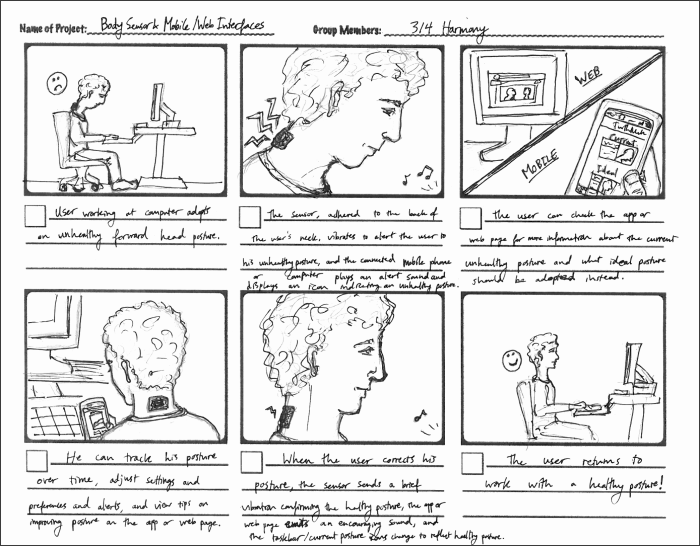
By understanding the principles of visual storytelling and employing effective compositional techniques, you can create powerful and engaging storyboards that resonate deeply with your audience. This guide has equipped you with the tools to transform abstract ideas into compelling visual narratives, enriching your storytelling capabilities significantly. Remember, a picture truly can speak a thousand words – learn to make yours count.