Unlock your storytelling potential with ten unique storyboard challenges designed to push your creative boundaries. This exploration delves into genre bending, narrative structure manipulation, and technical skill enhancement, offering a diverse range of exercises to sharpen your visual storytelling abilities. Whether you’re a seasoned storyboard artist or just beginning your journey, these challenges provide opportunities for growth and innovation.
From seamlessly blending genres to mastering complex action sequences, each challenge presents a specific obstacle to overcome, encouraging experimentation and the development of fresh, innovative approaches to visual storytelling. By tackling these diverse scenarios, you’ll not only improve your technical skills but also foster a deeper understanding of narrative structure and visual communication.
Genre Bending Storyboard Challenges

Genre-bending storyboards offer a unique opportunity to explore creative intersections and challenge conventional storytelling approaches. By blending seemingly disparate genres, artists can create visually striking and narratively compelling sequences that surprise and engage the viewer. This exploration allows for innovative visual language and narrative structures.
Science Fiction and Historical Fiction Blend
A storyboard sequence could depict a time-traveling historian discovering a hidden, advanced alien technology within the ruins of ancient Rome. The initial scenes would utilize a historically accurate visual style—think crumbling Roman architecture, togas, and realistic depictions of Roman life. As the historian uncovers the alien artifact (perhaps a sleek, metallic orb subtly embedded in a wall), the visual style would gradually shift. The color palette could become more saturated, with cooler tones representing the historical setting giving way to warmer, more vibrant colors associated with science fiction. The artifact itself could be rendered with a futuristic, almost otherworldly gleam, contrasting sharply with the surrounding ancient stones. The final shot could show the historian holding the orb, their face a mixture of awe and apprehension, bridging the two distinct worlds.
Dream Sequence and Reality Transition
A storyboard depicting a seamless transition between a dream and reality could start with a surreal, dreamlike sequence. The visuals could be distorted, with exaggerated colors and impossible perspectives. The character might be floating, or their surroundings could morph and shift unexpectedly. As the character begins to awaken, the visuals would slowly stabilize. The colors would become less intense, the perspective would normalize, and the fantastical elements would subtly dissolve into realistic details of their bedroom. A key element could be a recurring object, perhaps a specific piece of jewelry, that appears differently in the dream sequence (glowing, oversized) and then returns to its normal form as the character wakes up, visually anchoring the transition. The final frame could show the character fully awake, a lingering trace of the dream subtly visible in their expression or the room’s lighting.
Comedy and Horror Blend
A storyboard scene could portray a group of friends on a camping trip who stumble upon an abandoned cabin. The initial scenes could establish a lighthearted tone, using slapstick humor and exaggerated reactions. The friends might trip over roots, argue playfully, and react with comical fear to harmless forest creatures. As they enter the cabin, the tone shifts subtly. The lighting becomes darker, and unsettling details—strange symbols carved into the walls, unsettling sounds from within—begin to appear. The comedy doesn’t disappear entirely; instead, it becomes darker, more ironic, and tinged with dread. For example, a friend’s exaggerated reaction to a creaking floorboard could be juxtaposed with a genuinely terrifying glimpse of something moving in the shadows. The final frame could leave the audience uncertain whether the friends are in genuine danger or simply overreacting to their own imaginations, maintaining the ambiguous blend of both genres.
Unique Visual Style
A storyboard scene could be illustrated using a graphic novel aesthetic. Bold Artikels, cross-hatching for shading, and speech bubbles containing stylized dialogue would be key elements. The scene could depict a tense confrontation between two characters in a dimly lit alleyway. The use of stark black and white with selective splashes of color (perhaps red for blood or a character’s clothing) could emphasize the dramatic tension. The panels could vary in size and shape to create dynamic pacing, with close-ups on facial expressions interspersed with wider shots to establish the setting. The overall effect would be a visually striking and impactful scene, drawing on the expressive power of the graphic novel style.
Narrative Structure Storyboard Challenges
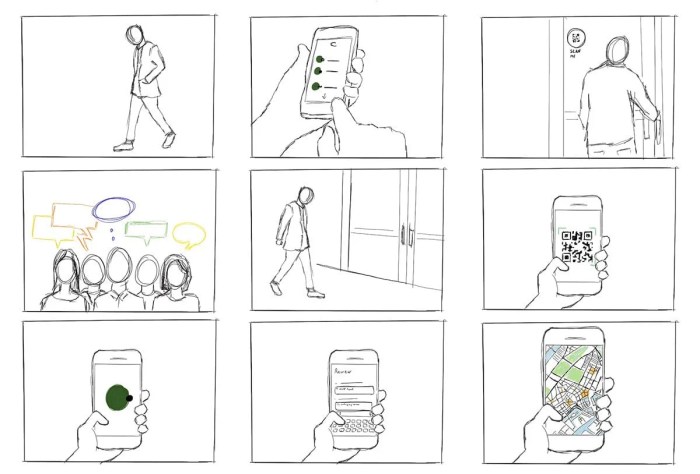
This section explores storyboard exercises designed to enhance your understanding and application of narrative structure, pushing you beyond simple scene depiction to crafting compelling and nuanced stories through visual language. Mastering these techniques allows for a deeper engagement with the audience and a more impactful storytelling experience. The following challenges focus on key narrative elements often overlooked in basic storyboarding.
Creating a Compelling Cliffhanger Ending
A cliffhanger ending leaves the audience wanting more, creating anticipation and excitement. The visual storytelling should build suspense throughout the sequence, culminating in a sudden, unresolved event or revelation. Consider using visual cues like impending danger, a character’s sudden realization, or a mysterious element revealed at the last moment. For example, a storyboard could depict a detective arriving at a crime scene, the camera focusing on a single, overlooked clue—a bloodstained glove—just as the lights go out, leaving the audience wondering about the identity of the perpetrator. The final panel could show only darkness, punctuated by a single, ominous sound effect.
Storyboarding a Plot Twist Through Visual Storytelling
A significant plot twist, revealed solely through visuals, demands careful planning and execution. The storyboard should subtly plant clues throughout the sequence, leading the audience to one conclusion, only to subvert their expectations in the final panels. This could involve misdirection, subtle changes in character behavior, or cleverly placed visual metaphors. For instance, a storyboard could initially portray a seemingly idyllic family dinner, but subtle details like a hidden bruise on a child’s arm or a tense exchange of glances between parents could hint at underlying conflict. The twist could be revealed through a final panel depicting a police car arriving at the house, subtly suggesting domestic abuse.
Illustrating Internal Conflict Through Visual Cues
Internal conflict, the struggle within a character’s mind, can be powerfully conveyed visually. The storyboard should focus on the character’s expressions, body language, and environment to reflect their inner turmoil. Use contrasting imagery, symbolic objects, or visual metaphors to represent the opposing forces within the character. For example, a character grappling with a difficult decision might be shown with one hand reaching towards a tempting object (representing temptation), while the other hand hesitates, clutching a worn photograph (representing conscience). The background could shift between bright and dark to visually represent the internal conflict.
Using Parallel Editing to Compare and Contrast Storylines
Parallel editing involves intercutting between two or more separate storylines, often to create a sense of contrast or comparison. The storyboard should clearly define the two (or more) narratives, establishing their individual contexts before strategically intercutting to highlight similarities, differences, or thematic connections. For example, one storyline could depict a tense courtroom scene, while the other shows a flashback to the events leading up to the trial. Alternating between these two storylines, highlighting moments of parallel action or contrasting emotions, creates a dynamic and engaging narrative.
Technical Skill Storyboard Challenges
Storyboard challenges focusing on technical skills are crucial for developing proficiency in visual storytelling. Mastering these aspects elevates your storytelling capabilities, allowing for more nuanced and impactful narratives. This section will explore several technical challenges designed to push your creative boundaries.
Camera Angles and Dramatic Tension
Effective use of camera angles is fundamental to creating dramatic tension. A low angle shot, for instance, can make a character appear powerful and intimidating, while a high angle shot can portray vulnerability or weakness. The following storyboard sequence illustrates this:
Panel 1: A lone figure stands at the edge of a cliff, silhouetted against a stormy sky. Camera angle: Low angle, emphasizing the figure’s size and dominance against the vast landscape.
Panel 2: Close-up on the figure’s face, showing a determined expression. Camera angle: Eye-level, creating intimacy and allowing the viewer to connect with the character’s emotions.
Panel 3: The figure looks down at a swirling chasm below. Camera angle: High angle, showcasing the vastness and danger of the situation, emphasizing the figure’s vulnerability.
Panel 4: The figure takes a step towards the edge. Camera angle: Over-the-shoulder shot, placing the viewer in the character’s perspective, heightening the sense of danger and suspense.
Complex Action Scene Storyboard
Storyboarding a complex action scene requires meticulous planning and organization. The following table Artikels a scene involving a chase:
| Character | Action | Camera Angle |
|---|---|---|
| Agent X | Runs through alleyway, dodging obstacles | Dynamic tracking shot, following Agent X |
| Villain | Pursues Agent X, firing a weapon | Intercut shots – close-up on villain’s face, then wide shot of the chase |
| Bystander A | Screams and ducks for cover | Quick, handheld shot, emphasizing chaos |
| Agent X | Jumps over a fence | High-angle shot, showing the jump and the surrounding environment |
| Villain | Continues pursuit, firing weapon again | Low-angle shot, emphasizing the villain’s relentless pursuit |
Lighting Techniques and Mood
Lighting is a powerful tool for setting mood and conveying emotions. Different lighting techniques can drastically alter the atmosphere of a scene.
Panel 1: A dimly lit room, with a single spotlight on a character’s face, creates a sense of mystery and suspense. (Low-key lighting)
Panel 2: A brightly lit scene, with even lighting across the frame, creates a feeling of openness and happiness. (High-key lighting)
Panel 3: A scene with contrasting light and shadow, creating a sense of drama and tension. (Chiaroscuro lighting)
Panel 4: A scene with backlighting, silhouetting the character and creating a sense of mystery and intrigue. (Backlighting)
Visual Metaphors and Abstract Concepts
Visual metaphors can effectively convey abstract ideas. For example, a wilting flower could represent lost hope, while a soaring bird could symbolize freedom. A storyboard depicting a character struggling under the weight of a heavy chain could visually represent the burden of responsibility or guilt. The chain’s physical weight translates directly to the character’s emotional burden. Another example would be a character walking through a dark tunnel representing overcoming adversity, eventually emerging into bright sunlight, symbolizing hope and triumph.
Last Word
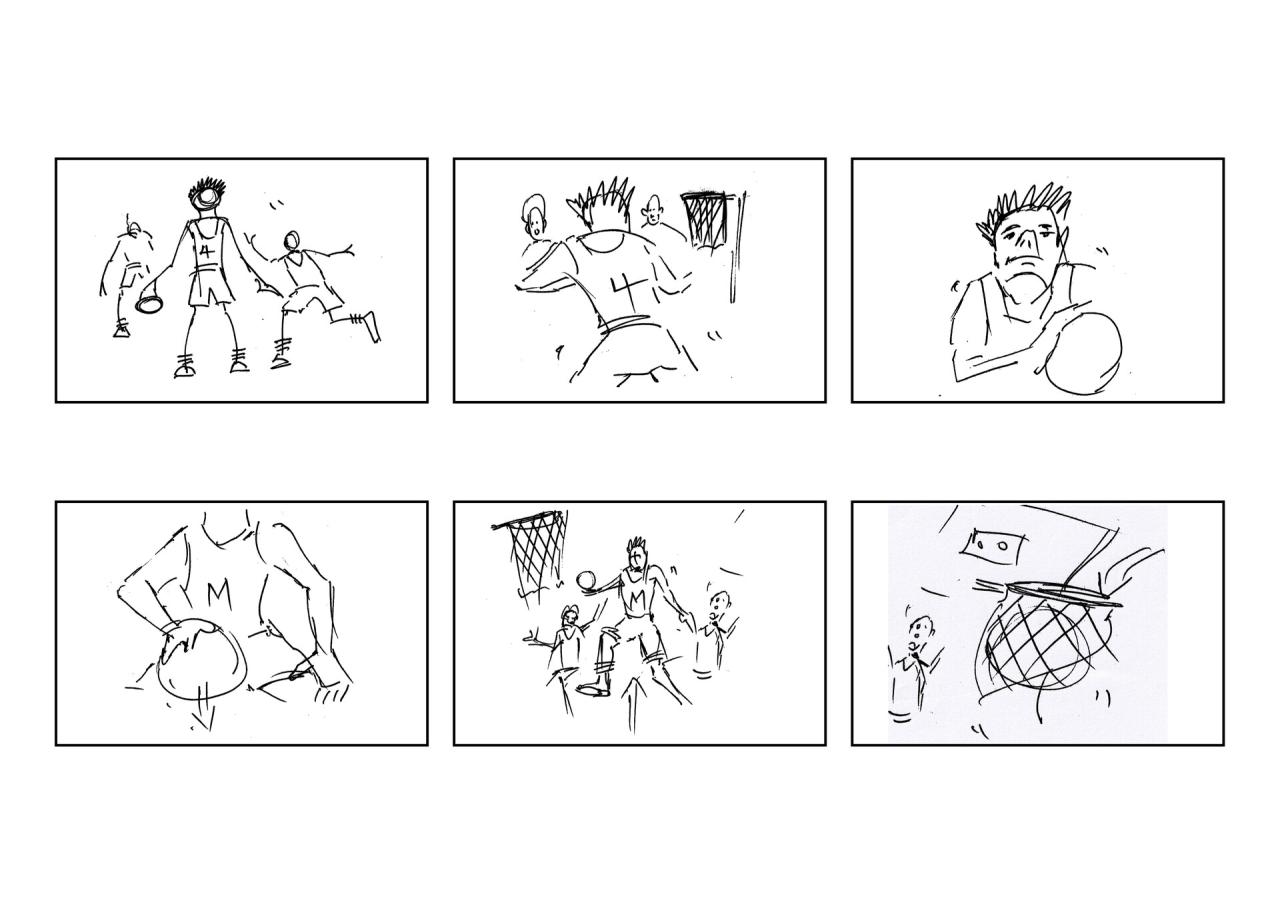
Mastering the art of visual storytelling requires constant exploration and a willingness to push creative boundaries. These ten storyboard challenges serve as a springboard for innovation, urging you to experiment with different genres, narrative structures, and technical skills. By embracing these challenges, you’ll refine your abilities, expand your creative toolkit, and ultimately elevate your storytelling to new heights. The journey of visual storytelling is a continuous process of learning and growth; embrace the challenges, and watch your creativity flourish.