Mastering the art of storyboarding is crucial for effective visual storytelling. This guide delves into eleven common storyboard layouts, exploring their strengths and weaknesses across diverse narrative styles, from high-octane action sequences to subtle character-driven dramas. We’ll examine how each layout impacts pacing and viewer engagement, offering practical advice on selecting the optimal layout to convey specific emotions and information. The guide also provides a step-by-step approach to creating compelling storyboards, incorporating advanced techniques like layout transitions and camera movement integration.
Through detailed examples, practical exercises, and comparative analysis, you’ll gain the confidence to design visually engaging storyboards that effectively communicate your narrative vision. Whether you’re a seasoned filmmaker or just starting your journey in visual storytelling, this comprehensive guide will equip you with the essential knowledge and practical skills to elevate your storytelling to the next level.
Understanding Storyboard Layouts
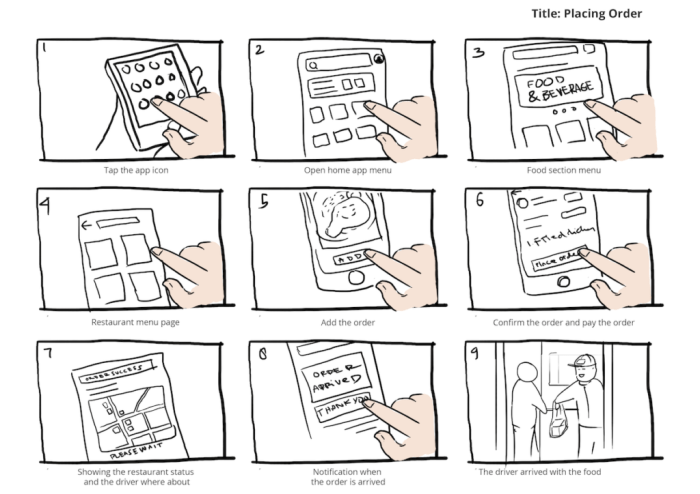
Storyboarding is a crucial pre-production process for filmmakers and animators, providing a visual roadmap for the final product. Understanding different storyboard layouts is key to effectively communicating the narrative’s visual flow, pacing, and emotional impact. The choice of layout significantly influences the audience’s experience.
Eleven Common Storyboard Layouts and Their Applications
Eleven common storyboard layouts offer diverse ways to visualize a scene. These include:
- Single Panel: Used for establishing shots, key moments, or impactful imagery. This layout emphasizes a single, powerful image.
- Two-Panel Sequence: Shows a simple action or reaction sequence, often emphasizing cause and effect. This is particularly effective for conveying simple transitions.
- Three-Panel Sequence: Builds on the two-panel layout, adding another layer of detail or action. This allows for a more nuanced depiction of movement or character development.
- Four-Panel Sequence: Provides a more detailed depiction of an action sequence, allowing for smooth transitions and clearer storytelling.
- Wide Shot/Close-up Sequence: Alternates between establishing shots and close-ups to build tension, intimacy, or to highlight details. This is a versatile layout for managing the audience’s focus.
- Over-the-Shoulder Shot Sequence: Used for dialogue scenes, creating intimacy and revealing the perspective of each character.
- Point-of-View (POV) Sequence: Shows the scene from the perspective of a character, allowing the audience to experience the action as they do. This enhances emotional connection.
- Multiple Panels: A more complex layout used to depict large-scale scenes or action sequences with multiple elements occurring simultaneously.
- Montage Sequence: Shows a series of short shots to condense time or convey a feeling of rapid change. This is effective for showcasing a passage of time or a fast-paced action sequence.
- Split-Screen: Shows two or more scenes simultaneously, allowing for comparison or contrasting of events or actions.
- Panel with Text/Annotation: Combines visual storytelling with written descriptions, useful for adding crucial details or clarifying complex actions.
Comparison of Layout Effectiveness Across Storytelling Styles
The effectiveness of different layouts varies depending on the storytelling style. For example, action scenes often benefit from four-panel sequences or montages to convey rapid movement and excitement. Drama might utilize wide shot/close-up sequences to build tension and intimacy, while comedy might employ split-screen or two-panel sequences for unexpected juxtapositions and gags.
Storyboard Example: A Scene from a Short Film
Let’s use a three-panel sequence to illustrate a scene from a short film about a thief trying to steal a painting.
- Panel 1 (Wide Shot): The thief, silhouetted against a moonlit window, carefully assesses the security system of an art gallery. The gallery is shown in a wide shot, emphasizing the vastness of the space and the seemingly impenetrable security measures. The purpose is to establish the setting and the challenge the thief faces.
- Panel 2 (Medium Shot): The thief uses a small device to disable the laser grid, his face partially obscured by shadow. The focus is on the thief’s hands deftly working the device, showcasing his skill and determination. This panel highlights the action and the thief’s expertise.
- Panel 3 (Close-up): The thief’s hand reaches for the painting, the priceless artwork filling most of the frame. The focus is on the thief’s expression – a mixture of excitement and anxiety. This builds suspense and allows the audience to connect with the thief’s emotions.
Comparison of Layout Features
The following table compares three chosen layouts: Single Panel, Three-Panel Sequence, and Wide Shot/Close-up Sequence.
| Layout | Panel Size/Number | Perspective | Typical Application |
|---|---|---|---|
| Single Panel | One large panel | Variable (can be any perspective) | Establishing shots, key moments |
| Three-Panel Sequence | Three panels of similar size | Usually consistent, but can vary | Simple action sequences, character development |
| Wide Shot/Close-up Sequence | Two panels, one wide, one close-up | Changes between wide and close | Building tension, intimacy, highlighting details |
Practical Applications of Storyboard Layouts
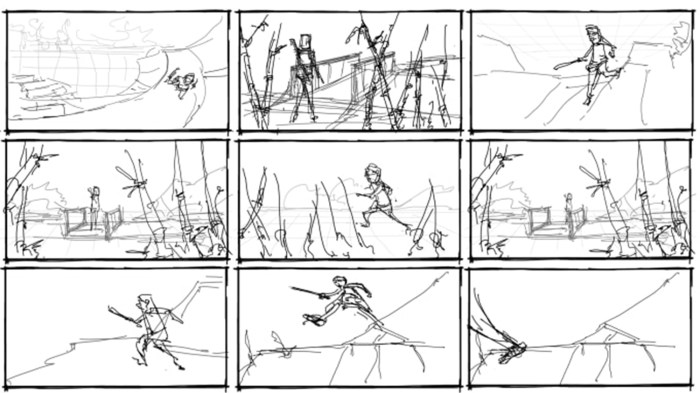
Storyboarding isn’t just about sketching out scenes; it’s a powerful tool for shaping the narrative’s rhythm, emphasizing key moments, and evoking specific emotions in the viewer. Different layouts directly impact pacing and viewer engagement, offering storytellers a precise means to control the audience’s experience. Understanding these impacts allows for more intentional and effective storytelling.
Different storyboard layouts significantly influence the pacing and viewer engagement of a narrative. Wide shots, for instance, can establish setting and context, slowing the pace and creating a sense of grandeur. Conversely, close-ups, especially rapid sequences of them, heighten tension and accelerate the pace, focusing the viewer’s attention on specific details or emotional expressions. The strategic use of these variations creates a dynamic viewing experience, preventing monotony and maintaining audience interest.
Layout Selection for Emotion and Information Conveying
The choice of layout directly correlates with the intended emotional impact and information conveyed. A long shot might be used to show the vastness of a desolate landscape, emphasizing loneliness or despair. In contrast, an over-the-shoulder shot during a tense conversation can build suspense and intimacy. Similarly, a close-up on a character’s face can highlight their emotional state, while a two-shot might emphasize the relationship between two characters. Careful consideration of the layout is crucial for accurately reflecting the story’s tone and mood.
Emphasizing Key Moments and Characters Through Layout
Specific layouts can be used to draw attention to pivotal moments or characters. For example, a dramatic reveal might be emphasized using a close-up, while a character’s importance can be underscored by consistently featuring them in the foreground of shots, or by using point-of-view shots from their perspective. Conversely, a wide shot might de-emphasize a character’s role, portraying them as insignificant within a larger scene. This selective use of layout creates a hierarchy of importance, guiding the viewer’s attention and understanding of the narrative’s structure.
Step-by-Step Guide: Creating a Storyboard Using a Single Layout (Example: Over-the-Shoulder Shot)
This guide will detail the creation of a storyboard using a consistent over-the-shoulder (OTS) shot layout. This layout is chosen for its effectiveness in conveying dialogue and building tension.
- Concept Development: Begin by outlining the scene’s dialogue and action. For example, consider a scene where two characters, Alex and Ben, are having a tense conversation in a dimly lit room. The scene’s purpose is to reveal Ben’s betrayal of Alex.
- Thumbnail Sketches: Create small, rough sketches of each panel. Each panel will feature an OTS shot, alternating between Alex’s perspective of Ben and Ben’s perspective of Alex. The dimly lit room should be consistently represented in each panel.
- Panel Refinement: Refine the thumbnail sketches into more detailed drawings. Pay attention to character expressions, body language, and the overall composition of each panel. Consider adding subtle details to the background, such as shadows or objects, to enhance the atmosphere.
- Dialogue and Action Notes: Add dialogue and brief action notes below each panel. This ensures clarity and aids in the understanding of the sequence.
- Tools and Techniques: Pencil and paper are sufficient for initial sketches. Digital tools like Photoshop or Procreate offer greater flexibility for refinement and coloring. For digital storyboarding, consider using digital brushes that mimic pencil or pen strokes to maintain a hand-drawn feel. Consider using a consistent color palette to enhance the overall mood of the scene. For example, muted blues and greens could further emphasize the dimly lit setting.
- Final Panels: Once satisfied with the details, finalize the panels. Ensure consistent framing, perspective, and character consistency across all panels.
Advanced Storyboard Techniques & Layout Integration
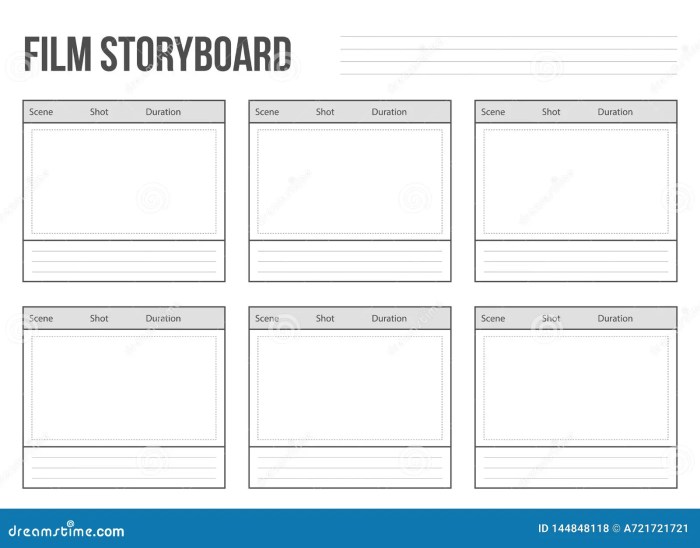
Mastering basic storyboard layouts is only the first step. Truly effective storyboarding involves creatively integrating various layouts to achieve a dynamic and engaging visual narrative. This section explores advanced techniques to elevate your storyboarding skills, focusing on layout transitions, camera work, and the seamless blending of different layout styles.
Integrating diverse layouts isn’t merely about visual variety; it’s a powerful tool for controlling the pacing and emotional impact of your story. By strategically shifting between wide shots, close-ups, and other layouts, you can guide the viewer’s attention, emphasize specific details, and build suspense or create moments of intimacy.
Layout Transitions
Effective transitions between storyboard layouts are crucial for maintaining a smooth and coherent visual flow. Abrupt shifts can disrupt the narrative, while well-planned transitions enhance the storytelling. Consider using techniques such as dissolves, wipes, or jump cuts to signal changes in time, location, or perspective. For example, a slow dissolve from a wide establishing shot to a close-up on a character’s face can subtly shift the focus from environment to emotion. Conversely, a quick jump cut can convey a sudden change in action or a shift in the character’s mental state. The choice of transition should always align with the narrative intent.
Camera Angles and Movement in Storyboard Layouts
Incorporating camera angles and movement directly into your storyboard layouts adds another layer of sophistication. Annotating camera movement—like a pan, tilt, zoom, or tracking shot—provides essential information for the director and cinematographer. For instance, a low-angle shot can make a character appear powerful, while a high-angle shot can create a sense of vulnerability. Similarly, a tracking shot following a character’s movement can build suspense or create a sense of intimacy. These annotations should be clear and concise, utilizing standard filmmaking terminology.
Dynamic Scene Storyboard Sequence
Let’s imagine a scene where a lone astronaut, EVA (Extravehicular Activity) is performing repairs on a damaged satellite in the vastness of space.
Panel 1: Wide shot. The astronaut, tethered to the satellite, is dwarfed by the immensity of space. The Earth is visible in the distance, a small blue marble. This establishes the setting and the astronaut’s isolation. Layout: Wide shot, establishing shot.
Panel 2: Medium shot. The astronaut is working on a specific component of the satellite, their face partially obscured by a helmet visor. This focuses the viewer’s attention on the task at hand. Layout: Medium shot, focusing on action.
Panel 3: Close-up. The astronaut’s gloved hand carefully connects a wire, highlighting the precision and difficulty of the repair. Sweat beads on their brow are visible. This adds a human element and increases tension. Layout: Close-up, detail shot.
Panel 4: Over-the-shoulder shot. The camera is positioned behind the astronaut, looking at the damaged section of the satellite. This provides a different perspective on the astronaut’s work. Layout: Over-the-shoulder shot, offering a new perspective.
The transition between these panels would be seamless, using a combination of dissolves and jump cuts to maintain the narrative flow. The camera movement is implied through the changing angles and perspectives. The sequence starts with a broad overview, then focuses on the action, before highlighting a crucial detail and finally offering an alternative viewpoint. This combination of layouts creates visual dynamism and effectively communicates the scene’s tension and the astronaut’s focused effort.
Conclusive Thoughts
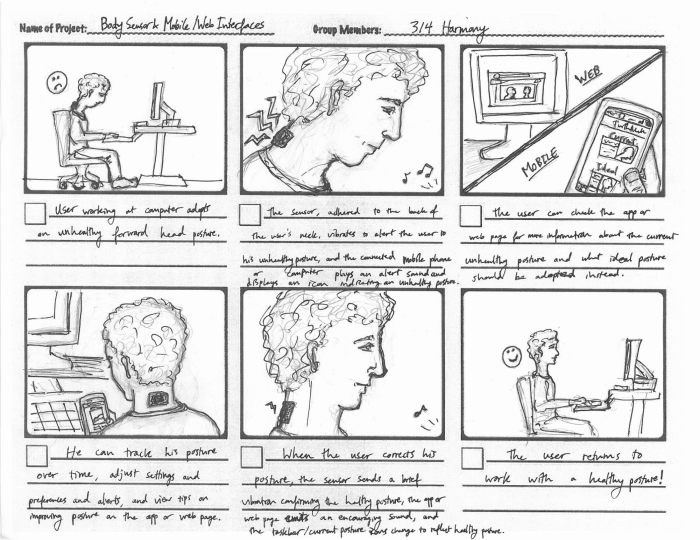
By understanding and skillfully applying these eleven storyboard layouts, you can significantly enhance your storytelling capabilities. Remember, the choice of layout is not arbitrary; it’s a deliberate artistic decision that directly impacts the pacing, emotional resonance, and overall effectiveness of your narrative. Mastering the nuances of layout selection, combined with a strong grasp of visual storytelling principles, will allow you to create dynamic and engaging storyboards that truly bring your vision to life. Experiment, iterate, and discover your own unique style within these foundational techniques.