Storyboarding is crucial for effective client communication, ensuring a shared vision before production begins. This guide delves into six essential tips for collaborating with clients on storyboards, transforming potential misunderstandings into collaborative successes. We’ll explore techniques for understanding client needs, designing effective storyboards, and navigating the collaborative workflow to deliver exceptional results.
From mastering client preferences and incorporating brand guidelines to managing revisions and resolving creative differences, we’ll equip you with practical strategies to build strong client relationships and achieve project goals efficiently. This guide provides actionable steps and illustrative examples to guide you through the entire storyboard process.
Understanding Client Needs & Preferences

Effective storyboarding hinges on a deep understanding of client needs and preferences. Ignoring this crucial aspect can lead to revisions, delays, and ultimately, a dissatisfied client. This section explores how to effectively integrate client input into the storyboard creation process, from initial concept to final approval.
Storyboard for a Minimalist Aesthetic
A client prioritizing a minimalist aesthetic values clean lines, simple compositions, and a limited color palette. The storyboard should reflect this by using sparse visual elements. For example, a scene depicting a character walking through a park would feature a single, stylized figure against a plain background, perhaps with just a few strategically placed trees. The focus would be on conveying the essence of the scene with minimal detail, emphasizing negative space and clean lines. Instead of detailed backgrounds, subtle gradients or single-color washes could be used. Character designs would be simple and uncluttered, avoiding intricate details or textures.
Incorporating Client Brand Guidelines
Brand guidelines are crucial for maintaining visual consistency. When incorporating them into a storyboard, pay close attention to the client’s logo, color palette, typography, and overall visual style. For instance, if the client uses a specific shade of blue, ensure this color is consistently used throughout the storyboard. Similarly, the logo should be accurately represented in any scene where it appears. Using the client’s specified font for any on-screen text is equally important. This ensures that the storyboard accurately reflects the brand’s identity. Failure to adhere to these guidelines can lead to significant revisions later.
Storyboard Revision Process Based on Client Feedback
Client feedback is invaluable. A typical revision process involves receiving feedback, analyzing it, and making the necessary changes. For example, imagine a client comments that a particular scene is too busy and lacks clarity. In response, you might simplify the composition, removing unnecessary elements and focusing on the key action. If the client requests a change in character expression, you’d redraw the character with the appropriate emotion. Documenting all changes made, along with the rationale behind each alteration, helps maintain transparency and facilitates efficient communication.
Comparing Two Storyboard Approaches for the Same Scene
Let’s consider a scene depicting a product launch. One storyboard approach, adhering strictly to client specifications, might show a meticulously detailed product rendering against a clean white background, featuring the client’s logo and brand colors precisely as Artikeld in the guidelines. The other approach, incorporating creative liberties, might depict the same scene but with a more dynamic composition, using suggestive imagery and a less literal representation of the product. It might emphasize the excitement and anticipation surrounding the launch using more expressive visuals, while still maintaining brand consistency in key elements. The first approach prioritizes accuracy and adherence to the brief; the second approach emphasizes creative interpretation within the brand’s guidelines.
Detailed Description of a Storyboard Meeting
A storyboard meeting typically includes an agenda outlining the key discussion points, such as review of the existing storyboard, client feedback, proposed changes, and next steps. Discussion points would involve specific feedback on individual panels, exploring alternative visual approaches, clarifying ambiguities, and addressing any concerns. The meeting’s outcome would be a clear understanding of the required revisions, an agreed-upon timeline for implementation, and the assignment of responsibilities.
| Discussion Point | Decision |
|---|---|
| Panel 3: Character expression | Revised to reflect a more confident demeanor. |
| Overall color palette | Adjusted to better align with brand guidelines. |
| Background detail in Panel 5 | Simplified to a cleaner, more minimalist design. |
| Next steps | Revised storyboard to be submitted by [date]. |
Effective Storyboard Design & Communication
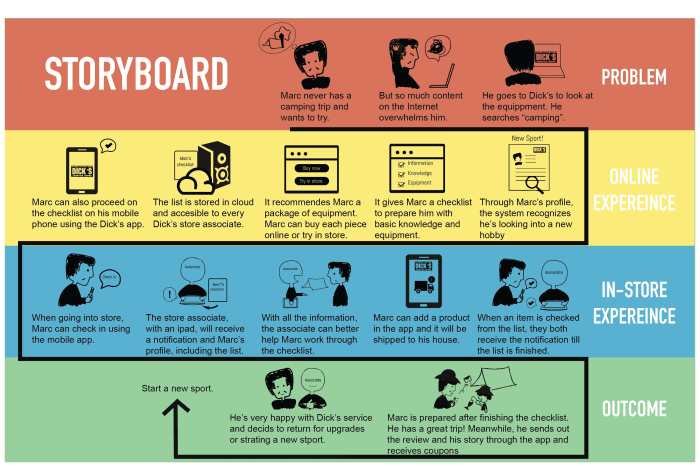
Creating effective storyboards involves more than just sketching out scenes; it’s about clear communication and collaboration with your client. This section will explore key strategies to ensure your storyboards are understood, approved, and ultimately, bring your client’s vision to life. Effective communication is paramount to a successful project.
Successful storyboard design hinges on visual clarity, narrative flow, and a shared understanding of the project’s aesthetic goals. By employing specific techniques, you can significantly improve your ability to communicate complex ideas and ensure client satisfaction.
Visual Metaphors in Storyboard Design
Visual metaphors are powerful tools for conveying complex or abstract ideas in a concise and memorable way. Instead of relying solely on literal depictions, consider using symbolic imagery to represent deeper meanings. For example, a wilting flower could symbolize loss or sadness, while a rising sun could represent hope or new beginnings. This approach allows you to communicate nuanced emotional states or conceptual themes more effectively to clients who may not be familiar with the technical aspects of filmmaking. A storyboard panel showing a character walking away from a bright, sunny field into a dark, shadowy forest, without explicitly stating it, can clearly communicate a shift from happiness to despair. The visual metaphor speaks volumes.
Storyboard Design Using a Client-Specified Color Palette
Imagine a client provides a color palette consisting of deep blues, muted oranges, and sandy beige. This palette suggests a nostalgic, perhaps slightly melancholic, setting. The deep blues could represent the vastness of the ocean or the twilight sky, establishing a sense of scale and mystery. The muted oranges might represent the warm glow of sunset or fading memories, adding a touch of warmth against the cooler blues. The sandy beige could represent the texture of the beach or the worn wood of an old ship, grounding the scene in a tangible reality. By carefully selecting specific shades and hues within this palette and applying them consistently across the storyboard, you can reinforce the overall mood and tone while adhering to the client’s vision.
Organizing a Storyboard to Highlight Narrative Arc and Pacing
The arrangement of panels in your storyboard is crucial for demonstrating the narrative arc and pacing of the story. A clear and logical flow is essential for client comprehension. You might choose to use a traditional left-to-right, top-to-bottom approach, or employ more dynamic layouts to reflect the energy and rhythm of the narrative. For instance, a sequence of quick, small panels can visually represent a fast-paced action scene, while larger panels with more detail can highlight emotionally significant moments. Consider using arrows or annotations to indicate transitions and emphasize key plot points. A well-organized storyboard allows clients to easily grasp the story’s progression and identify any potential pacing issues.
Comparison of Different Storyboard Layouts
Three common storyboard layouts offer distinct advantages and disadvantages:
- Traditional Panel Layout: This involves a grid-like arrangement of rectangular panels, flowing from left to right and top to bottom. Strengths: Familiar, easy to follow. Weaknesses: Can feel static, less dynamic for action sequences.
- Film Strip Layout: This resembles a film reel, with panels arranged in a horizontal sequence. Strengths: Emphasizes the cinematic flow, good for action. Weaknesses: Can be less suitable for scenes with multiple perspectives or complex staging.
- Freeform Layout: This allows for more creative arrangement of panels, often using different sizes and shapes to emphasize specific elements. Strengths: Highly visual and dynamic, suitable for complex scenes. Weaknesses: Can be harder to follow if not carefully planned, requires more artistic skill.
The best layout will depend on the specific project and client preferences.
Communicating Mood and Tone Through Storyboard Design
Consider a scene depicting a character alone in a dimly lit room, staring out a rain-streaked window. The storyboard panels would show this character in a medium shot, with the focus on their pensive expression. The color palette would be muted grays and blues, reflecting the somber atmosphere. The rain outside could be emphasized to enhance the feeling of isolation and melancholy.
The written description accompanying the storyboard would further reinforce the mood and tone:
- Mood: Melancholy, reflective, introspective, lonely
- Tone: Somber, quiet, contemplative, slightly hopeless
The combination of visual elements and written description ensures a clear and consistent communication of the intended emotional impact of the scene.
Collaboration & Workflow Strategies
Effective collaboration is crucial for successful storyboard creation. A streamlined workflow ensures clear communication, manages revisions efficiently, and minimizes potential conflicts between your creative vision and the client’s expectations. This section Artikels strategies for achieving this.
Establishing a clear and efficient collaborative process from the outset is key to a positive client experience and a successful project. This includes utilizing the right tools, setting up a system for feedback management, and proactively addressing potential creative differences.
Collaborative Storyboard Revision Process Using Online Tools
A step-by-step process using online collaborative tools like Google Slides, Figma, or Miro can significantly improve the revision process. This ensures transparency and allows for real-time feedback.
- Initial Share and Feedback: Share the initial storyboard draft with the client via the chosen platform. Clearly communicate the purpose of each scene and its intended impact.
- Client Feedback Integration: Encourage the client to leave comments directly on the storyboard using the platform’s annotation features. This allows for precise feedback on specific panels.
- Revision & Iteration: Incorporate client feedback into the storyboard, addressing their comments and suggestions. Use version control features to track changes.
- Iterative Review: Share the revised storyboard with the client for another review. Repeat steps 2 and 3 until the client is satisfied.
- Final Approval: Once the client approves the final version, download and archive the storyboard files.
Feedback and Revision Management System
A well-organized system for managing feedback and revisions is essential for efficient workflow. The following table illustrates a sample system:
| Revision Stage | Action | Deliverable | Timeline |
|---|---|---|---|
| Initial Draft | Share storyboard with client via online platform | Storyboard PDF/Link to online platform | Within agreed upon timeframe |
| Feedback Round 1 | Client provides feedback via platform annotations | Annotated storyboard | Within 2 business days |
| Revision 1 | Incorporate feedback, update storyboard | Revised storyboard | Within 3 business days |
| Feedback Round 2 (if needed) | Client provides further feedback | Annotated storyboard | Within 1 business day |
| Final Revision | Final adjustments, client approval | Approved storyboard (high-resolution) | Within 1 business day |
Handling Conflicting Creative Visions
Differences in creative vision are common. Open communication and a collaborative approach are key. Actively listen to the client’s concerns, explain your creative choices, and find compromises that satisfy both parties. Consider presenting alternative options to address their concerns while maintaining the overall narrative integrity.
Sample Email Communication Strategy
A consistent email communication strategy keeps the client informed and manages expectations.
Example Email 1 (Project Initiation): “Dear [Client Name], This email confirms our project to create a storyboard for [Project Name]. I’ve attached a project timeline outlining key milestones and deadlines. Please let me know if you have any questions.”
Example Email 2 (Sharing Draft): “Dear [Client Name], The initial storyboard draft is now available at [Link]. Please review and provide your feedback by [Date].”
Example Email 3 (Addressing Concerns): “Dear [Client Name], Thank you for your feedback. I’ve addressed your concerns regarding [Specific concern] by [Action taken]. Please review the updated version at [Link].”
Storyboard Workflow with Client Sign-Offs
A structured workflow with client sign-offs at key stages ensures project alignment and avoids misunderstandings.
- Concept Approval: Client approves the initial concept and direction of the storyboard.
- Rough Draft Sign-off: Client reviews and approves the rough draft, confirming the overall narrative flow.
- Revised Draft Approval: Client approves the revised storyboard after incorporating their feedback.
- Final Sign-off: Client approves the final, high-resolution storyboard.
Outcome Summary
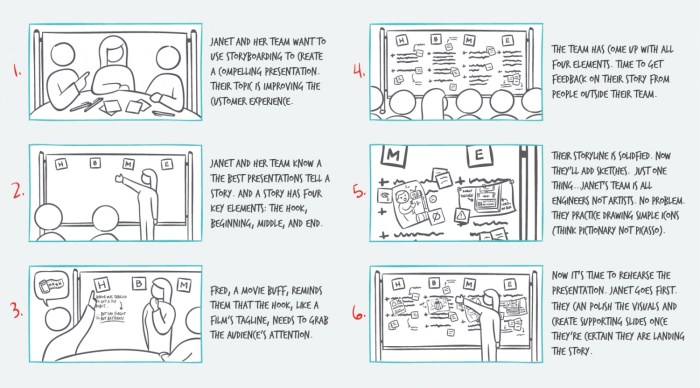
Mastering the art of client collaboration in storyboarding leads to smoother projects, happier clients, and a higher quality final product. By understanding client needs, employing effective communication strategies, and implementing efficient workflows, you can confidently navigate the creative process, resulting in storyboards that accurately reflect the client’s vision while maintaining creative integrity. Remember that clear communication and a collaborative spirit are key to success.