Mastering the art of storyboarding is crucial for effective visual storytelling. This guide delves into eight key composition techniques that elevate your storyboards from simple sketches to powerful visual narratives. We’ll explore fundamental principles like the rule of thirds and negative space, and then move on to more advanced techniques such as manipulating color, lighting, and camera angles to create impactful scenes. Prepare to transform your storytelling with these practical strategies.
From understanding basic compositional principles to applying advanced visual techniques and mastering a practical workflow, this guide provides a comprehensive approach to creating compelling storyboards. We will cover various aspects, including choosing the right framing techniques, utilizing color theory to evoke emotions, and incorporating visual metaphors to enhance narrative depth. By the end, you will be equipped to craft storyboards that effectively communicate your vision and captivate your audience.
Understanding Compositional Principles in Storyboarding

Effective storyboarding relies heavily on strong compositional principles to guide the viewer’s eye and enhance the narrative impact of each panel. Understanding and applying these principles ensures your storyboard is not only visually appealing but also effectively communicates the story’s flow and emotional impact. This section explores key compositional techniques to elevate your storyboard designs.
The Rule of Thirds and its Application
The rule of thirds suggests dividing your frame into nine equal parts using two equally-spaced horizontal lines and two equally-spaced vertical lines. By placing key elements along these lines or at their intersections, you create a more visually engaging and balanced composition than simply centering the subject. In storyboarding, this means strategically positioning characters, action, and focal points to avoid a static, uninteresting panel. For instance, instead of placing a character directly in the center of a panel depicting a tense confrontation, positioning them along one of the vertical thirds, with the antagonist occupying a point of intersection, creates a more dynamic and engaging image, hinting at the power dynamic and tension.
Leading Lines in Storyboard Design
Leading lines are visual pathways within the frame that guide the viewer’s eye towards the main subject or point of interest. These lines can be actual lines within the scene (roads, fences, rivers) or implied lines created by the arrangement of elements. In storyboarding, effectively using leading lines helps direct the viewer’s attention through the panel, creating a sense of movement and narrative flow. Imagine a storyboard panel depicting a character walking down a long, winding road. The road itself acts as a leading line, drawing the viewer’s eye towards the character and suggesting a journey or a sense of purpose.
Effective Use of Negative Space
Negative space, the empty area surrounding the main subject, is a crucial compositional element. Rather than being wasted space, negative space can enhance the impact of the main subject by providing breathing room and emphasizing its importance. A storyboard panel featuring a lone character standing in a vast, empty landscape uses negative space to highlight the character’s isolation and vulnerability. Conversely, a tightly framed panel with minimal negative space creates a sense of claustrophobia or urgency. The careful management of negative space is essential for controlling the mood and emphasis within each panel.
Symmetry and Asymmetry for Visual Balance
Symmetry, the mirroring of elements across a central axis, creates a sense of order, stability, and formality. Asymmetry, on the other hand, uses uneven distribution of elements to create a more dynamic and informal feel. A storyboard panel depicting a perfectly symmetrical building might suggest order and control, while an asymmetrical panel showing a chaotic street scene might reflect the scene’s energy and disorder. A balanced composition, whether symmetrical or asymmetrical, is essential for visual harmony. Consider a panel depicting a character standing before a large, imposing building. A symmetrical composition might place the character precisely in the center, creating a sense of confrontation. An asymmetrical composition could offset the character to one side, suggesting a sense of vulnerability or insignificance compared to the building’s grandeur.
Framing Techniques and Their Impact
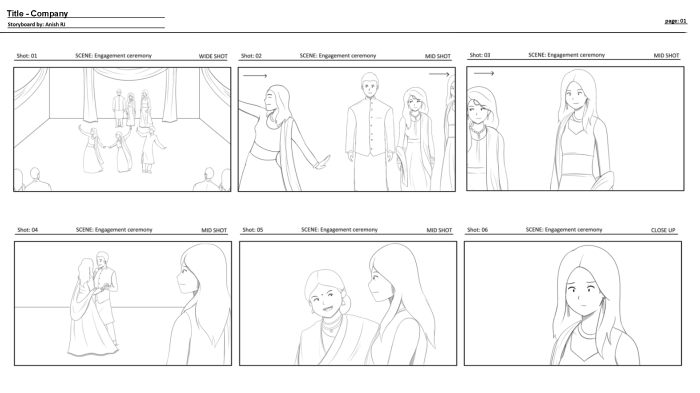
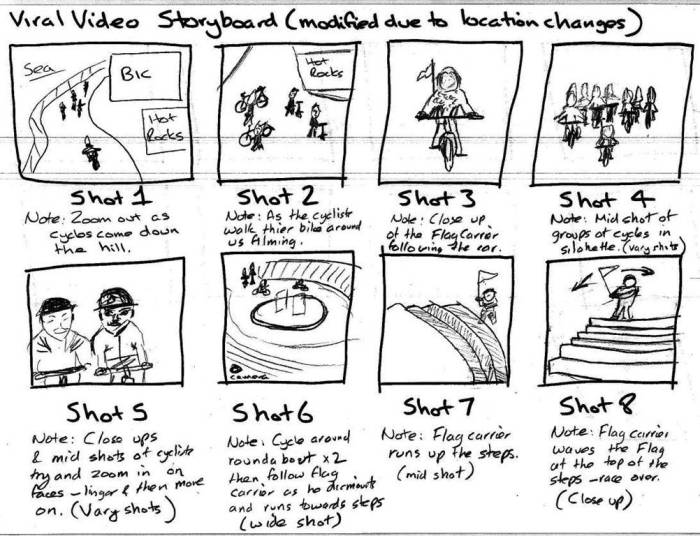
Different framing techniques significantly influence storytelling. A close-up shot emphasizes emotion and detail, a medium shot balances character and environment, and a long shot provides context and establishes setting. In a storyboard, a series of close-up shots during a tense conversation might amplify the emotional intensity, while long shots establishing the setting before introducing characters can provide crucial context. The strategic use of these techniques can greatly impact the pace, mood, and overall narrative effectiveness of your storyboard. For example, shifting from a long shot showing a character approaching a building to a close-up on their apprehensive face immediately communicates their internal state and foreshadows the scene’s events.
Applying Visual Techniques for Enhanced Impact
Storyboarding isn’t just about sketching out scenes; it’s about crafting a visual narrative that resonates with the audience. Effective use of visual techniques significantly enhances the impact of your storyboard, transforming a simple sequence of drawings into a powerful storytelling tool. This section explores key techniques to elevate your storyboard’s visual communication.
Color Theory and Emotional Response
Color plays a crucial role in setting the mood and evoking specific emotions. Warm colors like reds and oranges often represent energy, passion, or danger, while cool colors such as blues and greens can suggest calmness, tranquility, or sadness. Consider a scene depicting a tense confrontation: using predominantly reds and oranges in the background and on the characters’ clothing could immediately communicate the scene’s high stakes. Conversely, a peaceful forest scene would benefit from a palette dominated by greens and blues. Understanding color psychology allows storyboards to visually communicate emotions before a single word is spoken. For instance, a character dressed in vibrant yellow might symbolize optimism, while one shrouded in dark grey might represent mystery or sadness. The strategic use of color harmony or contrast can further amplify these effects.
Lighting and Dramatic Emphasis
Lighting is another powerful tool for directing the viewer’s attention and creating dramatic effects. High-key lighting, characterized by bright, even illumination, often creates a cheerful and optimistic atmosphere. In contrast, low-key lighting, with strong shadows and contrasts, adds suspense and drama, drawing attention to specific details. Consider a scene in a dimly lit alleyway: strategic use of low-key lighting, with a single spotlight on a character’s face, can instantly create tension and focus the viewer’s attention on that character’s expression. Similarly, backlighting can create silhouettes, adding mystery and intrigue. The manipulation of light and shadow is a fundamental aspect of visual storytelling, capable of profoundly impacting the mood and narrative.
Camera Angles and Perspective
The choice of camera angle dramatically influences the viewer’s perception of a scene and its characters. A high-angle shot can make a character appear vulnerable or insignificant, while a low-angle shot can convey power and dominance. A storyboard might depict a powerful villain from a low angle, emphasizing their imposing presence, while portraying the protagonist from a high angle during a moment of vulnerability to highlight their emotional state. Eye-level shots offer a neutral perspective, while extreme close-ups focus on specific details, enhancing emotional impact or revealing crucial clues. Consider a series of panels: the first showing a character from a high angle, emphasizing their isolation; the second from a low angle as they overcome an obstacle; and the third from an eye-level shot as they connect with another character, illustrating their journey. This variety in camera angles creates dynamic visual storytelling.
Visual Metaphors and Symbolism
Visual metaphors and symbolism can add layers of meaning and depth to a storyboard, enhancing the narrative’s impact. For example, a recurring image of a wilting flower might symbolize the protagonist’s fading hope, while a soaring bird could represent freedom or aspiration. The use of symbolic colors, objects, or settings allows for a more nuanced and engaging story, moving beyond literal representation to create richer interpretations. A character consistently holding a specific object could symbolize their past trauma or a hidden desire. These subtle visual cues contribute to a more profound and memorable viewing experience.
Visual Styles: Realism, Stylization, and Abstraction
Different visual styles suit different stories. A realistic style, aiming for accurate representation of reality, might be suitable for a historical drama or documentary-style animation. A stylized approach, employing exaggerated features and bold lines, can be effective for fantasy or superhero stories. Finally, an abstract style, using shapes and colors to convey emotion and concepts, is ideal for conveying dream sequences or conveying complex emotions. Consider the difference: a realistic storyboard for a historical drama would focus on accurate depiction of costumes and settings, whereas a stylized storyboard for a fantasy film might utilize exaggerated character designs and environments. An abstract storyboard for a dream sequence could use swirling colors and distorted shapes to reflect the surreal nature of the dream. The chosen style directly influences the overall tone and message of the storyboard.
Practical Application and Storyboard Workflow
Storyboarding is not merely a theoretical exercise; it’s a crucial tool for visualizing and refining narratives before production. A well-executed storyboard acts as a blueprint, guiding the entire filmmaking process from pre-production to post-production, ensuring visual consistency and a cohesive narrative flow. This section will delve into the practical application of storyboarding techniques, illustrating a workflow from initial concept to final product.
Storyboard Example: A Short Scene
The following storyboard depicts a short scene incorporating rule of thirds, leading lines, negative space, and symmetry. Imagine a tense scene in a detective’s office.
| Panel 1: Wide shot. Detective’s office, cluttered but organized. Rule of thirds – desk positioned off-center. Leading lines – bookshelves draw the eye to the detective’s desk. |
Panel 2: Medium shot. Detective sits at his desk, reviewing files. Negative space – emphasizes his isolation. |
Panel 3: Close-up. Detective’s face, showing deep concentration. Symmetry – his face is centered, highlighting his emotional state. |
Panel 4: Medium shot. A suspect enters, nervously fidgeting. Rule of thirds – suspect positioned off-center, creating tension. |
Storyboard Development Process
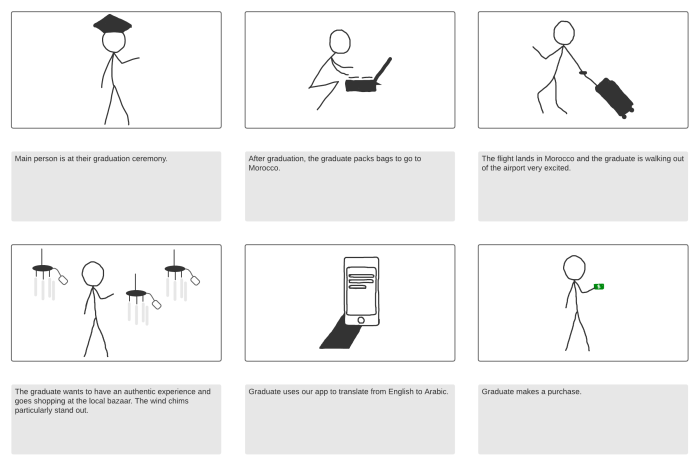
Developing a storyboard involves several iterative steps. It begins with a concise scene description, outlining the action and dialogue. Initial sketches are created, focusing on key moments and compositions. These sketches are then refined, incorporating feedback from directors, writers, or other team members. The final draft incorporates detailed camera angles, sound cues, and character expressions, ensuring a clear visual representation of the scene. Revisions are crucial, allowing for adjustments based on feedback and evolving creative vision. For example, a scene initially conceived as a wide shot might be altered to a series of close-ups to emphasize character emotions after feedback suggests a need for greater intimacy.
Storyboard Panel Elements
A typical storyboard panel includes several crucial elements. Action: A brief description of the main action taking place within the frame. Dialogue: Any spoken words, presented in speech bubbles or below the panel. Camera Angle: Indicates the perspective (e.g., high angle, low angle, eye level). Sound: Any significant sound effects or music cues are noted. Additionally, character expressions, props, and setting details are meticulously depicted. For instance, a panel might depict “Action: Character A runs towards Character B,” “Dialogue: ‘Help me!'” “Camera Angle: Low angle, emphasizing Character B’s power,” “Sound: Footsteps, panting.”
Illustrating an Emotional Arc
A storyboard sequence can effectively illustrate a character’s emotional arc through visual cues and composition. For instance, a character initially depicted in a wide shot, feeling insignificant, might progress through medium shots, revealing increasing confidence, culminating in a close-up conveying triumph. The change in framing and character positioning (e.g., initially hunched over, then standing tall) directly reflects the emotional journey. The use of light and shadow can also contribute, with dark, muted tones representing sadness giving way to bright, vibrant colors representing joy.
Team Collaboration Best Practices
Effective storyboard collaboration requires clear communication and a shared understanding of the project’s vision. Using digital platforms for sharing and revising storyboards is essential. Regular feedback sessions allow for iterative improvements. Assigning roles and responsibilities clearly avoids confusion. Maintaining a central repository for all storyboard versions ensures everyone is working with the most up-to-date version. For example, using cloud-based collaborative tools allows for real-time feedback and version control, minimizing potential conflicts and ensuring efficient workflow.
Epilogue
By mastering these eight composition techniques, you’ll be able to create storyboards that are not just functional, but visually stunning and emotionally resonant. Remember that effective storyboarding is an iterative process; embrace experimentation, seek feedback, and refine your approach with each project. The ability to communicate your vision clearly and compellingly through visual storytelling will significantly enhance your projects and collaborations. Start practicing these techniques today and watch your storyboards come to life!