Mastering the art of visual storytelling through storyboarding unlocks a world of creative possibilities. This guide delves into the core principles of effective storyboarding, exploring techniques to elevate your narrative from simple scenes to compelling visual experiences. We’ll cover fundamental concepts, advanced strategies, and practical applications, equipping you with the skills to craft impactful visuals that resonate deeply with your audience.
From understanding basic storyboard layouts and panel design to leveraging color palettes, character design, and camera angles, we’ll explore how to infuse emotion and mood into your visuals. We’ll also examine the intricacies of storyboarding complex action sequences, dialogue-heavy scenes, and the integration of sound and visual metaphors to enrich your storytelling.
Understanding Storyboard Fundamentals
Storyboarding is a crucial pre-production process that visually maps out a narrative, allowing filmmakers, animators, and other creatives to plan shots and sequences before committing to expensive production. A strong storyboard acts as a blueprint, ensuring consistency in visual storytelling and facilitating clear communication among the production team. Understanding its core components is paramount to effective use.
Storyboards translate a script into a series of visual panels, each representing a single shot or scene. These panels, typically arranged in sequence, are accompanied by concise descriptions and annotations detailing camera angles, actions, dialogue, and other essential elements. This allows for a holistic view of the pacing, flow, and visual impact of the final product.
Storyboard Components and Their Purpose
A typical storyboard panel comprises several key elements working in concert. Firstly, there’s the visual representation of the scene itself, a quick sketch depicting characters, setting, and key action. This sketch provides the foundational visual information. Secondly, a concise description of the action and dialogue often accompanies the sketch, providing context and details that the visual alone might not convey. Thirdly, camera direction is indicated, specifying camera angle (e.g., high angle, low angle, close-up), movement (e.g., pan, zoom, tracking shot), and framing. Finally, annotations can add further details such as sound effects, transitions, and special effects.
Storyboard Layouts and Suitability
Different projects benefit from varying storyboard layouts. A simple, linear layout, where panels are arranged sequentially from left to right, is ideal for straightforward narratives with a linear progression. However, more complex projects might employ branching layouts to visualize multiple narrative threads or different versions of a scene. For instance, a film with multiple perspectives might use a branched layout to show each character’s point of view concurrently. Similarly, an interactive project like a video game might use a non-linear layout to map out various paths and decision points. The chosen layout directly reflects the narrative structure and complexity of the project.
Best Practices for Clear and Concise Storyboard Panels
Creating effective storyboard panels requires a balance between detail and clarity. Each panel should focus on a single shot or a clearly defined moment in the narrative. Avoid overcrowding panels with too much information; instead, prioritize the most important visual and narrative elements. Keep the sketches simple and easily understandable, focusing on conveying the essential information rather than creating highly detailed artwork. Concise descriptions and clear camera notations ensure everyone involved understands the intended shot. Using consistent visual style and panel size across the entire storyboard improves readability and overall visual cohesion.
Sample Storyboard Panel: Scene Transition
Imagine a scene transitioning from a bustling city street at night to the quiet interior of a dimly lit apartment. The panel would depict a split screen. The left side shows a high-angle shot of a crowded city street at night, perhaps with blurred lights and people moving. A small arrow points to the right, indicating the transition. The right side shows a low-angle shot of a dimly lit apartment interior, focusing on a single figure sitting on a couch. The description might read: “EXT. CITY STREET – NIGHT (HIGH ANGLE) – TO – INT. APARTMENT – NIGHT (LOW ANGLE) – SOUND OF CITY FADES, REPLACED BY SILENCE.” This simple illustration effectively conveys the scene transition and the associated changes in setting, atmosphere, and sound.
Enhancing Visual Storytelling Techniques
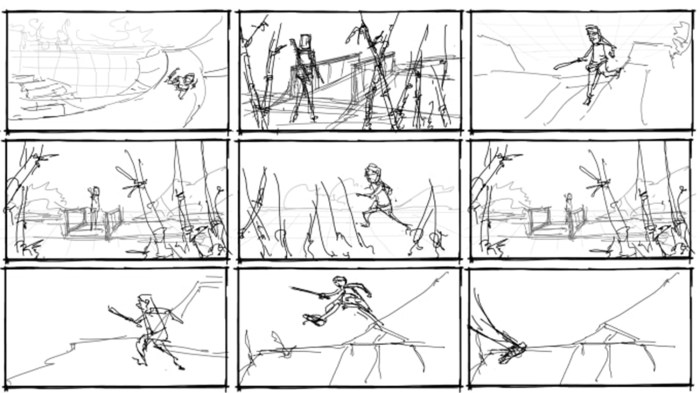
Storyboarding isn’t just about sketching out scenes; it’s about crafting a compelling visual narrative. Effective storyboards leverage visual techniques to convey emotion, establish tone, and drive the story forward. This section delves into specific methods for enhancing your visual storytelling through considered choices in color, character design, and camera angles.
Conveying Emotion and Mood Through Visual Storytelling
Visual storytelling relies heavily on the unspoken language of images to evoke emotional responses in the viewer. This is achieved through a combination of factors including character expressions, color palettes, lighting, and composition. For example, a dark, shadowy scene with muted colors and downcast characters might convey sadness or fear, while a brightly lit scene with vibrant colors and characters in active poses could suggest joy or excitement. The use of close-up shots on a character’s face can highlight their emotional state, while wide shots can emphasize the environment’s impact on their feelings. Consider the contrast between a lonely figure dwarfed by a vast landscape versus a bustling city scene filled with interacting characters. These differences directly influence the viewer’s emotional engagement with the narrative.
Color Palettes in Establishing Visual Tone
The strategic use of color is fundamental to setting the tone and mood of a story. Warm colors like reds, oranges, and yellows often evoke feelings of warmth, energy, and excitement, while cool colors like blues, greens, and purples can create a sense of calmness, serenity, or even melancholy. A film noir style might utilize deep blues and blacks to emphasize mystery and suspense, contrasting sharply with the vibrant hues of a children’s animation. Monochromatic palettes, using variations of a single color, can create a unified and focused mood, while complementary colors can create visual tension and drama. The strategic use of color saturation also plays a vital role; desaturated colors often convey feelings of sadness or nostalgia, while highly saturated colors enhance vibrancy and energy.
Character Design and its Impact on Storytelling
Character design goes beyond simply giving a character a face and clothes. It’s about communicating personality, background, and even inner conflicts through visual cues. The shape and size of a character, their clothing style, posture, and even the details of their facial features contribute to their overall portrayal. A round, soft character might suggest friendliness and approachability, while a sharp, angular character could appear more aggressive or serious. The choice of clothing can indicate social status, profession, or even rebelliousness. A character’s posture – slumped shoulders suggesting defeat, or an upright stance conveying confidence – further enhances their personality and adds layers to the narrative. Even the smallest details, like a character’s hairstyle or accessories, can tell a story.
Storyboard Sequence Demonstrating Camera Angles
Imagine a scene where a detective enters a dimly lit room. The scene begins with a long shot, establishing the room’s overall atmosphere. As the detective moves forward, the camera angle shifts to a medium shot, focusing on the detective’s expression as they observe their surroundings. A low angle shot, looking up at the detective, is used when they discover a crucial piece of evidence, highlighting their discovery’s significance. Finally, a close-up shot of the evidence provides the audience with a detailed view, increasing tension. This sequence effectively uses camera angles to guide the viewer’s attention and control the emotional impact of the scene. The shifting perspective enhances the narrative flow and keeps the audience engaged.
Comparison of Camera Angles and Their Effects
| Camera Angle | Description | Effect on Viewer | Example |
|---|---|---|---|
| Eye Level | Camera is at the subject’s eye level. | Creates a neutral and relatable perspective. | A conversation between two characters. |
| High Angle | Camera looks down on the subject. | Makes the subject appear smaller, weaker, or vulnerable. | A character feeling defeated after a loss. |
| Low Angle | Camera looks up at the subject. | Makes the subject appear larger, more powerful, or intimidating. | A villain looming over a helpless hero. |
| Dutch Angle | Camera is tilted, creating an off-kilter perspective. | Conveys disorientation, unease, or chaos. | A scene of a car crash or a character experiencing a mental breakdown. |
Practical Applications and Advanced Techniques
Storyboarding isn’t just about sketching out scenes; it’s a powerful tool for pre-visualizing complex narratives and ensuring visual consistency across your project. Mastering advanced techniques allows you to elevate your storyboards from simple scene Artikels to comprehensive visual guides that inform every aspect of production. This section explores practical applications and advanced techniques to help you refine your storyboarding skills.
Storyboarding Complex Action Sequences
Effectively storyboarding action sequences requires breaking down complex movements into a series of smaller, manageable panels. Each panel should focus on a specific moment of action, highlighting key poses and transitions. Consider using a combination of wide shots to establish the environment and close-ups to emphasize character expressions and crucial details. For instance, a fight scene might begin with a wide shot showing the characters’ initial positions, followed by a series of panels depicting individual blows, dodges, and reactions, culminating in a final panel showing the outcome. Remember to maintain a clear sense of timing and spatial relationships between characters and objects. Arrow indicators or motion lines can be incorporated to emphasize movement and direction.
Storyboarding Dialogue-Heavy Scenes
Storyboarding scenes with significant dialogue requires a different approach. While action is still important, the focus shifts to character interaction and emotional expression. Panel composition should emphasize character proximity and body language, using close-ups and medium shots to capture facial expressions and subtle nuances in their interactions. Dialogue should be concisely represented within the panels, perhaps using speech bubbles or captions, but the visual emphasis should be on the nonverbal communication between characters. Consider using visual cues like shifts in posture, eye contact, or hand gestures to enhance the emotional impact of the dialogue. For example, a tense conversation might be depicted using tight close-ups, minimal background details, and characters positioned at an angle to each other, conveying distance and discomfort.
Integrating Sound Effects and Music
Sound design is an integral part of storytelling, and incorporating sound effects and music into your storyboards enhances their effectiveness. Use annotations to indicate where specific sounds or musical cues should be placed. This might include descriptions like “footsteps approaching,” “ominous music swells,” or “glass shattering.” This helps to create a more complete picture of the scene’s atmosphere and emotional impact, guiding the sound designer and composer in their work. For example, a suspenseful scene might be annotated with “creaking door,” “whispering wind,” and “low, unsettling music,” setting the mood before any visual action occurs.
Incorporating Visual Metaphors and Symbolism
Visual metaphors and symbolism can add depth and meaning to your storyboards. Instead of literally depicting every detail, consider using symbolic imagery to represent abstract concepts or emotions. For example, a wilting flower could symbolize loss or despair, while a bright sunrise might represent hope or new beginnings. These symbolic elements enhance the storytelling and allow for a more nuanced interpretation of the scene. These elements need to be carefully chosen and consistently applied throughout the storyboard to avoid confusion.
Storyboarding Multiple Characters and Interactions
Storyboarding scenes with multiple characters requires careful planning of panel composition and character placement. Use clear visual cues to distinguish characters and show their relationships. Consider using different sizes and positions of characters to convey dominance or subordination. Lines of sight and body language can also indicate character interactions and relationships. For example, a scene showing a group discussion might utilize a wide shot to show everyone’s position and body language, followed by closer shots focusing on specific character interactions. Consistent character design and clear labeling will also aid clarity.
Utilizing Software and Tools
Several software and tools are available to create professional-looking storyboards. Software like Storyboarder, Adobe Photoshop, and Toon Boom Harmony offer various features, including drawing tools, panel templates, and animation capabilities. Choosing the right tool depends on your skill level, project requirements, and budget. Each software offers unique strengths; for example, Storyboarder is known for its intuitive interface and focus on storytelling, while Photoshop provides more advanced image editing capabilities. Familiarity with at least one of these programs is crucial for creating polished, professional storyboards.
Final Review
By mastering the techniques Artikeld in this guide, you’ll be well-equipped to transform your ideas into captivating visual narratives. Storyboarding isn’t just about sketching; it’s about strategic planning and creative execution. Through thoughtful consideration of visual elements and a deep understanding of storytelling principles, you can create storyboards that not only effectively communicate your narrative but also leave a lasting impression on your viewers. Embrace the power of visual storytelling and watch your projects come alive.