Visual storytelling is a powerful tool, and storyboarding is its key. This guide delves into the art and science of storyboarding, exploring its applications beyond film and animation. Discover how this versatile technique can revolutionize your approach to visual prototyping across website design, app development, and marketing campaigns, transforming complex ideas into easily digestible narratives.
We’ll explore fundamental principles, advanced techniques, and practical examples, equipping you with the skills to craft compelling storyboards that effectively communicate your vision and facilitate collaboration. From understanding different storyboard types to incorporating user feedback and iterative design, this comprehensive guide provides a practical roadmap for mastering this essential design skill.
Understanding Storyboarding Fundamentals
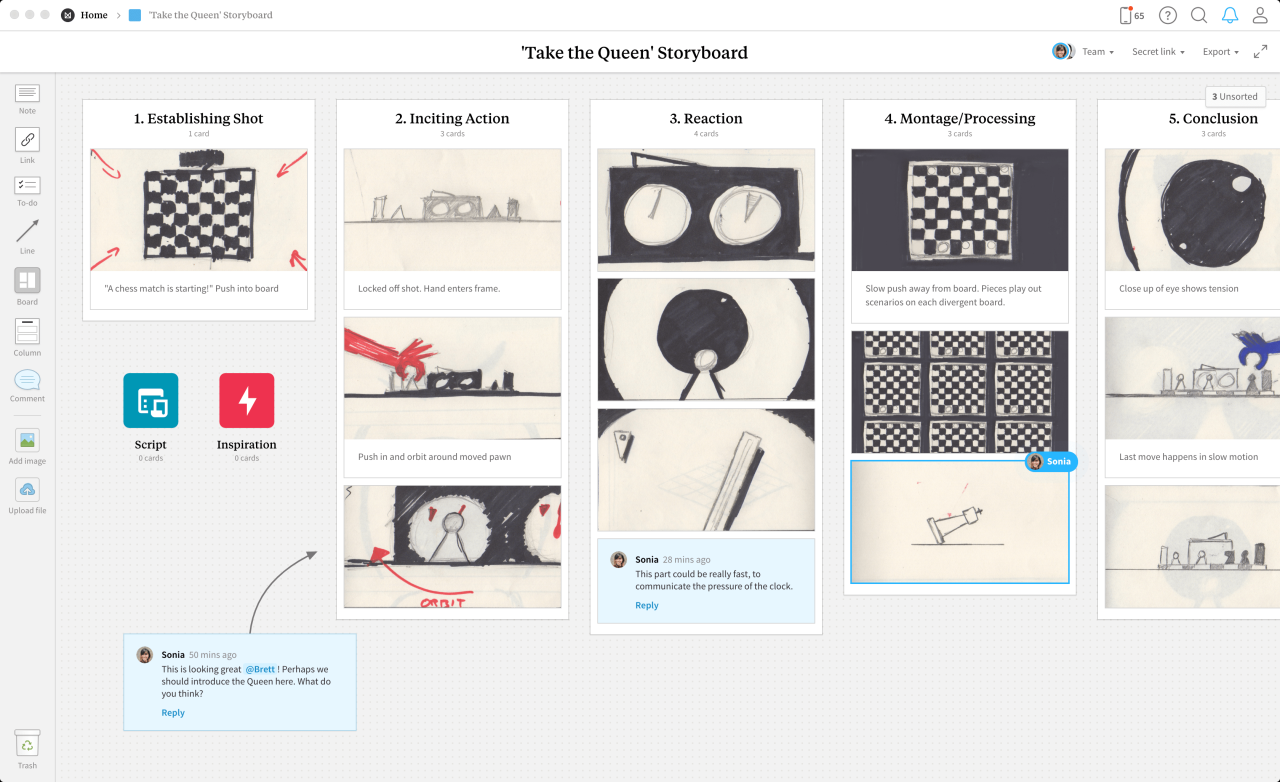
Storyboarding is a powerful visual planning tool used across various creative fields to pre-visualize a sequence of events, whether it’s a film scene, an animation sequence, or a user experience flow. Mastering its core principles allows for clearer communication, efficient production, and a more polished final product. This section delves into the fundamentals of effective storyboarding, exploring different types and providing a practical example.
Storyboarding relies on a series of panels, each depicting a single moment or shot. Effective storyboarding prioritizes clarity, conveying the essential narrative information through concise visuals and minimal text. Consistency in style and panel layout enhances readability and improves the overall impact. Furthermore, effective storyboards consider pacing and transitions between panels to create a smooth and engaging visual narrative.
Types of Storyboards
Storyboards adapt to various creative mediums, each with its own nuances. Film storyboards focus on camera angles, shot composition, and character movements. Animation storyboards emphasize character animation and scene transitions, often including detailed character poses and expressions. UX storyboards, in contrast, illustrate user interactions with a product or interface, focusing on screen layouts and user flows.
Sample Storyboard: A Simple Narrative
Let’s create a storyboard for a short narrative: A dog chases a ball.
Panel 1: Visual: A happy dog sitting next to its owner. Text: “Sunny afternoon in the park.”
Panel 2: Visual: The owner throws a bright red ball. Text: “The ball flies high!”
Panel 3: Visual: The dog is running at full speed, eyes fixed on the ball. Text: “Chase is on!”
Panel 4: Visual: The dog leaps into the air, catching the ball in its mouth. Text: “Gotcha!”
Panel 5: Visual: The dog returns to the owner, tail wagging excitedly. Text: “Happy ending!”
Comparison of Storyboarding Techniques
The choice of storyboarding technique depends on the project’s needs and the creator’s preferences. Below is a comparison of different techniques.
| Storyboarding Technique | Advantages | Disadvantages | Best Suited For |
|---|---|---|---|
| Traditional Hand-Drawn | Personal touch, expressive, cost-effective for smaller projects | Time-consuming, difficult to revise, less precise | Short films, animation, concept development |
| Digital Storyboarding Software | Efficient revisions, collaboration features, precise control | Requires software proficiency, can be expensive, may lack personal touch | Feature films, large-scale animation, complex projects |
| Photo Storyboarding | Realistic visuals, quick prototyping | Limited flexibility, requires photography skills, can be expensive | Live-action films, advertising, commercial projects |
| Simple Sketching | Fast, flexible, good for brainstorming | Less detailed, may lack precision, difficult to communicate complex ideas | Early brainstorming sessions, quick concept sketches |
Storyboarding for Visual Prototyping in Different Fields
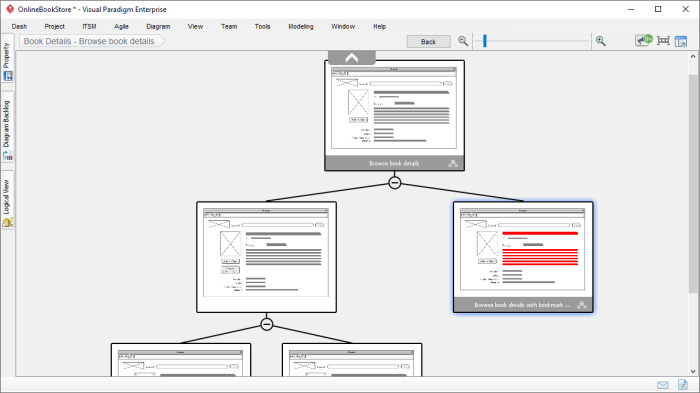
Storyboarding, a powerful visual communication tool, transcends its origins in filmmaking and animation. Its application in diverse fields like website design, app development, and marketing campaign development allows for effective visual prototyping and pre-visualization of complex projects. By outlining the user journey and key interactions, storyboards enable stakeholders to identify potential issues and refine the design process early on, saving time and resources.
The use of storyboards allows for a shared understanding of the project’s vision, facilitating smoother collaboration among designers, developers, and clients. This shared understanding reduces ambiguity and ensures everyone is on the same page before significant resources are committed to development.
Storyboarding in Website Design
Storyboards are invaluable in website design, providing a clear visual representation of user flows and page layouts. Imagine designing an e-commerce website: a storyboard could depict a user navigating from the homepage, browsing product categories, adding items to a cart, proceeding to checkout, and finally confirming the order. Each frame would represent a distinct page or screen, highlighting key elements like navigation menus, product displays, and call-to-action buttons. This visual representation allows designers to identify potential usability issues, such as confusing navigation or unclear calls to action, before the website is built. For example, a storyboard might reveal that a crucial button is too small or poorly placed, leading to a low conversion rate. Addressing these issues early in the design phase is far more efficient than making changes after the website is launched.
Storyboarding in App Development
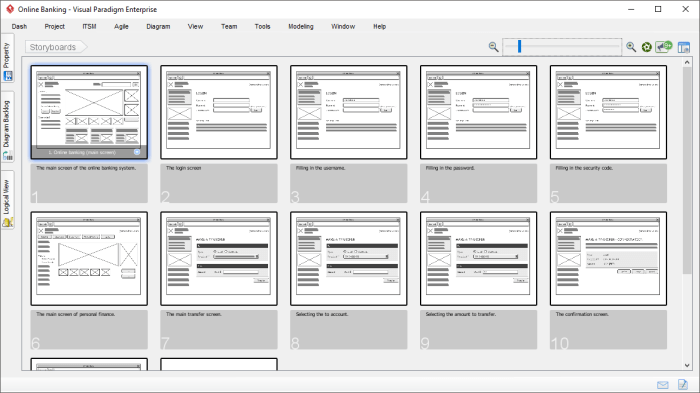
In app development, storyboarding is crucial for visualizing user interactions and workflows within the app’s interface. Consider a mobile banking app: a storyboard might illustrate a user logging in, checking their account balance, transferring funds, and paying bills. Each frame would show the app’s screen at each step, showcasing the user interface elements and transitions between screens. This process helps developers anticipate potential problems with user experience, such as confusing menus or difficult navigation. For example, a storyboard could reveal that the process of transferring funds is too complex, requiring too many steps. By identifying such issues early, developers can simplify the user flow and improve the overall user experience. A successful case study is the development of the Duolingo language-learning app, where storyboarding likely played a significant role in visualizing the interactive lessons and gamified learning experience.
Storyboarding in Marketing Campaign Development
Storyboarding is essential for visualizing the narrative and visual elements of a marketing campaign. This applies across various media, from television commercials to social media campaigns. For example, a storyboard for a television commercial could depict a series of scenes illustrating the product’s benefits and highlighting its unique selling points. Each frame would show a specific shot, indicating camera angles, character actions, and visual effects. This visual plan ensures that the final commercial aligns with the campaign’s message and target audience. Similarly, a storyboard for a social media campaign could Artikel the visual style and messaging across different platforms, ensuring a consistent brand identity. A successful example would be a storyboard used to plan a viral marketing campaign, outlining the progression of visuals and messaging to maximize engagement.
Comparative Analysis of Storyboarding Effectiveness
| Feature | Website Design | App Development | Marketing Campaign Development |
|---|---|---|---|
| User Flow Visualization | Highly Effective: Clarifies navigation and user journeys across web pages. | Highly Effective: Visualizes user interactions and workflows within the app. | Moderately Effective: Illustrates the narrative arc of the campaign but may not fully capture all interactive elements. |
| UI/UX Design Refinement | Highly Effective: Identifies usability issues and improves overall user experience. | Highly Effective: Allows for iterative improvements to the app’s interface. | Less Effective: Focuses more on visual narrative than direct user interaction. |
| Collaboration & Communication | Highly Effective: Facilitates clear communication between designers, developers, and clients. | Highly Effective: Enables seamless collaboration between designers and developers. | Highly Effective: Provides a shared vision for the campaign’s creative direction. |
| Time & Resource Savings | Highly Effective: Reduces the need for costly revisions later in the development process. | Highly Effective: Minimizes development time and reduces the likelihood of costly bugs. | Moderately Effective: Can help avoid costly reshoots or revisions in advertising production. |
Advanced Storyboarding Techniques and Applications
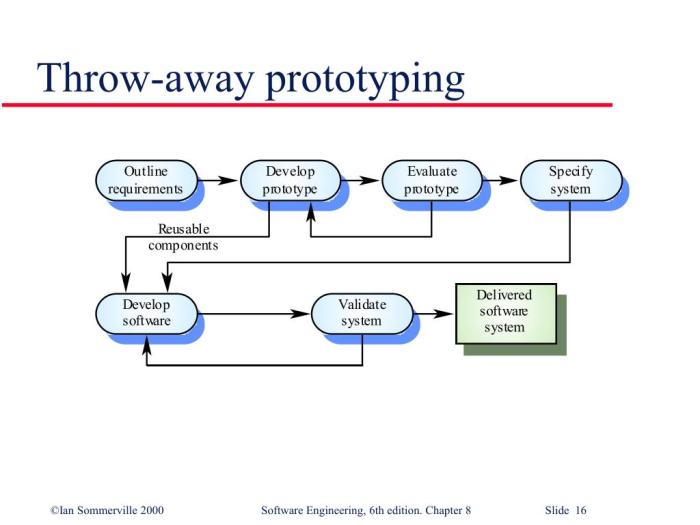
Storyboarding transcends basic visual planning; it’s a powerful tool for iterative design and complex project management. Mastering advanced techniques unlocks its full potential, enabling more effective communication and collaboration across various creative fields. This section explores several such techniques, focusing on their practical application in UX design and video production.
Integrating advanced techniques into your storyboarding workflow elevates the process from simple visualization to a robust prototyping and planning method. This allows for more thorough testing and refinement, leading to higher-quality final products. The techniques described below will significantly improve the clarity and effectiveness of your storyboards.
Incorporating User Personas into Storyboards for UX Prototyping
User personas are crucial for effective UX design. By representing target users with specific characteristics and goals, designers can create more empathetic and user-centered products. Incorporating these personas directly into storyboards allows designers to visualize how users might interact with a product or service at each stage. For instance, a storyboard depicting an e-commerce website checkout process might show a persona – let’s call her Sarah, a busy professional – navigating the site. Each panel could illustrate Sarah’s actions, thoughts, and potential frustrations, guiding design decisions towards a smoother, more intuitive user experience. This allows for early identification of potential usability issues and allows for the testing of different design choices from the perspective of the target audience.
Utilizing Diverse Visual Styles in Storyboards
The visual style of a storyboard significantly impacts its effectiveness. Using a consistent visual language throughout the entire storyboard is important, but the choice of style itself depends on the project’s needs and the audience. Rough sketches can quickly convey the overall narrative flow and key interactions. Wireframes offer a more detailed representation of the user interface, highlighting structural elements and information architecture. High-fidelity mockups, on the other hand, provide a realistic preview of the final product’s visual appearance. A storyboard might effectively combine these styles: beginning with loose sketches for initial brainstorming, moving to wireframes for interactive flow, and concluding with mockups for crucial scenes that require detailed visual representation. This layered approach offers a clear progression of detail, facilitating better communication and a more comprehensive understanding of the final product.
Designing a Storyboard Incorporating User Feedback and Iterative Design
Iterative design is central to effective product development. Storyboards are excellent tools for incorporating user feedback at various stages. After an initial storyboard is created, it can be tested with users to gather feedback on the narrative flow, user experience, and overall clarity. This feedback is then used to revise and refine the storyboard, creating a more polished and user-centered design. This cycle of creation, testing, and revision can be repeated multiple times until a satisfactory result is achieved. For example, if user testing reveals confusion about a specific interaction, the relevant storyboard panels can be redesigned to improve clarity and user understanding. This iterative process ensures the final product accurately reflects user needs and expectations.
Using Storyboards to Plan and Execute Video Production
Storyboards are indispensable for pre-production planning in video production. They serve as a visual blueprint, outlining each shot, its composition, and its purpose within the larger narrative. This ensures a clear understanding of the project’s scope, facilitating efficient resource allocation and a smoother production process.
A step-by-step guide to using storyboards for video production:
- Develop a detailed script: A well-defined script is the foundation of a successful video. This script should include scene descriptions, dialogue, and any necessary sound effects.
- Create a shot list: Identify the specific shots required to tell the story effectively. This includes camera angles, movements, and any special effects.
- Sketch the storyboard panels: Visually represent each shot, including camera angles, character positioning, and key action elements. Simple sketches are sufficient at this stage.
- Annotate the storyboard: Add detailed notes to each panel, including camera instructions, dialogue, sound effects, and any other relevant information.
- Review and refine: Share the storyboard with the production team for feedback and make necessary revisions before filming begins.
- Use the storyboard during filming: The storyboard serves as a guide during filming, ensuring consistency and efficiency.
- Post-production reference: The storyboard can be used as a reference during post-production, ensuring that the final video aligns with the original vision.
Final Thoughts
Mastering storyboarding unlocks a world of creative possibilities, transforming abstract concepts into tangible visual representations. By understanding the core principles and applying the diverse techniques discussed, you can leverage storyboarding to streamline your design process, improve collaboration, and ultimately, create more impactful and engaging products and campaigns. This guide serves as a springboard—embrace experimentation and discover the unique power of storyboarding in your own creative endeavors.